 Retro Replay Retro Gaming History, Reviews & Emulation
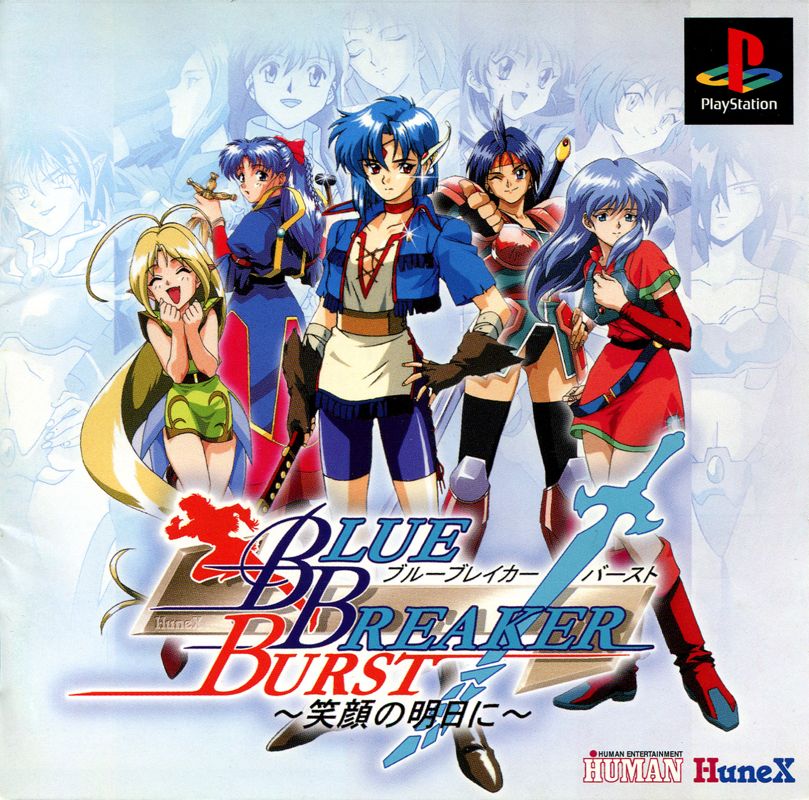
Retro Replay Review
Gameplay
The first thing to know is that Egao no Asu ni is not trying to reinvent Blue Breaker Burst. It returns to full-3D fighting and builds its strongest new hook around Team Battle: each side selects three characters, then uses them in order. That is a simple change, but it gives matches more shape than a straight one-on-one fight, since your picks have to work as a group rather than merely representing your single favorite character.
The expanded playable roster matters for the same reason. More characters are not automatically a reason to celebrate, but they fit the three-person format well: you have more room to experiment with a lineup and more reason to revisit the game after settling on an initial team. The pleasure here is in treating the cast as a pool for combinations, not just a list to sample once.
Newcomers should use the optional prologue before committing to the main story. It recaps the preceding game and is the most practical way to avoid beginning this finale in the middle of a conversation. Even with that refresher, though, the game’s direct-sequel structure means that returning fans are the audience most likely to feel immediately at home.
Graphics
Egao no Asu ni again stages its fights in full 3D while drawing from an anime and manga-style cast. The important visual change in play is the three-character Team Battle setup, which puts a larger selection of fighters at the center of each match instead of limiting the focus to a single combatant per side.
Story
This is the third and final Blue Breaker title, and it picks up directly after Blue Breaker Burst: Hohoemi o Anata to. Chimena is still searching for the holy sword, so the game asks you to continue an existing journey rather than start a self-contained new one.
That directness is both its strength and its limitation. If you have history with the series, there is real value in reaching the intended conclusion and seeing the central search carried forward. If you do not, the recap can explain the basics, but it cannot replace the attachment built across the prior game.
Several new side stories featuring other characters help broaden the focus beyond Chimena. They are especially welcome in a fighting game sequel, where extra context for the cast can make the roster feel like more than a set of match options. Fans attached to supporting characters have a clear reason to spend time beyond the main continuation.
Overall Experience
Egao no Asu ni is an easy recommendation for an invested Blue Breaker Burst fan. It concludes the series, continues the holy-sword storyline directly, adds playable characters, and introduces a team format that gives its fights a distinct extra layer. That is a solid sequel package because each addition serves the same audience: people who already care about these characters.
Its biggest hurdle is also inseparable from its purpose. This is a finale, not a reset button. You can start here with the prologue, but the emotional payoff is naturally stronger after Hohoemi o Anata to, when Chimena’s ongoing search and the returning cast already mean something to you.
Go in for a compact continuation with a useful Team Battle twist, not for a detached introduction to the series. If that sounds right, Egao no Asu ni earns its place as Blue Breaker’s closing chapter and gives returning players a good excuse to take another team into the arena.


Reviews
There are no reviews yet.