 Retro Replay Retro Gaming History, Reviews & Emulation
Retro Replay Review
Gameplay
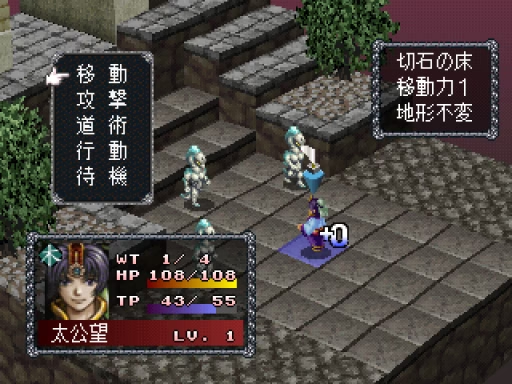
The first few battles put Hōshin Engi in familiar tactical RPG territory: units act according to speed, then spend their turns moving, attacking, using skills, or reaching for items. If you enjoy the deliberate back-and-forth of the original Final Fantasy Tactics, the basic rhythm will feel immediately comfortable. Positioning is not just busywork here, because the map height gives every advance and bottleneck more weight.
What starts to click is the weapon proficiency system. Your character’s available abilities grow out of skill with the weapon type they have equipped, so development feels tied to how you actually use a fighter rather than to an abstract class shuffle. That creates a satisfying sense of commitment. You are not merely raising numbers, you are steering a warrior toward a broader combat toolkit.
Paopei treasures are the strongest reason Hōshin Engi has its own character. These magical pieces of equipment unlock powerful abilities capable of changing the shape of the battlefield, which can turn a familiar tactical problem into something less predictable. Between the linear story missions, you can send individual party members to train for experience and equipment. That downtime helps soften the pressure of a campaign that decides when new allies arrive, though it will frustrate you if you prefer total control over party-building from the start.
Graphics
The isometric battlefields are built from stacked gray stone platforms and skinny stairways, making elevation easy to read when units climb through a map. Pale blue-gray armored figures stand out beside a purple-clothed character, while dark green hanging vegetation breaks up the stone and brown-red emptiness falls away beyond the arena. The stepped layouts look suitably dramatic, even if mottled stone textures run together and the tiny character faces have little detail.
Story
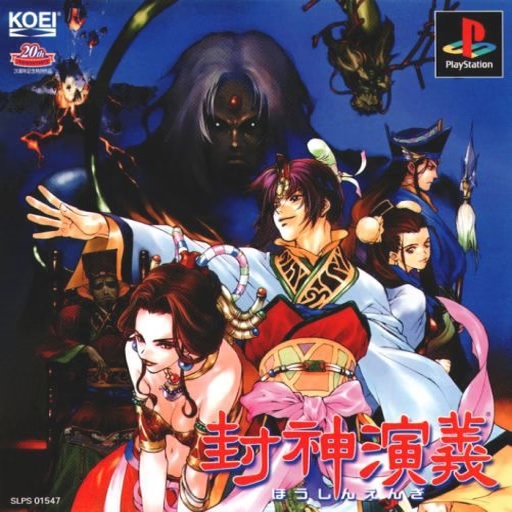
Hōshin Engi adapts the Chinese classic Fengshen Yanyi, also known as Investiture of the Gods, and puts you in the role of the monk Taigong Wang. His objective is clear: gather warriors capable of opposing King Zhou of the Yin Dynasty and the king’s consort, Daji. It is a strong foundation for a campaign of recruitment, conflict, and escalating supernatural tactics.
The story moves in a linear sequence, and party members join as its events dictate. That structure gives the adventure direction, which suits a tale centered on Taigong Wang assembling the right people for a larger confrontation. You are guided through a specific version of this epic rather than dropped into a sprawling sandbox.
That focus comes with a tradeoff. The narrative progression leaves less room to define your own route or recruit on your own terms, but the training breaks ensure the party does not simply sit still between major events. If Chinese mythological fantasy is the draw, the setting gives the tactical framework more flavor than another generic medieval war.
Overall Experience
Hōshin Engi is not trying to replace its famous tactical RPG contemporaries. It earns attention by taking a recognizable isometric, turn-based format and anchoring character growth in weapon proficiency, then letting paopei disrupt the usual assumptions about map control. That combination gives battles a distinct strategic texture once your team begins to develop.
The rough spots are tied to its age and its restrictions. Small unit details can be hard to make out, and the linear party progression means you need to work with the people the campaign hands you. Still, the map elevation is clear where it counts, and the between-mission training gives you a practical way to prepare rather than simply hoping the next battle meets your current strength.
Give it a chance if you want a focused PlayStation tactical RPG that rewards patience and a willingness to invest in a weapon-based team. The payoff is a campaign where your choices in equipment, training, and battlefield placement matter, with paopei serving as the extra twist that keeps its tactics from feeling entirely borrowed.


Reviews
There are no reviews yet.