 Retro Replay Retro Gaming History, Reviews & Emulation
Retro Replay Review
Gameplay
The first few minutes are disarmingly simple: fit pieces together, finish the picture, beat the other side. Then the ordered piece supply starts to matter. You cannot always wait patiently for the exact shape you want, so there is a real rhythm to recognizing where a newly delivered piece belongs and committing before your opponent gains ground. It makes jigsaw solving feel more immediate than it has any right to.
Power-ups are the crucial bit of spice. Since they can hinder the opposing player, a match is not merely two people solving identical tasks in parallel; it becomes a little meaner and much more social. Winning a close round after interrupting a rival at the right time is satisfying, while being on the receiving end can be irritating in exactly the competitive way the game intends. Bring someone who can laugh off a setback rather than someone expecting a meditative puzzle night.
There is plenty to work through alone as well. The 150 puzzles span photographs and illustrations, and each can be tackled at 24, 96, or 150 pieces. That range lets you start with quick, low-pressure boards before committing to a longer assembly job. Still, the regular one-player mode exposes the game’s more ordinary side: without the race and interference, it is a solid digital jigsaw library rather than an especially novel puzzle experience.
The two battle modes supporting up to four players give it the right party-game use case. It is a niche kind of multiplayer—everyone needs to enjoy piecing together images under pressure—but it creates competition without demanding quick fighting-game reflexes. If that sounds like your group, Jigsaw Island has a sharper hook than its gentle subject matter suggests.
Graphics
The puzzle selection mixes photographs with illustrations, so the boards do not blur into one long run of similar-looking images. The real visual pleasure is seeing a scattered field gradually resolve into a complete picture, whether you are playing a compact 24-piece round or working through 150 pieces.
Story
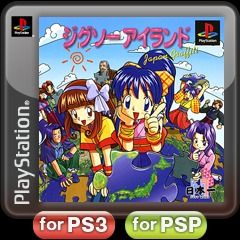
In the Japanese release, Asuka and Akira are young girls from the Japanese Kingdom trying to climb the ranks of their school’s Puzzle Association. It is a suitably light frame for a game about competitive jigsaws: school rivals lead into matches, and the stakes remain centered on getting better at the club’s chosen pastime.
The progression from students to teachers gives the story mode a useful sense of escalation. It answers the practical question a single-player campaign needs to answer—why keep playing another puzzle battle?—without pretending the premise is more dramatic than it is.
Do check which version you are buying. The international release, Jigsaw Madness, removes this story mode entirely and retains the solo and battle options. That does not damage the core competitive puzzle play, but anyone drawn to Asuka and Akira’s climb through the association should seek the Japanese version.
Overall Experience
Jigsaw Island: Japan Graffiti is easy to underestimate. A jigsaw game with arcade rules sounds like a novelty, yet the ordered pieces and opponent-hindering power-ups give every round enough tension to make it work. The payoff is strongest when you have a rival beside you and both of you can see a finish coming together.
It will not replace a deep strategy game or satisfy someone who only wants the calm, private ritual of assembling a picture at their own pace. The competitive rules deliberately poke at that calm, and the solo mode cannot fully replicate the spark of a close match. But the large puzzle count and adjustable piece totals mean there is more staying power here than a single party session.
Give it a chance if you enjoy oddball PlayStation-era puzzle ideas and can recruit a friend for a few rounds. The blend of cozy image assembly and petty competitive interference is specific, silly, and genuinely effective. For the right pair or small group, this is one of those games that turns an apparently sleepy activity into a surprisingly animated contest.


Reviews
There are no reviews yet.