 Retro Replay Retro Gaming History, Reviews & Emulation
Retro Replay Review
Gameplay
Sokoban Basic is the kind of puzzle game that makes you feel clever one minute and spectacularly careless the next. You push boxes toward marked areas, planning around walls and limited space, but you cannot pull a box out of a bad position. That single restriction turns even a small board into a tight little problem: every push matters, and the move that looks helpful right now may quietly ruin the solution.
The opening pull comes from how quickly the objective is understood. You are not learning a pile of systems before the puzzles begin; you are already making meaningful decisions. Soon, though, the right habit clicks into place: stop treating each crate as an isolated task and start thinking about order. Which box has to reach a corner first? Which lane must stay open? When should you leave a marked area empty so you can cross behind it? The best moments come when a board that seemed hopeless suddenly becomes legible.
Frustration is part of the package, because a deadlocked box usually means retracing your steps or starting the challenge again. This is not a game for impatient poking around. It asks you to pause before committing, notice the spaces a box can never escape, and accept that solving a puzzle often begins with recognizing what must not be pushed yet. If that sounds satisfying rather than exhausting, its stern design remains wonderfully direct.
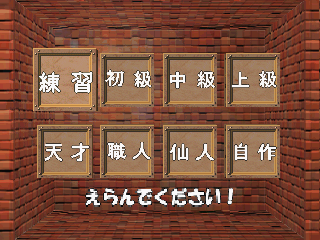
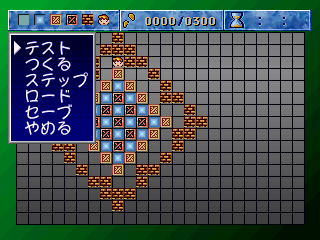
There are eight difficulty levels with 40 challenges in each, so the game has a substantial 320-puzzle runway. That quantity matters because Sokoban problems live or die by their layouts, and the gradual climb gives you room to build the planning discipline the harder boards demand. The puzzle editor is the other major draw: once you understand the rules deeply enough, making a box arrangement that traps somebody else can be almost as rewarding as escaping one yourself.
Graphics
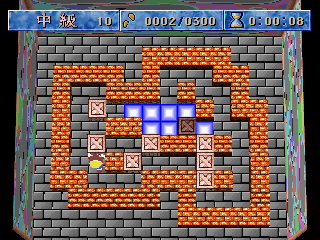
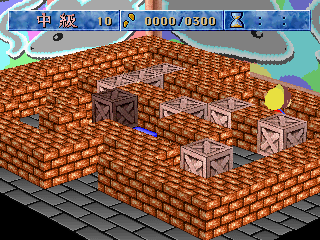
The top-down puzzle view is a natural fit for Sokoban Basic. You can see the boxes, marked destinations, and the routes around them at a glance, which is crucial when a solution depends on preserving one narrow passage or leaving room to maneuver.
Story
Sokoban Basic keeps its focus on the board in front of you. There is no narrative distraction between you and the next box-moving problem, so the rhythm is simple: study the layout, commit to a plan, and either enjoy the breakthrough or learn from the mistake.
That lack of story suits the game’s old-school puzzle discipline. The tension comes from spatial consequences rather than characters or plot twists; a box against the wrong wall can be more alarming than any dramatic cutscene when it means you have just invalidated ten careful moves.
If you need a campaign to pull you forward, this bare-bones structure may feel dry. If you enjoy puzzles that create their own miniature dramas—one final crate, one blocked route, one last chance to leave yourself space—the boards supply their own stakes.
Overall Experience
Sokoban Basic succeeds because it does not dilute a great puzzle idea. Its rules are easy to explain, but the solutions reward patience, foresight, and the willingness to restart without blaming the game for a trap you created yourself. You can settle into a quick board, then find yourself spending far longer than intended trying to rescue a single awkward arrangement.
The 320 challenges make this a strong fit for anyone who wants a long stretch of deliberate, brain-first play rather than reflex-heavy action. Difficulty will naturally be a dividing line: you need to enjoy thinking several pushes ahead, because blind experimentation becomes costly as layouts tighten. The editor sweetens the deal for puzzle tinkerers who want to keep exploring the same elegant rules from the designer’s side.
This is an easy recommendation for dedicated Sokoban fans and for newcomers curious about why the format has endured. Give it a chance if you want clean, uncompromising logic puzzles with real bite. Skip it only if repeated restarts and careful pre-planning sound more like homework than fun.


Reviews
There are no reviews yet.