 Retro Replay Retro Replay gaming reviews, news, emulation, geek stuff and more!
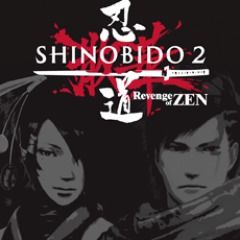
Retro Replay Review
Gameplay
The first hour makes a strong case for Shinobido 2. Zen is not built to trade blows with every guard in front of him, so you quickly learn to treat each mission as an infiltration problem instead of an action brawl. That weakness is a strength when the stealth clicks: you watch patrols, find a route through a large map, leap over trouble, and get out before a messy fight turns a clean job into a scramble.
Zen’s high, long jumps give the game its best movement moments, and the later glide ability expands your options further. Palaces, towns, villages, and mountain areas are large enough to encourage detours rather than a single prescribed path. You can buy supplies, find loot from guards, or make your own tools through crafting. Health-boosting potions are useful insurance, while poisoned sushi, bombs, and mines let you prepare a more devious solution when slipping past everyone is not enough.
The larger faction system is clever, even when the individual jobs blur together. You take semi-random contracts for three competing daimyo, and success can improve one side’s food, intelligence, or military position while damaging another’s. Your standing changes with those decisions, and a weakened ruler can eventually become someone you protect or assassinate. It gives routine contracts consequences, so an ox-cart attack or a rescue is more than filler on paper.
In practice, though, there is a lot of repetition between the story beats. Theft, abduction, escort, bodyguard, rescue, and elimination missions all fit the stealth framework, but a constant stream of them can make progress feel stalled. Story missions unlock through faction work and add boss fights, yet they largely play like the regular assignments. The open-ended ability to keep taking work while more than one warlord remains is interesting, but it can also make the game feel like it is delaying its own revenge tale.
Graphics
The game’s ancient-Japan maps give you practical places to stalk through: palaces and cities sit alongside villages and mountainous regions, with enough room to exploit Zen’s jumping and gliding. The third-person view suits that vertical movement well, because you need to judge rooftops, ledges, routes around guards, and possible exits at a glance.
Story
Zen’s personal goal is direct and appropriately grim. Six months after the earlier game, he is hunting Shu the Cypress, the man who killed Zen’s girlfriend and is seeking the Tenma Mirrors to open the gates of hell. It is a solid revenge hook, and the race to collect the mirrors gives the otherwise shifting political conflict a clear reason to matter.
The province-wide war complicates that hunt in a useful way. Ichijo, Lady Kihan, and Kazama all offer work, and Zen’s choices can reshape their fortunes rather than merely moving down a linear list of missions. That makes you feel less like a spectator in Utakata-Province and more like an opportunist exploiting a civil struggle for a personal end.
Kaede adds another wrinkle once she joins Zen. As the living mirror image of his girlfriend, she is closely tied to the game’s central mystery, and she becomes playable outside the main story missions. The premise is stronger than the game’s pacing: the revenge plot has purpose, but the need to complete faction work before story missions arrive can dilute its urgency. For background and release history, see Shinobido 2: Revenge of Zen.
Overall Experience
Shinobido 2 is easiest to enjoy when you want a portable stealth sandbox rather than a tightly driven campaign. Its best missions let you use Zen’s mobility, avoid direct combat, and choose whether a crafted trick or a careful route is the safer answer. The faction war adds a welcome strategic layer, since helping one daimyo can genuinely hurt another and eventually change who survives.
It is also a game that asks for patience. The mission pool has variety in objective names and political outcomes, but the steady loop of contracts can become a grind, especially if you are waiting for the next story development. Boss fights give the main missions a different flavor, yet they do not fully solve the uneven pacing.
If you miss the deliberate, vulnerable style of ninja stealth associated with Tenchu, this is worth a look. You should go in ready to make your own fun from routes, faction choices, traps, and repeatable jobs—not expecting Zen’s revenge to move at a relentless pace. The payoff is a distinctive stealth game with real systemic ambition, held back by repetition that it never quite turns into tension.


Reviews
There are no reviews yet.