 Retro Replay Retro Replay gaming reviews, news, emulation, geek stuff and more!
Retro Replay Review
Gameplay
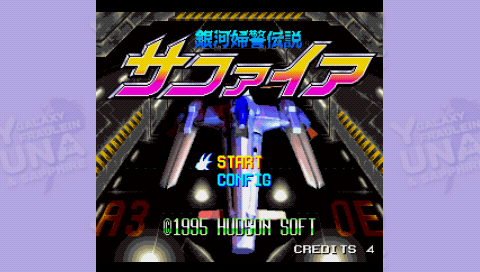
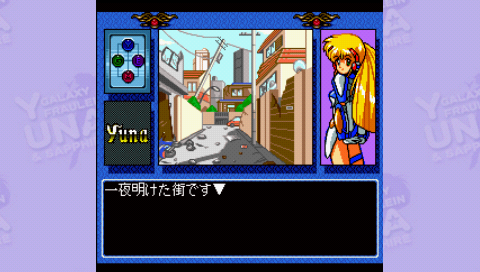
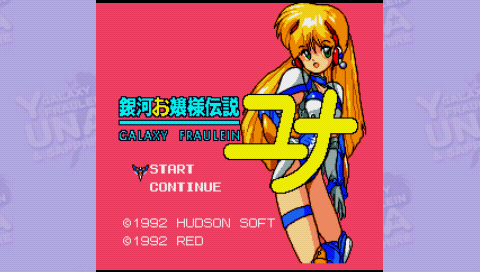
The first hour with this collection starts with a straightforward but satisfying choice: begin at the 1992 Ginga Ojōsama Densetsu Yuna, skip ahead to its 1995 follow-up, or sample Ginga Fukei Densetsu Sapphire. Starting with Yuna is the right call if you want the set to feel like a journey rather than a grab bag. This is a collection built around a connected group of PC Engine games, and playing them in sequence gives the package its reason to exist.
What clicks is the sense of access. You are not buying a single retrospective curiosity; you have three entries tied to the same series under one roof. Yuna 2: Eien no Princess has the clearest place in that progression, while Sapphire broadens the package beyond simply pairing an original with a sequel.
That focus also makes the audience clear. If the Galaxy Fräulein Yuna name already catches your attention, this is a far more inviting proposition than picking only one entry and hoping it represents the whole. If you want a PSP compilation with a shared subject instead of a random assortment, the curation is the payoff.
Graphics
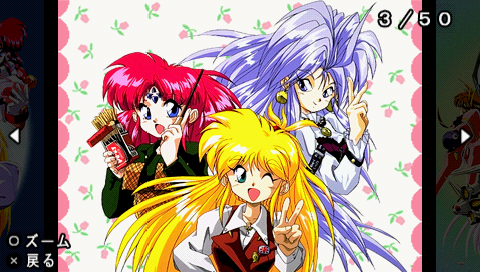
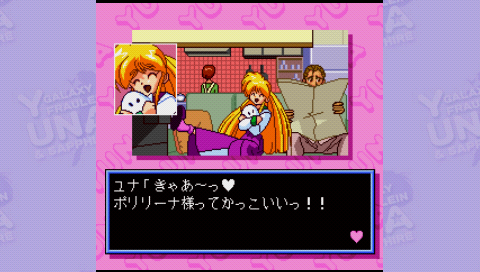
The most concrete visual extra is the gallery of production and promotional art. It is a welcome inclusion because it lets you spend time with the series’ artwork outside the games themselves, giving the package the feel of a small archive as well as a playable compilation.
Story
The collection’s narrative pull comes from its connected-series format. Ginga Ojōsama Densetsu Yuna and Ginga Ojōsama Densetsu Yuna 2: Eien no Princess immediately invite a start-to-finish approach, and the presence of Ginga Fukei Densetsu Sapphire makes the set feel broader than a simple two-part story.
Begin with the original if story continuity matters to you. A sequel is most rewarding when you have lived with the earlier entry first, and the collection conveniently puts that decision in your hands without separating the games across different releases.
The art gallery adds a useful companion piece to that progression. Production and promotional material can make a series feel more tangible between play sessions, especially when you are working through several related titles instead of dipping into one game for an evening.
Overall Experience
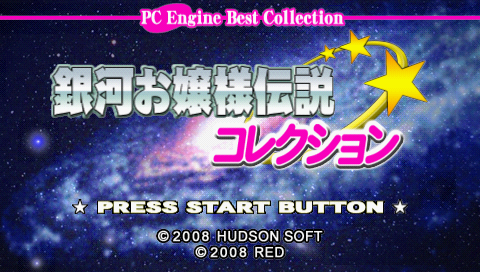
PC Engine Best Collection: Ginga Ojōsama Densetsu Collection succeeds because it has a point of view. Hudson did not merely gather three PC Engine titles; it assembled a compact Galaxy Fräulein Yuna package that lets you follow the original, its sequel, and a connected 1995 game together.
Its strongest quality is convenience with context. The original Ginga Ojōsama Densetsu Yuna dates to 1992, while Yuna 2 and Sapphire arrive from 1995, so the compilation brings together games from different points in the series’ PC Engine life on PSP. The gallery is a modest but smart addition that reinforces the archival angle.
Give this a chance if you want to spend real time with the Yuna series rather than merely own one representative title. The collection is tightly targeted, and that is precisely why it works: it knows the specific corner of PC Engine history it wants you to explore.


Reviews
There are no reviews yet.