 Retro Replay Retro Gaming History, Reviews & Emulation
Retro Replay Review
Gameplay
The first few runs make Sonic Rivals 2’s core idea immediately clear: every stage is a race, and the finish line only matters if you cross it ahead of somebody else. That small twist changes how you approach a platformer. You are still pushing forward, collecting power-ups, and looking for the cleanest route, but every mistake feels sharper when a rival is gaining ground beside you.
The power-ups add some needed friction to the sprint. Using one to disrupt your opponent can turn a close race around, and being on the receiving end creates the kind of irritation that makes you want an immediate rematch. It is a simple competitive loop, not a dramatic overhaul of Sonic platforming, but it gives stages a more direct purpose than a solo dash to the exit.
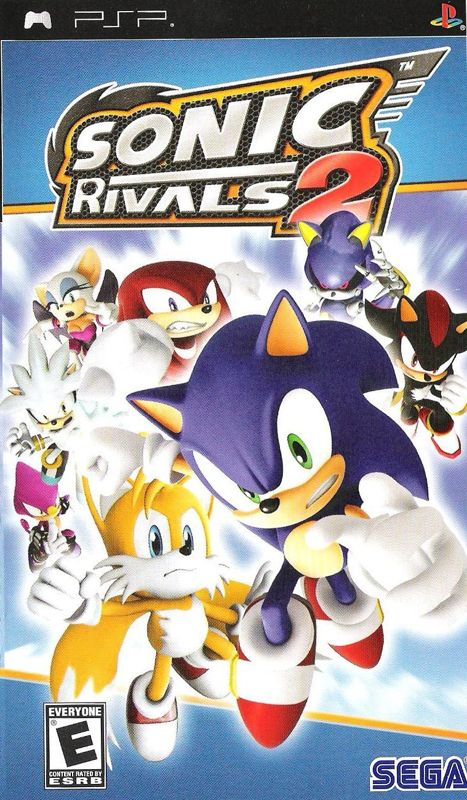
Boss stages preserve that same competitive angle: beating the boss is not enough if your rival gets the job done first. That is a smart fit for the game’s premise, though it also means frustration can build when a run goes wrong and the rival capitalizes. The larger cast—now including Tails, Espio, and Rouge alongside returning characters—helps the package feel less narrow, while collectible cards and their associated challenges offer reasons to revisit stages.
Freeplay is one of the most useful additions because it lets you return to cleared stages without the mandatory race. It will suit you if you occasionally want to enjoy the platforming on its own terms. Multiplayer also has more variety than a straight race, with Knockout, Ring Battle, King of the Hill, Capture the Chao, and Tag joining the expected Race mode. That breadth gives the game a better chance of becoming a regular handheld group game rather than a brief solo diversion.
Graphics
Sonic Rivals 2 uses 2D gameplay within a 3D environment. The side-view action keeps the important race easy to follow: your character, your rival, and the route to the finish are the focus even as the world is built with depth around them.
Story
Story is not the reason to pick up Sonic Rivals 2. Its identity comes from the competitive setup of racing another character through each stage, with the roster supplying different familiar faces to take into that contest.
That light framing is appropriate for a game built around replaying runs and chasing better results. You are here for the next race, the next boss contest, or another challenge tied to the card collection—not for a plot that carries the experience between levels.
If you want a Sonic game with a substantial narrative hook, this is unlikely to be the one that changes your mind. If you are content with a brisk excuse to put rivals on the same course, it stays out of the way.
Overall Experience
Sonic Rivals 2 is easy to recommend with a qualifier: you need to enjoy the tension of being raced, not merely tolerate it. The game’s best moments come when you know the stage well enough to push harder, use a power-up at the right time, and steal a win that seemed lost. Its worst moments come from that same premise, when an interruption or mistake turns a promising run into another restart.
As a sequel, it wisely expands rather than abandons the original formula. More playable characters, Freeplay, collectible challenges, and a fuller multiplayer selection make this a more flexible game, even though its central structure remains familiar. The additions matter because they give you alternatives when head-to-head racing starts to wear thin.
At 6.2, it lands in the middle for good reason. There is real handheld fun in its quick competitive platforming, particularly with another person nearby, but the formula has limits and its pressure can become repetitive. Give it a chance if a Sonic race where you can actively mess with the other runner sounds more exciting than a standard run to the goal.


Reviews
There are no reviews yet.