 Retro Replay Retro Gaming History, Reviews & Emulation
Retro Replay Review
Gameplay
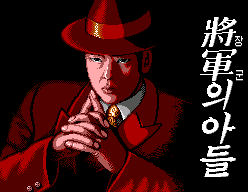
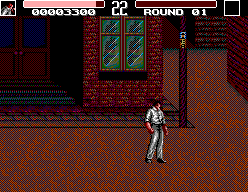
Janggun-ui Adeul gets to the point quickly. You guide Kim Doohan through side-scrolling stages, knocking out every enemy in the way before you are allowed onward. That familiar brawler loop has an honest, no-nonsense pull: there is always another opponent in front of you, another short stretch to clear, and a boss waiting at the end.
The move set is small but sensible. Punching and kicking are your fundamentals, and jumping can be combined with those attacks for a little more variety. It is not a game that buries you in systems; instead, it asks you to make the basic actions count while dealing with groups. That makes it approachable from the first minute, especially if you enjoy games where learning the immediate rhythm matters more than studying a long command list.
Frustration can set in if you need constant surprises from a beat-em-up. The rule that every enemy must be defeated before progress opens up means the stages are built around repeated confrontations rather than exploration or detours. Still, the boss battles give the march a useful punctuation mark. You get a clear test after each run of regular fights, which helps the straightforward structure feel purposeful.
Graphics
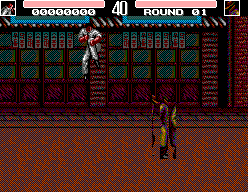
The game uses a 2D side view suited to its street-fighting action. Enemies and Kim Doohan stay on the scrolling playfield together, keeping the immediate question—who needs to be hit next—easy to grasp.
Story
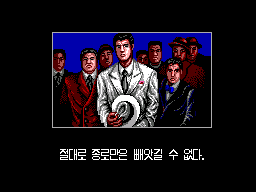
The story carries more historical weight than the average excuse for arcade punching. Set in 1920s Korea under Japanese occupation, it follows Kim Doohan from beggar and street punk to the discovery that he is the son of a celebrated general. That is a strong foundation for a rise-from-the-streets brawler.
More importantly, Doohan’s fights are framed as part of a larger effort to unite people from Korea’s lower social circles against Japanese oppression. The premise gives the action a political edge and ties the game directly to the Korean film The General’s Son. Even in a genre built around clearing screens of enemies, that context makes the central struggle feel less interchangeable.
Do not come here expecting the narrative to displace the fighting as the main attraction. Its role is to give each advance through the streets a cause, and it does that effectively. If the film’s premise interests you, the adaptation’s setting and hero provide a worthwhile reason to choose this brawler over a more anonymous one.
Overall Experience
Janggun-ui Adeul is a lean, traditional beat-em-up that knows exactly what it wants you to do: fight through each stage, use a compact set of attacks, and take down a boss. The first hour’s draw is immediate because there is almost no barrier between you and the action. Whether it holds you depends on how much you enjoy extracting satisfaction from simple combat patterns.
The historical premise is the game’s clearest distinguishing strength. Kim Doohan’s journey and the occupied-Korea setting give the repeated brawls a real sense of stakes, rather than leaving them as disconnected arcade scuffles. That does not transform the mechanics, but it does make the game easier to remember.
Give it a chance if you have a taste for direct 2D brawlers and want one with a specific Korean film-inspired backdrop. Skip it if you need deep fighting systems or a changing assortment of objectives to stay engaged. For the right mood, its stripped-down march from street fight to boss fight is a satisfying, focused throwback.



Reviews
There are no reviews yet.