 Retro Replay Retro Gaming History, Reviews & Emulation

Retro Replay Review
Gameplay
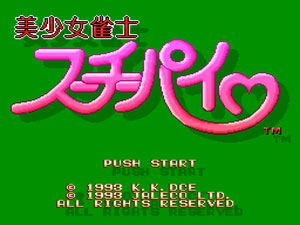
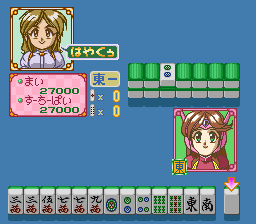
The first few hands ask a simple question: do you want to play mahjong, or do you just want to hang around an anime heroine? Bishōjo Janshi Suchie-Pai is most honest about that divide. The Suchie-Pai premise is a cheerful hook, but the table is where you spend your time, making tile decisions and trying to assemble winning hands against a lineup of rivals.
If mahjong already clicks for you, the character framing gives the matches a welcome sense of occasion. You are not just grinding through anonymous rounds; you are playing as a transforming heroine and taking on a roster of opponents. That is enough to make a traditionally methodical game feel more playful without changing what makes mahjong satisfying: patience, pattern recognition, and the occasional moment when a hand finally comes together.
Newcomers should be realistic about the barrier to entry. Mahjong has enough rules and hand-reading to punish anyone hoping for a breezy button-masher, and the anime angle does not remove that learning curve. Stick with it long enough to understand why particular tiles matter, though, and the tension of deciding what to discard becomes the point rather than a nuisance.
Graphics
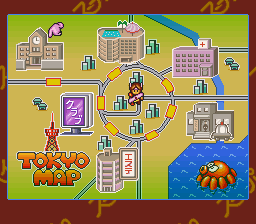
The game is rooted in an anime/manga look, with Kyoko’s Suchie-Pai identity and a cast of young female opponents supplying the color around the mahjong table. Its top-down board-game viewpoint suits the main event: you need to keep your attention on the tiles and the state of the hand.

Story
This is a premise, not a sprawling dramatic campaign: eighteen-year-old Misaki Kyoko can transform into Suchie-Pai, and Suchie-Pai challenges other women to mahjong. That knowingly odd setup is exactly the charm. It treats a formal tabletop contest as the arena for a superheroine-style lead.
Do not come expecting the plot to carry you through losses or teach you who everyone is beyond the basic setup. The rivals primarily give the matches personality and a reason to keep moving forward. For this kind of game, that is a sensible use of story: a light wrapper around the table action rather than a distraction from it.
If the magical-girl flavor is your entry point, the comparison to Bishōjo Senshi Sailor Moon is a useful reminder of how differently anime heroines can be used in games. Here, the central fantasy is less about action and more about outthinking the opponent across a mahjong hand.
Overall Experience
Bishōjo Janshi Suchie-Pai is easy to recommend to a particular kind of retro player: someone who likes mahjong and appreciates a silly, upbeat anime frame around it. The game does not need a huge concept when the core contest already has depth; Suchie-Pai’s job is to make another match feel a little less anonymous.
It is much harder to recommend as a gateway for anyone with no patience for tile games. The novelty is real, but it cannot carry the experience if the rhythms of discarding, waiting, and reading possible hands leave you cold. You will get more from it by meeting it on its own terms than by treating it as a conventional anime adventure.
For genre fans, that narrow focus is a strength. There is a pleasingly specific retro-game energy in a transforming heroine whose main weapon is competence at mahjong. Once the rules start making sense, the premise stops feeling like a joke pasted onto a board game and becomes a fun reason to play one more round.


Reviews
There are no reviews yet.