 Retro Replay Retro Gaming History, Reviews & Emulation
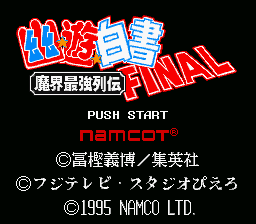


Retro Replay Review
Gameplay
The first few fights are about learning the rhythm of light versus hard punches and kicks, then finding out which special-move inputs suit the character you chose. That is a sensible foundation for a 2D fighter: you can start throwing hands immediately, but there is a reason to stay with a fighter long enough to check their moves and build some consistency.
The roster is the main draw. Yusuke, Kurama, Kuwabara, and Hiei are here, but the game does not stop at the obvious heroes. Sensui and Super Sensui, Shigure, Shura, Demon Yusuke, Demon Fox Kurama, Raizen, Yomi, and Mukuro give the lineup a satisfying late-series focus. If you came specifically for the season 3 and 4 material, this is much more enticing than a game that merely waves at those arcs. Yakumo is also tucked away as a secret-code unlock, a nice extra for fans of Poltergeist Report.
Training is where the fighting system has the best chance to click. Being able to select limited or unlimited energy lets you either rehearse specials freely or practice under match-like constraints, and choosing the location adds a little control to your sessions. Check the move list before a fight rather than hoping to stumble onto everything; the game explicitly makes that information available, and it is the quickest route to getting more out of your chosen combatant.
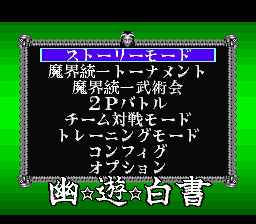
The mode list gives you practical ways to play. Story Mode is the natural starting point for solo fans, while the Demon World tournament and Elimination Match suit a run of consecutive bouts. Team Battle and two-player matches are the better choices when you want to compare favorites with another Yu Yu Hakusho fan. It is not trying to bury you in systems; it puts its characters and match formats up front.
Graphics
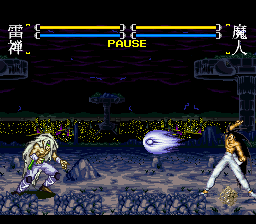
This is a 2D, side-view fighting game, so matches keep both combatants in a direct horizontal face-off. The selectable fighters span human heroes, demon forms, and later-series opponents, giving the character lineup more visual variety than a roster limited to the original team.

Story
Story Mode draws from seasons 3 and 4 of Yu Yu Hakusho, which is exactly where the game’s roster points: Sensui, Raizen, Yomi, Mukuro, and the transformed versions of Yusuke and Kurama are not token inclusions. The adaptation’s focus is clear before you even enter a match.
That focus makes this a better fit for someone already invested in the anime than for a newcomer hunting for an introduction to the series. You will get more out of seeing favorite later-era fighters gathered in one game than from treating the story material as a substitute for the show.
Yakumo’s hidden appearance is a small but welcome nod beyond the main anime seasons. It does not change the game’s core emphasis, but it rewards the kind of fan who recognizes the movie connection and enjoys a roster secret with some context behind it.
Overall Experience
Yū Yū Hakusho Final: Makai Saikyō Retsuden succeeds on the strength of its focused fan service and useful selection of modes. A 13-character lineup with distinct transformed and late-series picks, plus a hidden bonus fighter, gives you enough choices to avoid settling into one automatic matchup.
The frustration, if it arrives, is likely to come from expecting the game to do all the work for you. Specials require specific inputs, so a few minutes in training and a look at the pre-fight command information are not optional busywork; they are how you move beyond basic attacks and start seeing what each fighter can do.
For a Yu Yu Hakusho fan with an SNES and a fondness for straightforward side-view fighters, the payoff is there. Start with a character you already like, spend time with their commands, then take them through Story Mode or the Demon World tournament. If your interest is purely in deep competitive fighting-game systems rather than this particular anime roster, its licensed appeal will matter far less.


Reviews
There are no reviews yet.