 Retro Replay Retro Replay gaming reviews, news, emulation, geek stuff and more!
Retro Replay Review
Gameplay
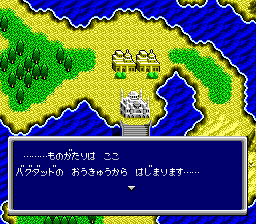
The first hour asks you to settle into a very familiar rhythm: move Sindibad’s party across a top-down world map, choose destinations marked as towns or dungeons, and prepare for random encounters. There is comfort in how immediately legible it all is. You know why you are travelling, you know what a town is for, and you know that the next purchase or level-up is meant to make the next stretch safer.
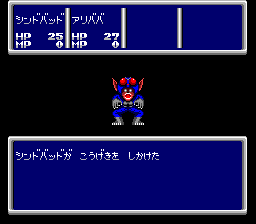
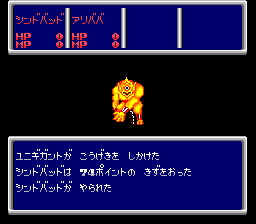
Combat shifts to a first-person, turn-based view and follows the classic RPG loop of fighting for money and experience. Better weapons and armor give the journey its forward momentum, while automatic leveling keeps character growth uncomplicated. That makes it approachable for anyone who wants an uncomplicated period RPG, but it also means the game leans heavily on the player’s affection for repeated battles and incremental upgrades.
The linear structure is both its strength and its limitation. You are not asked to untangle a sprawling web of objectives; instead, you follow Sindibad’s rescue quest from place to place. That focus gives the game a clean sense of direction, though veterans who need tactical surprises or a more flexible adventure may find the formula too rigid. Its rewards come from patiently working through familiar RPG routines, not from overturning them.
Graphics
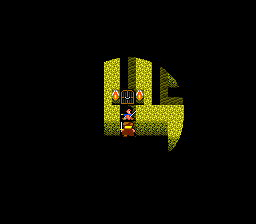
Exploration uses a diagonal top-down world map, with towns and dungeons shown as icons, while battles are viewed from the party’s first-person perspective. It is a functional split: the map makes the next destination easy to identify, and the battle view keeps attention on turn order and commands rather than on moving characters around an arena.
Story
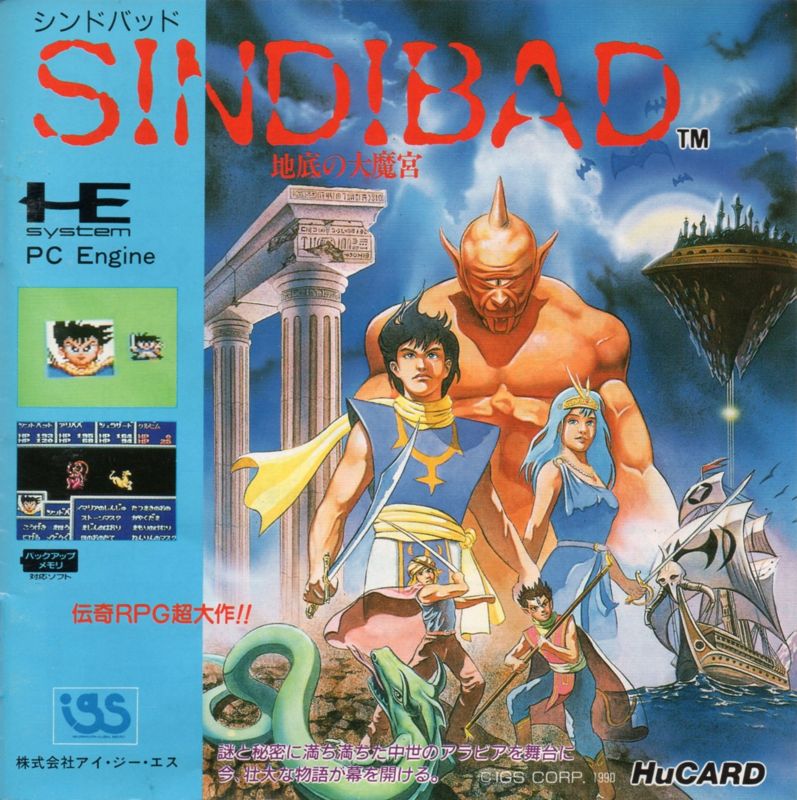
Sindibad’s quest has the direct, storybook urgency that an early RPG needs. Princess Scheherazade has been kidnapped, a reward and her hand in marriage await whoever saves her, and Sindibad leaves immediately with Alibaba. You never have to hunt for a reason to leave town: the goal is planted clearly from the opening.
The most enjoyable part is the game’s willingness to remix names from 1001 Nights rather than faithfully adapt one tale. Sindibad is Alibaba’s son here, and Scheherazade is a princess at the center of a rescue story. That is a playful use of a familiar mythic library, and it gives the adventure a different flavor from the usual medieval fantasy kingdom.
Still, the story is built to carry a linear RPG campaign, not to challenge what you expect from a princess-rescue premise. Go in for the Arabian Nights-inspired cast and a clear adventure hook, rather than expecting a faithful retelling of Sinbad or a densely branching narrative.
Overall Experience
Sindibad: Chitei no Daimakyū is easy to understand and easy to categorize: a traditional Japanese RPG wearing an appealing 1001 Nights costume. The familiar loop of travel, random battles, shopping, and automatic growth has an honest simplicity. When you want that kind of dependable progression, it can be pleasantly relaxing.
Its biggest hurdle is how little it seems interested in departing from that template. The same straightforwardness that makes the game welcoming can turn into frustration if frequent random fights and a linear route feel like chores rather than the point of the adventure. The setting helps it stand apart, but it does not transform the underlying structure.
Give it a chance if a compact, old-fashioned RPG journey through a remixed Arabian Nights world sounds comforting. Skip it if you need unusual combat systems, open-ended questing, or a story that moves beyond its simple rescue setup. For the right retro RPG mood, it is serviceable and likable; for everyone else, it is a very conventional trip.



Reviews
There are no reviews yet.