 Retro Replay Retro Gaming History, Reviews & Emulation


Retro Replay Review
Gameplay
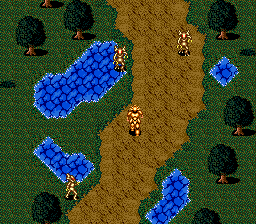
The first thing that separates Susanoō Densetsu from many RPGs of its era is that it asks you to pay attention before a battle even starts. Enemies wander visibly across the world map instead of appearing from nowhere, so you can try to dodge them, steer into safer routes, or deal with the fact that they may surround you. That makes travel feel less like an interruption between destinations and more like a constant small tactical problem.
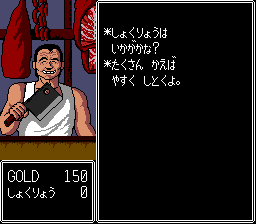
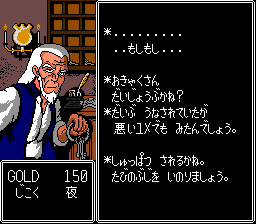
The day-and-night cycle is another genuinely useful complication rather than background flavor. Monster appearances change with the time of day, while towns run on schedules and shops close at night. You have to think about when to travel and when to handle errands, which gives the world a pleasingly inconvenient sense of routine. It can be frustrating when you arrive somewhere at the wrong hour, but that friction also makes the journey feel more deliberate.
Combat takes place on a top-down field where you move freely in fast-paced turns. Movement and commands cost action points, so every step matters: rushing toward a target can leave fewer options for attacking or using an ability. The need to open a menu to pause a fight sounds awkward, and it likely makes early encounters feel hectic until the rhythm clicks. Once it does, the system has more bite than a simple line-up-and-select-command RPG.
Susa eventually travels with two companions and can hire mercenaries, adding more bodies to manage in battle. Leveling brings ESP powers, the game’s version of magic, so advancement is tied to expanding your tactical choices rather than merely raising numbers. This is an RPG for someone who enjoys making do with positioning, timing, and a party assembled under pressure.
Graphics
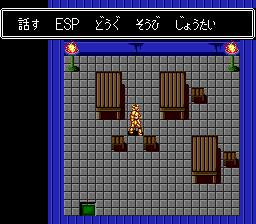
The game uses a top-down viewpoint for both world travel and its battlefields, which suits the emphasis on roaming enemies and maneuvering around opponents. Seeing monsters on the map gives danger a concrete shape: you can watch a group close in rather than simply wait for a random encounter to announce itself.
Story
This is not a gentle fantasy quest. Susa begins as an ordinary teenager who discovers he houses Susanoo, a destructive Japanese god, and the story opens after that power has already devastated the world. Evil spirits have been released into the ruins, leaving Susa to reckon with damage he caused while searching for Yukishiro and his other friends.
That premise gives the adventure a stronger emotional angle than a standard save-the-world setup. You are not setting out to prevent an abstract catastrophe; you are moving through the consequences of Susa losing control. The post-apocalyptic setting and the hero’s guilt fit each other cleanly.
It also continues a manga story from a cliffhanger rather than retelling its beginning. Fans of Go Nagai’s Susa no Oh have the clearest reason to seek it out, since they can follow Susa beyond the manga’s stopping point. Even without that background, the central conflict is direct enough to understand: find the people Susa cares about and find a way to repair an unthinkable mistake.
Overall Experience
Susanoō Densetsu is most compelling when its systems overlap. You are watching the clock, choosing a route around visible threats, reaching town before businesses close, and then fighting with movement constrained by action points. Few early Japanese RPGs build that many practical concerns into simply getting from one place to another.
The price of that ambition is that the game can ask for patience. Fast battles that require a menu command to pause, enemy groups that can hem you in, and time-sensitive town services all create opportunities for irritation. If you want frictionless dungeon crawling, this may feel demanding in ways that are not always comfortable.
But for a gamer drawn to odd late-1980s RPG experiments, it is easy to see why this one deserves attention. The licensed manga premise is memorable, yet the real payoff is an RPG willing to make its world behave on its own schedule and make you adapt. That is a sharper, more distinctive experience than its obscure status might suggest.


Reviews
There are no reviews yet.