 Retro Replay Retro Gaming History, Reviews & Emulation
Retro Replay Review
Gameplay
The first battle is likely to clarify Auto Crusher Palladium’s priorities fast: you watch your mech fight rather than throw punches yourself. That sounds like a small distinction until your carefully assembled machine loses. Then the urge to revisit the body, limbs, AI, weapons, and weight budget becomes the whole game. It is less a fighting game than a pre-fight engineering argument that gets settled in public.
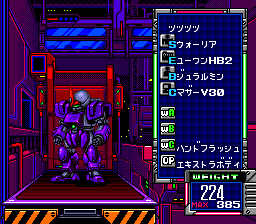
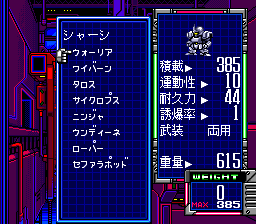
Its strongest idea is how many shapes that argument can take. You can build a humanoid robot, a more conventional machine, something that rolls on wheels, a flier, or a transforming design. The overall weight cap is crucial because it asks you to make a real choice instead of simply loading every powerful component onto one chassis. A build needs a purpose, and the enemy in front of you is the test of whether you found one.
That same commitment to automation will divide you. When a design fails, you cannot rescue it with quick reactions or a better combo; you have to diagnose the construction and try again. For anyone who loves iterating on a build and seeing whether the numbers and parts choices hold up, that is the point. If you want the immediacy of controlling a mech in battle, the hands-off matches can make the payoff feel remote.
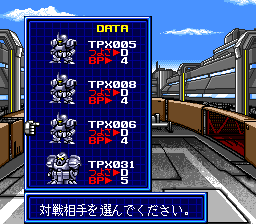
League mode gives the construction system a useful competitive frame by putting selected robot models into a tournament. It should be especially enjoyable with another person involved, since comparing designs and watching them meet is more interesting than merely admiring them in isolation. The mode fits the game because it turns each machine into a claim: this is the robot you believe can survive the bracket.
Graphics
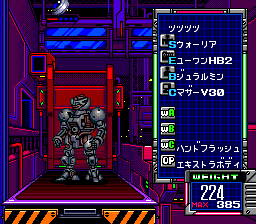
Combat uses a side-scrolling fighting-game view with HP bars, making the outcome of an automated duel easy to track at a glance. The most appealing visual hook is the variety of possible mech silhouettes: a humanoid build, wheeled machine, flying robot, and transforming design promise distinctly different-looking creations even before the match starts.
Story
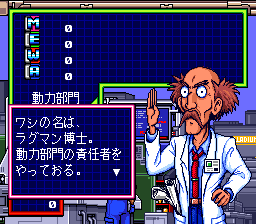
Auto Crusher Palladium puts its dramatic weight on the machine you create rather than on a narrated adventure. Your robot becomes the central character simply because every victory or embarrassing loss reflects choices you made in the workshop.
That creates a small but satisfying kind of personal story. A failed design is not just a defeat screen; it is evidence that your intended solution did not work, and a rebuilt mech marks the next chapter of that experiment.
The league tournament adds a clean competitive arc without needing much more. Pick models, enter the bracket, and let the machines make their case against one another. It is a story of rival designs rather than named heroes.
Overall Experience
Auto Crusher Palladium is a niche mech-builder with a refreshingly uncompromising premise: the fun is in construction, prediction, and revision, not reflexes. Its mix of component assembly, strict weight limits, and automatic battles can produce the wonderfully stubborn “I can fix this” loop that strategy-minded players know well.
It is also easy to see where frustration can set in. Watching a machine lose without being able to intervene asks you to accept failure as feedback rather than as a moment to seize control. The game rewards patience and curiosity; impatience will make its central idea feel like a barrier.
Give it a chance if designing a mech matters more to you than driving one, and if a tournament of self-made robots sounds like a better reward than a flashy duel. The payoff is the moment a revised build finally defeats the opponent that exposed its flaws. That is a modest thrill, but for the right kind of tinkerer, it is a real one.


Reviews
There are no reviews yet.