 Retro Replay Retro Gaming History, Reviews & Emulation
Retro Replay Review
Gameplay
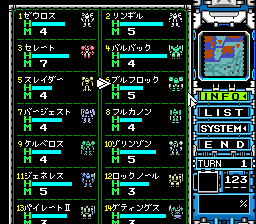
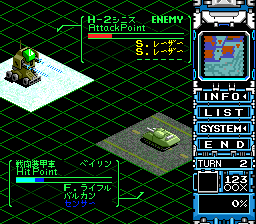
The first thing to understand about Vasteel 2 is that it wants you thinking like a commander, not performing like an arcade pilot. You move a rebel army through hex-based battles, line up encounters, and choose the weapon you want a unit to carry into a fight. That narrower focus gives each decision some weight: do you commit to a melee strike, or use the different laser options available to bipedal tanks? The game is asking you to read the board and pick the right tool before the fighting starts.
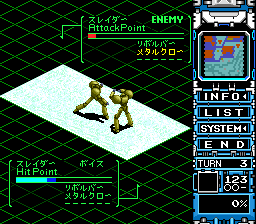
Combat then resolves automatically. If you came in hoping for the original Vasteel‘s action sequences, that change may sting; there is no last-second reflex test to rescue a bad tactical call. On the other hand, it makes the turn structure cleaner. Your satisfaction comes from setting up favorable engagements and watching the plan hold together, rather than bouncing between strategy and action.
The reduced emphasis on robot production and financial management is a sensible fit for the campaign’s more story-led direction. You are not being asked to babysit an elaborate war economy before getting to the robots. That makes it easier to settle into the game, though it also means strategy fans who live for deep resource management may find the campaign less demanding than its battlefield framing suggests. It works best when you enjoy careful unit placement and weapon selection more than spreadsheet-like planning.
Graphics
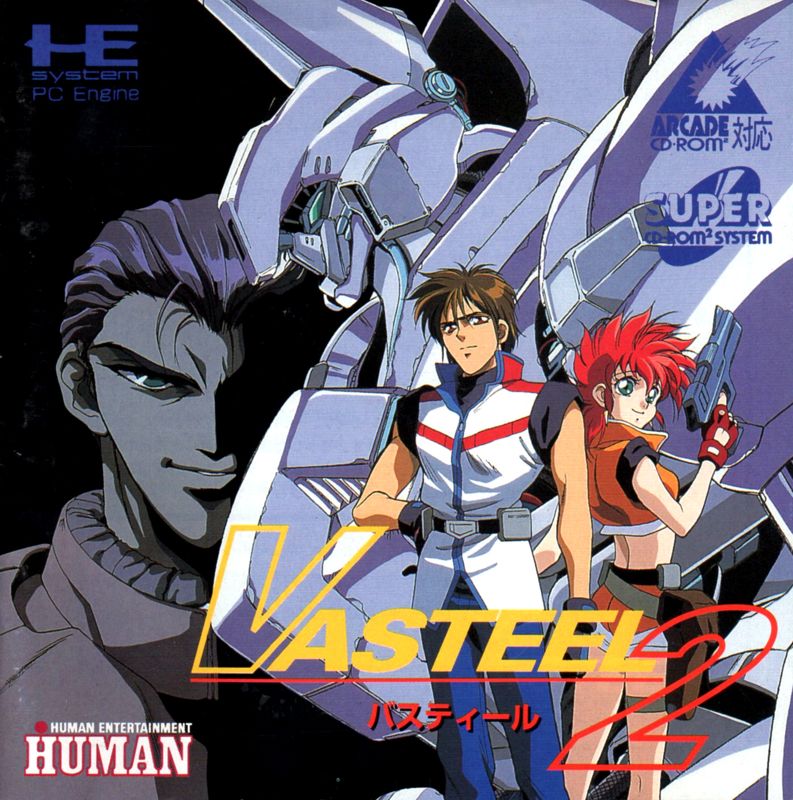
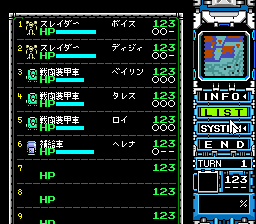
The look leans hard into anime and manga: giant robots carry the battles, while animated cutscenes give Voice and the rebellion a more character-driven face. The top-down hex battle view keeps the strategic layout in front of you, and the shift to animated story scenes helps break up the maps.
Story
Voice Knuckles is given an immediately understandable reason to fight. Emperor Agares attacks his planet, destroys his home, and kills his mother, turning a boy’s peaceful life with his mother and girlfriend Diggy into a revenge mission. It is broad, dramatic material, but it gives the campaign a human center that robot strategy games can sometimes lack.
The strongest choice here is that the story does not wait politely between missions. Characters talk during the larger battles, and scripted events can interrupt the usual rhythm of moving units and initiating combat. That keeps the war from feeling like a chain of disconnected scenarios. Even when the plot is operating in full melodrama, it gives you a reason to care about reaching the next map.
Despite the sequel title, this is not a continuation that demands homework. The setting returns to the same futuristic solar system and retains the conflict of giant robots, yet Voice’s fight is separate from the predecessor’s story. You can start here without feeling as though you have missed the crucial chapter.
Overall Experience
Vasteel 2 is a focused piece of 1990s mecha strategy: revenge, rebellion, hex maps, and machines trading blows under your command. Its biggest strength is commitment. Rather than splitting attention between action scenes, management systems, and tactics, it narrows the game around turn-based battles and pushes the drama through animated scenes and dialogue.
That focus will also draw a clear line between fans and skeptics. If automatic combat sounds like a loss of energy, the battles may feel too hands-off after you have made your selections. If you prefer strategy games that ask you to spend most of your time making the important call before the clash, the structure is easier to appreciate. The payoff is seeing a good setup resolve on your terms.
Give it a chance if a self-contained anime robot war with straightforward tactical priorities sounds more inviting than a systems-heavy strategy epic. The story has enough urgency to carry the maps, and the stripped-back management lets you get to the part that matters: directing a rebel army toward Agares and choosing how its machines fight.


Reviews
There are no reviews yet.