 Retro Replay Retro Gaming History, Reviews & Emulation
Retro Replay Review
Gameplay
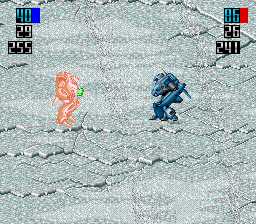
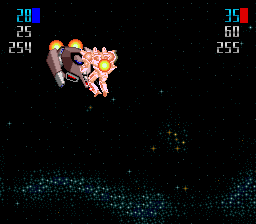
Vasteel opens as a recognizable hex-based war game: move your army across top-down maps, seize ground, capture enemy cities, and work toward wiping out the opposing force. Then the first clash changes the rhythm completely. Rather than simply watching a combat calculation resolve, you take direct control of your robot in an action battle, scrambling to line up shots while avoiding return fire. That jolt of responsibility is the game’s strongest idea, because every engagement asks whether you can back up your map decisions with quick reactions.
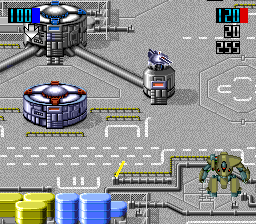
The strategic layer has enough pressure to make those fights matter. Factories create new robots, and you can build several in a turn, but money is limited. You cannot mindlessly flood every front forever, so city control and positioning carry real weight. A poor advance can leave a valuable unit exposed; a timely production choice can shore up a weak line. The basics are easy to understand, but the mix of territory, finances, and unit placement gives each map a useful sense of momentum.
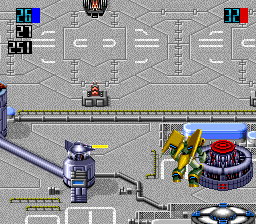
Capturing or destroying facilities also refuses to be automatic. Send a robot into a city or factory and the defender operates stationary turrets while the attacker tries to dodge fire and reach the core. It is a tense variation on the standard capture command, though it can also become the point where Vasteel’s split personality frustrates you. Planning a good move is only part of the job. If you dislike fast action deciding the outcome of a strategic push, these sequences may feel harsher than satisfying.
That tension is exactly why Vasteel remains memorable. It does not let you settle into a comfortable routine of moving pieces and trusting percentages. The pace lurches between measured deployment and immediate combat, and you need patience for both. The story mode lets you command either Stefan’s or Faliall’s army, while versus mode opens every map for two-player battles. With another person across from you, the push-and-pull between map planning and live duels should be especially lively.
Graphics
The war unfolds on top-down maps, while the forces themselves lean hard into anime-style mecha design. Tanks, cannons, and spaceships are all rendered as transformer-like robots rather than conventional military hardware, giving both armies a distinctly exaggerated sci-fi look. The clear contrast between map maneuvering and direct battle screens helps you feel the shift from commander to pilot.
Story
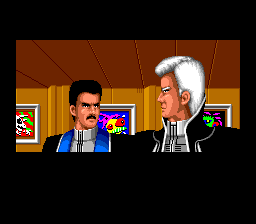
Belose is ruled by the Faracia dynasty, but the death of an unpopular emperor turns long-simmering public anger into a succession crisis. His older son Faliall is named heir; his younger son Stefan wants to answer the common people’s demands for change. It is a clean, immediately understandable setup for a civil war, with power and justice placed on opposite sides of the battlefield.
The strongest part of the premise is that neither brother is introduced as a random invader. The conflict begins inside the ruling family, which gives the campaign’s opposing armies a personal stake even before the robots roll out. Stefan’s reform-minded position is especially easy to grasp, while Faliall carries the authority of the declared successor.
Do not come here expecting the strategy layer to disappear behind political drama. The story chiefly gives shape to a sequence of military confrontations and lets you see the conflict from either prince’s side. That is enough to make the map objectives feel more pointed than a disconnected set of skirmishes, but the real drama is still in how you conduct the war.
Overall Experience
Vasteel is worth a look because it tries something bolder than a standard turn-based robot war. The strategic map game is familiar territory, but its interactive fights force you to participate in the consequences of every confrontation. When that connection clicks, a successful advance feels earned twice: first through smart positioning, then through steady hands in combat.
Its biggest weakness is also its defining trait. The shift into action can disrupt the thoughtful pace that draws many people to hex strategy, and the turret encounters make capturing objectives more demanding than simply occupying a tile. You need to be willing to lose some control over the clean, chess-like flow of a conventional tactics game.
Give it a chance if you enjoy mecha warfare and want strategy that occasionally puts you in the cockpit instead of leaving every clash to numbers. Skip it if you want uninterrupted turn-based planning or purely reflex-driven shooting. For the right mood, Vasteel’s strange blend of limited production, territorial warfare, and direct robot battles makes the payoff worth the friction.


Reviews
There are no reviews yet.