 Retro Replay Retro Gaming History, Reviews & Emulation
Retro Replay Review
Gameplay
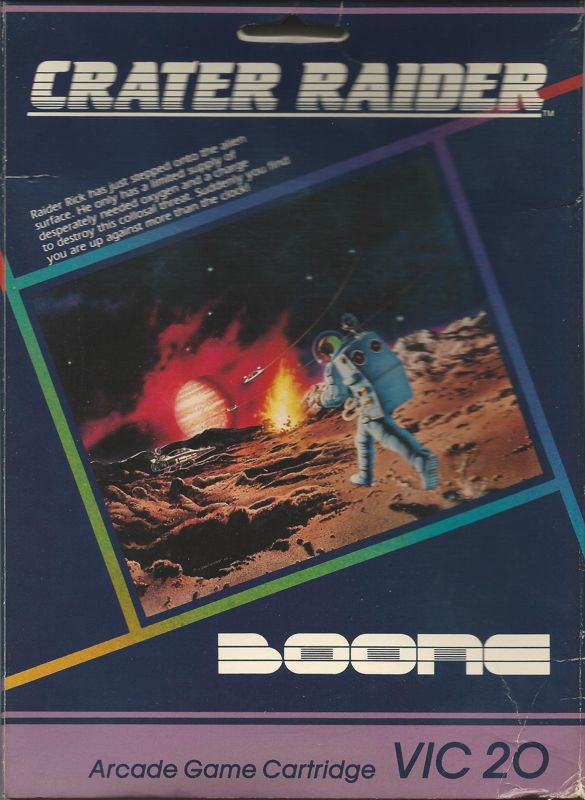
Crater Raider earns your attention quickly because its central problem is so clean: keep Raider Rick moving across a dangerous asteroid without falling into a crater, getting struck by flying meteorites, or suffocating. You begin with three lives, so the first few screens are about learning to respect the terrain rather than treating every jump as a casual flourish. The constant oxygen limit is especially effective because it stops the game from becoming a simple exercise in cautious hopping; you have to collect canisters and maintain momentum.
The structure has more purpose than a pure survival run. Reaching screen 20 lets you drop a bomb into a large crater, but that is not the finish line. With three minutes left before detonation, you must make it back to the ship. That reversal is the game’s strongest idea: the route you survived on the way out becomes a final exam when the clock is running and failure means the mission is lost.
Later stages add aliens to the meteorites and craters, while successful missions move you on to a harder asteroid and award an extra life. Nine difficulty levels make this a better fit for someone who enjoys gradually mastering a strict arcade challenge than for anyone hoping for a relaxed space adventure. Frustration will set in if repeated deaths come from greedy jumps or missed oxygen, but that is also where the game’s tension comes from. Every canister and clean landing matters.
Graphics
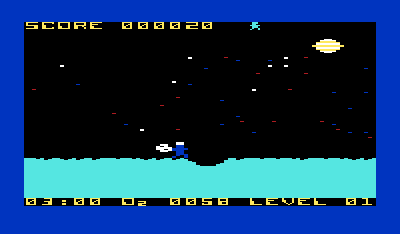
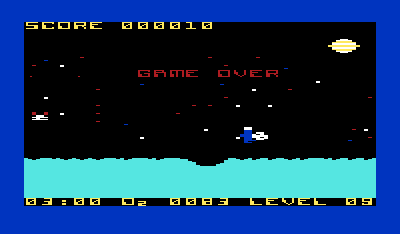
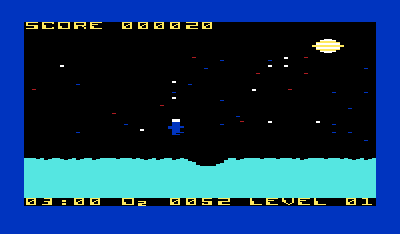
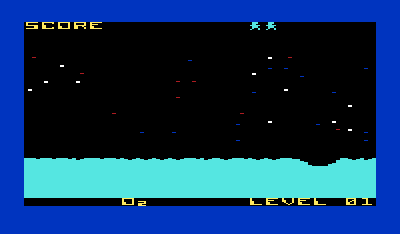
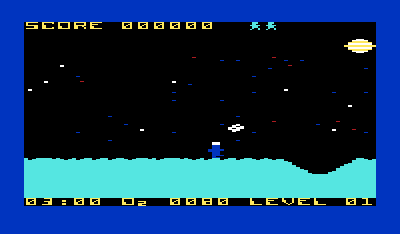
On the VIC-20, Crater Raider is built around a side-view, 2D scrolling asteroid surface. You watch Rick cross craters while flying meteorites pass through the action, and later aliens join the hazards. The large crater on the twentieth screen gives the bombing objective a clear visual target amid the scrolling run.
Story
The story is thin, but it gives the arcade action a useful sense of stakes: a giant asteroid is headed for Earth, and Rick is sent across its surface to destroy it. There is no need for a complicated plot when the basic mission is already easy to understand.
What works is the escalation built into the objective. You are not merely trying to stay alive indefinitely; you are pushing toward the bomb drop at the twentieth screen. That makes the hazards feel like obstacles on a rescue mission rather than random arcade clutter.
The return to the ship after planting the bomb is the dramatic payoff. The game asks you to escape before the asteroid explodes, then sends a successful Rick to a harder asteroid. It is a compact sci-fi premise, but it gives repeated runs a satisfying loop of mission, escape, and tougher assignment.
Overall Experience
Crater Raider is a compact, hard-edged arcade game that understands how to get mileage out of a few pressures working at once. Craters demand careful jumps, flying hazards punish mistimed movement, and oxygen forces you to keep collecting resources instead of playing too safely. The result is immediate and tense.
The bomb objective is what elevates it above a straightforward obstacle course. Reaching screen 20 feels like progress, but the game makes you earn the victory by turning the escape into a timed dash. That second half is likely to be the part you remember, whether it ends in a heroic run to the ship or a last-second failure.
Give it a chance if you enjoy early arcade games that are blunt about their rules and generous only after you learn them. Crater Raider does not soften its limits on lives, oxygen, or hazards, and its challenge rises across harder asteroids. For the right gamer, that severity is the payoff: a focused mission where improvement is measured in cleaner movement, smarter oxygen pickups, and finally making it home before the bomb goes off.


Reviews
There are no reviews yet.