 Retro Replay Retro Gaming History, Reviews & Emulation
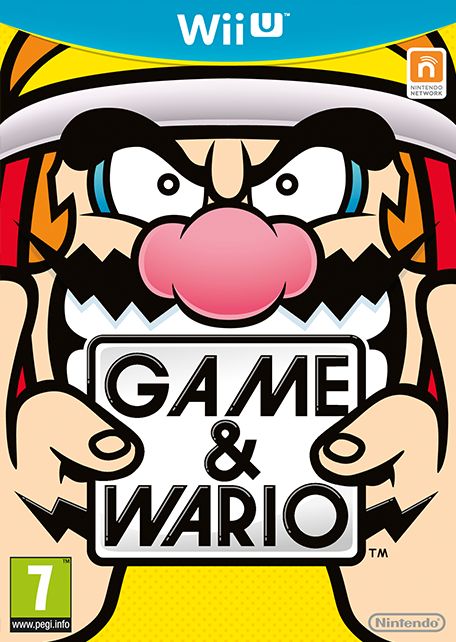
Retro Replay Review
Gameplay
The first few minutes of Game & Wario have the particular charm of somebody dumping a box of odd toys on the floor and daring you to try each one. Every minigame uses the Wii U GamePad alone, but the inputs keep changing: you might tilt it to guide a character, hold it vertically for skiing, use it as a shield against arrows, take photographs, tap rhythms, or draw with the stylus. That constant reset is the point. You are not here to master one deep system; you are here to see what bizarre use of the controller comes next.
Some ideas immediately make sense in your hands. The GamePad’s screen can demand your full attention while the TV supplies outside pressure, as in the minigame where you play while trying not to get caught by a disapproving mother. That split focus turns a simple joke into real tension. Other games lean on physical handling rather than traditional button work, which makes the collection easy to pass around even when its individual rules are unusual.
The multiplayer structure is where the collection becomes both more social and more frustrating. Most of the group games have people taking turns with a single GamePad, so a good round depends on spectators enjoying the current player’s predicament. Disco is the standout concept: two people hold opposite sides of the controller, tap out rhythms, and try to reproduce each other’s patterns accurately. It is direct, competitive, and has everyone involved at once. By contrast, the turn-taking games can drag if your group is impatient or large.
There are 10 solo minigames, two that support one or two people, and four multiplayer games, with play extending to five people in the larger party options. That sounds generous, yet the uneven mix means Game & Wario works better as a short rotation than an all-night centerpiece. Strong single-player performances earn tokens for collectible extras, giving you a reason to revisit challenges, but these rewards do not turn the package into a long-term obsession. Bring it out in bursts, and its best jokes land more often.
Graphics
The old Wario regulars host and star in the minigames, giving the collection a deliberately mischievous, cartoonish face rather than one unified world. The most visually distinct detour is a minigame styled around Nintendo’s old Game & Watch devices, a fitting nostalgic change of pace amid the broader Wario chaos.
Story
There is no single narrative pulling you from one minigame to the next. Instead, Game & Wario treats its cast of familiar Wario-franchise troublemakers as hosts and performers, with each challenge acting like a separate comic setup. That loose format suits a compilation built on abrupt changes in rules and controller handling.
The funniest premise described here is also the one with the clearest miniature story: you are absorbed in a game while keeping half an eye on the television so the protagonist’s mother does not catch him. It is a small, instantly understandable scenario, and it gives that challenge more personality than a generic score chase would have.
Don’t expect character arcs or a reason to care about what happens after the next menu selection. The cast exists to frame the jokes, introduce the weirdness, and make the transitions feel less like a bare test suite for the GamePad. For this kind of game, that is enough—though it also means the personality has to carry a lot of the package once the novelty of a given minigame fades.
Overall Experience
Game & Wario is a fascinating reminder of how much Nintendo wanted the Wii U GamePad to be more than a second screen. At its best, it finds playful reasons to move, tilt, tap, sketch on, photograph with, and share the controller. You can feel the experimental energy in nearly every mode, and a room full of friends can turn even a simple challenge into a small event.
Its limitation is that experimentation is not the same thing as consistency. With only 16 minigames, and several multiplayer modes built around passing one controller from person to person, the collection has less staying power than its wild premise suggests. The solo content is most useful as a way to sample ideas and chase tokens, while the party content rises or falls with the people on your couch.
Give it a chance if you enjoy local party games that prize novelty, awkward laughter, and Wii U-specific oddities over polished competitive depth. It is especially worthwhile for a short gathering where everyone is happy to watch, comment, and take a turn. If you want sustained solo challenge or multiplayer where everyone is constantly active, its scattered highlights may not justify the wait. For more background on its place in the series, see this Game & Wario history and release overview.

Reviews
There are no reviews yet.