 Retro Replay Retro Gaming History, Reviews & Emulation
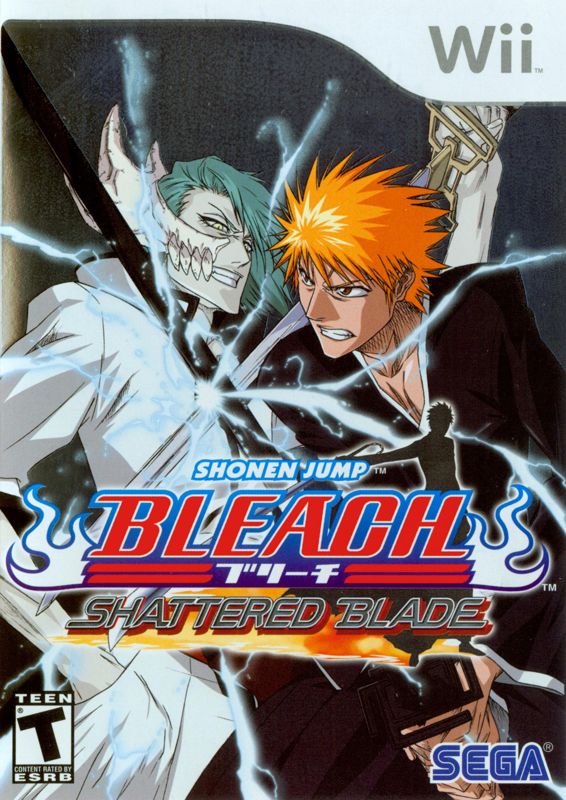
Retro Replay Review
Gameplay
The immediate hook in Bleach: Shattered Blade is wonderfully direct: put the Wii Remote in your hand and start swinging it as a sword. You move around the arena with the Nunchuk, use it to block, and turn remote movements into attacks. For a licensed Wii fighter, that straightforward physicality is the right instinct. It gets you into a duel quickly instead of making you learn a long command list before you can enjoy the fantasy.
There is more going on than loose waggle. Successful strikes and combos build spiritual energy, and that meter opens Bankai mode, where your attacks hit harder. Each fighter also brings special and critical attacks, so the best moments come when you stop treating every fight as a flurry of swings and begin looking for the right moment to spend energy or interrupt an opponent. Specials use the B button plus particular motions, and the examples have some welcome personality: Orihime can heal, while Hitsugaya can send ice upward from the ground to trap an enemy.
The critical-attack system is the most divisive part. Holding A lets you counter incoming strikes at regular-attack speed, but the answer to that counter is another critical attack or Bankai. That escalation sends both combatants into rochambeau, a rock-paper-scissors contest that determines who lands the hit. It is a lively attempt to give clashes some drama, yet it can also turn a hard-won opening into a guess. If you prefer fighters where every reversal comes from precise execution, this will grate.
Modes are modest but practical. Arcade asks you to clear eight rounds against random opponents, while Versus lets you fight either the computer or another person. Episode mode is the real progression path, with eight character-led episodes; three are available from the start and the rest unlock as you advance. Earning kan in Arcade and Episode to spend in the shop adds a small reason to keep playing, though the core loop remains a run of single-round matches rather than a deep campaign.
Graphics
The game keeps the action in side-view 2D battles, a sensible angle for following spacing, blocks, and sword swings. Episode mode sets up each character’s route with sequences of still pictures, so the story is delivered more like illustrated scene-setting than a lavishly animated showpiece.
Story
This is an original side story set after Ichigo and his friends rescue Rukia in the Soul World. Rather than retell the opening of Bleach, it sends Ichigo after shards of the ancient Sokyoku blade, needed to open a sealed gate and return home. That makes the plot easy to enter, even if you mostly know the series through its broad setup.
The game does rely on that setup. Ichigo is a teenager who can see spirits, and his encounter with the injured Soul Reaper Rukia leaves him carrying her role and wielding a Zanpaku-to sword. Knowing why those ideas matter gives the adventure more context, but the immediate goal is clean enough: gather the shards before the route home remains closed.
Episode mode retells the same central quest from different characters’ perspectives, each beginning with still-image scenes explaining why that character is after the shards. It is a functional excuse to sample the roster and unlock more episodes, not a sprawling narrative. Fans will get the most out of seeing familiar characters take their own angle on the chase; everyone else may find the story chiefly serves the next fight.
Overall Experience
Bleach: Shattered Blade is at its best when you want an accessible, energetic anime duel and have another person nearby for Versus. Swinging the Remote, blocking with the Nunchuk, building toward Bankai, and trying character-specific specials produces a clear arcade rhythm. The first hour has a nice sense of discovery because the controls are easy to grasp while the special moves and counters reveal some extra layers.
Its limitations show up soon after. Single-round battles make progress brisk, but they also make the game feel slight, and the rochambeau outcome attached to critical clashes can undercut the satisfaction of outplaying someone. The episode structure offers replay value through different characters, yet it does not transform the experience into a more substantial fighting game.
At a 6 out of 10, this is a decent licensed brawler rather than an essential Wii fighter. Give it a chance if the thought of acting out Bleach swordplay with the Wii Remote sounds inherently fun, especially for casual local matches. Skip it if you need tournament-minded combat depth or a long, fully developed story to stay invested.


Reviews
There are no reviews yet.