 Retro Replay Retro Gaming History, Reviews & Emulation

Retro Replay Review
Gameplay
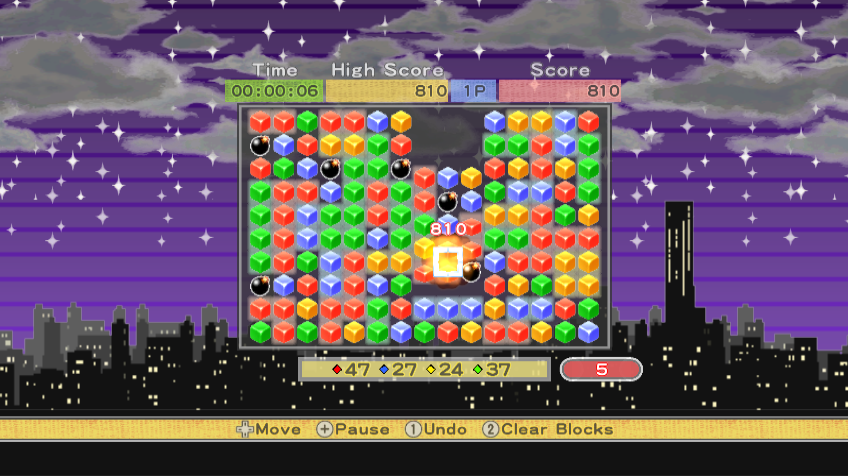
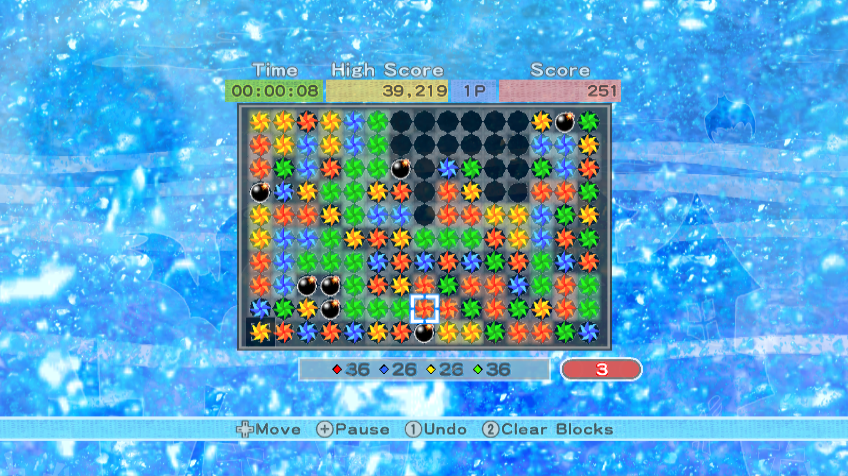
The first board is easy to understand in seconds: find a touching group of at least two blocks in the same colour, click it, and watch the blocks above drop into the gap. The trick arrives immediately afterward. Empty a column and the remaining columns slide in from the right, so each clear rearranges every decision that follows. You are not merely hunting for a match; you are trying to preserve the matches you will need later.
That makes the scoring rule more important than it first appears. Large groups are worth more, so there is a constant temptation to leave an obvious pair alone and build something bigger around it. Sometimes that patience pays off with a satisfying sweep across a crowded board. Sometimes it leaves isolated blocks behind, with no legal move left. The tension between cashing in a safe clear and setting up a larger one is where this familiar puzzle formula earns its bite.
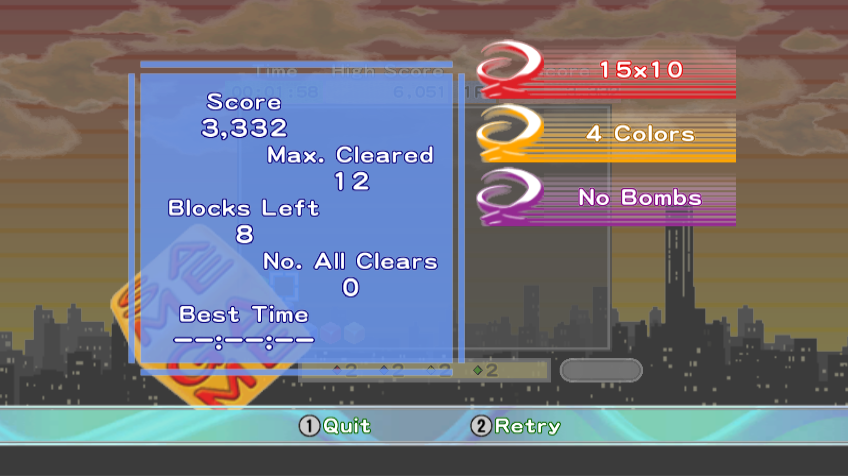
Difficulty options let you tune how tangled the board becomes. A small 9×9 board with three colours is a gentler place to learn how columns collapse; a 22×12 board with five colours asks for more foresight and makes bad leftovers much harder to rescue. Bombs can remove unwanted blocks when a layout starts to seize up, though using one is most satisfying when it opens a chain of ordinary clears rather than merely postponing trouble.
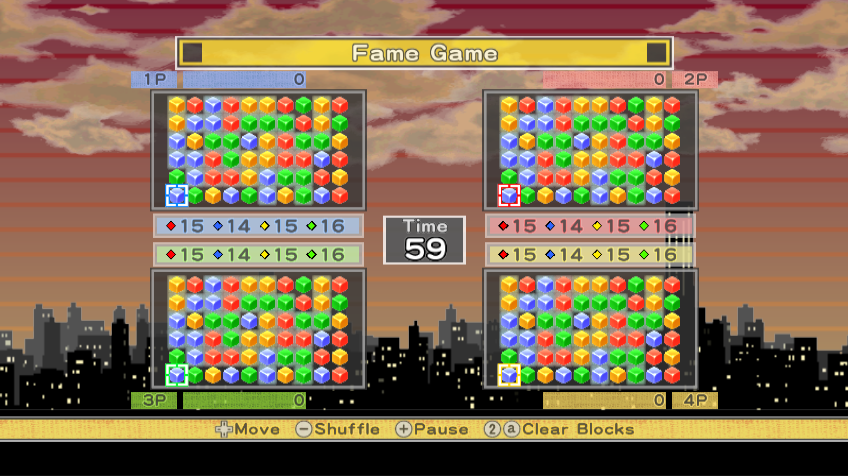
Local multiplayer is more than a score table bolted onto solo play. Fame Game rewards the highest score, while Shame Game perversely crowns the lowest scorer, forcing you to rethink the value of every large cluster. Both modes let big clears colourblock opponents, adding a direct bit of sabotage. Blame Game puts everybody on one board, which should suit groups who prefer arguing over the next move to quietly optimizing separate grids.
Graphics
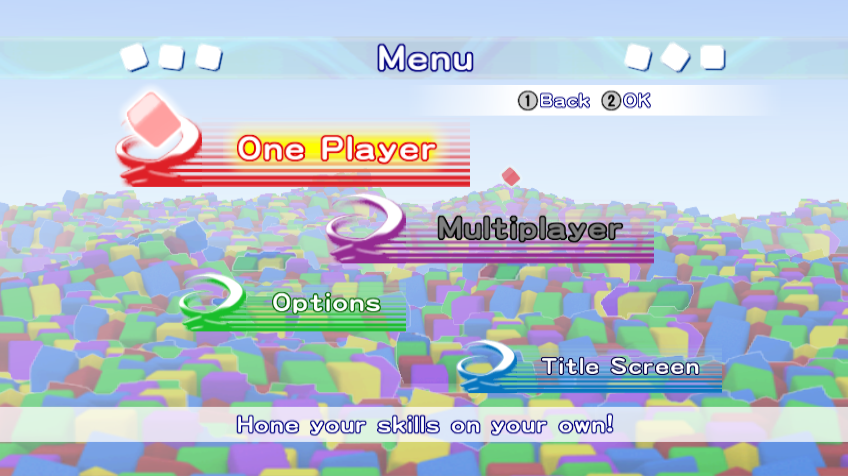
The screen is built around a board of coloured blocks, and that direct layout fits a game where you need to spot matching groups at a glance. As blocks disappear, the downward drop and rightward column shift make the board’s changing shape easy to follow.
Story
This is a puzzle about the little stories you create for yourself on the board: the colour group you protect, the awkward singleton you hope to absorb, and the final click that either clears the grid or ends the run.
Each new board gives that arc a clean beginning. Early moves feel open, the middle fills with trade-offs, and the end turns into a careful search for one remaining connection between colours.
Multiplayer writes a different kind of drama. In Fame Game, a large clear can put you ahead; in Shame Game, that same instinct can work against you. Blame Game turns the shared board into a collective problem with plenty of room for second-guessing.
Overall Experience
Pop ‘Em Drop ‘Em Samegame does not need a complicated rulebook to create real pressure. Its best moments come when you see a potential big clear forming, resist an easier move, and then discover whether the falling blocks reward your patience or punish it. That push-and-pull makes it easy to return for another board after a frustrating dead end.
You should give it a chance if you like clean, turn-based puzzles where planning matters more than speed. The changing board sizes and colour counts make it approachable at the low end but capable of becoming properly knotty, while bombs soften the harshest jams without erasing the need to think ahead.
The multiplayer modes are the extra reason to bring it out with friends, especially if your group enjoys puzzle games with a competitive streak. For a related take in the broader line, see Pop’em. Pop ‘Em Drop ‘Em Samegame is a focused little game, but its collapses, scoring gambles, and playful rule variations give that focus plenty to work with.


Reviews
There are no reviews yet.