 Retro Replay Retro Gaming History, Reviews & Emulation


Retro Replay Review
Gameplay
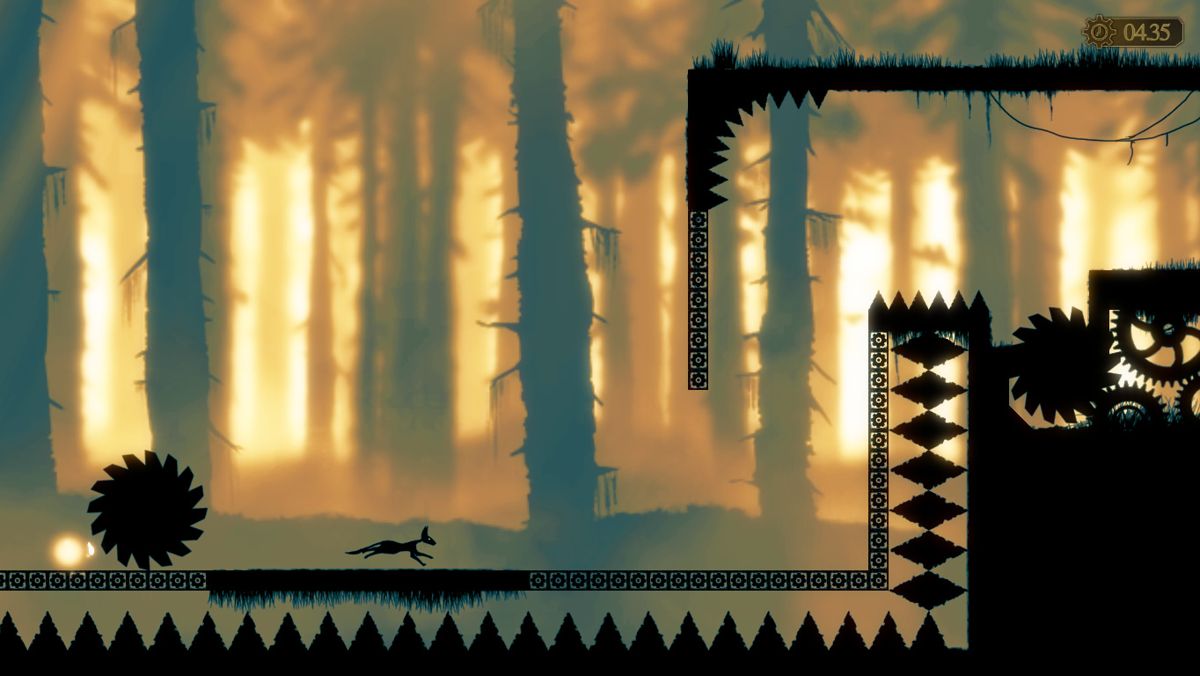
The first few levels make their intentions plain: you are here to die quickly, restart immediately, and learn. Bast’s run, jump, wall cling, and wall jump form a nimble platforming toolkit, but the game refuses to let you coast on basic competence. Spikes, moving gears, enemies, collapsing surfaces, and moving walls turn short rooms into compact tests of timing and route planning. Since one hit sends you back to the start, every successful clear has that gratifying feeling of finally executing something you have rehearsed in your head.
Short stages are the right fit for this level of punishment. Most can be finished in under a minute, so a failed run rarely becomes a long walk back to the hard part. You will still hit a wall on difficult layouts—this is absolutely a trial-and-error game—but the pace keeps the frustration from becoming a slog. The level map also makes a smart concession: you do not need to conquer every stage to advance. If one room is draining your patience, move on and return when you want another crack at it.
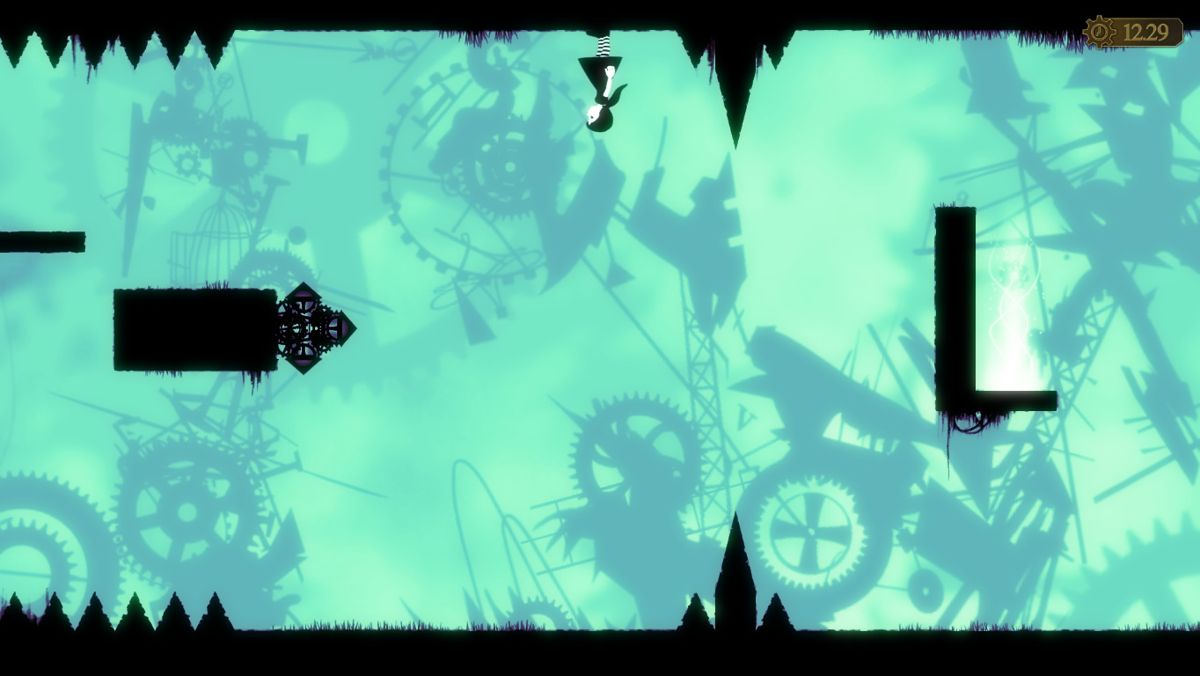
Arielle’s levels prevent the formula from becoming too comfortable. Rather than using Bast’s wall-jumping moveset, she switches rapidly between floor and ceiling while retaining air control. That changes how you read every hazard, because safety can become danger the moment gravity flips. Bast gets in on gravity switching too, particularly in auto-run stages where the scrolling screen forces quick calls alongside jumping and crouching. These are likely to be the most divisive levels: their fixed forward motion creates exhilarating momentum when you are locked in, but leaves little room to recover from a bad read.
Glowing orbs add a worthwhile second layer for anyone who finds the exits too easy. Reaching them means taking more dangerous paths, and par times invite you to refine a merely successful run into a sharp one. The game understands that completion and mastery are different urges. You can press through the map without clearing every optional challenge, then revisit the stages that have lodged themselves in your brain.

Graphics
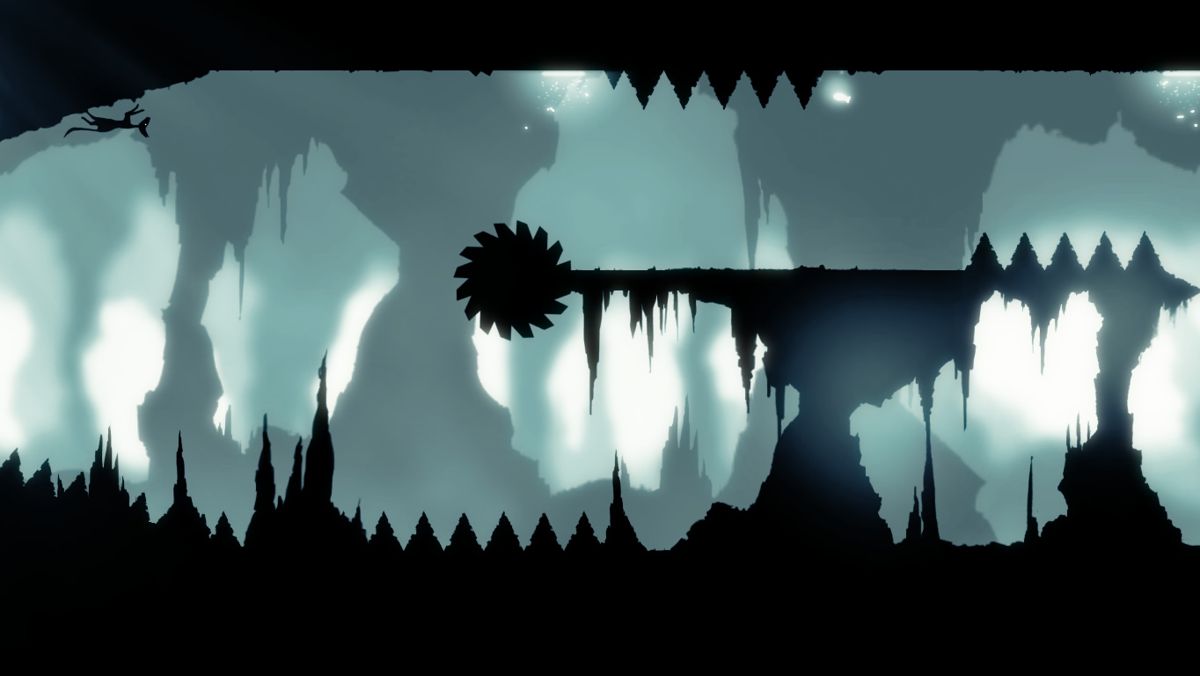
The 2D side-view stages begin in a dark forest and later move into the strange world holding Arielle. Against those dark surroundings, glowing exits and collectible orbs give your eye clear targets, while spikes, gears, blades, and swinging spiders make the hazard layout easy to parse during fast attempts.
Story
The story is simple but effective motivation for a difficult platformer. Arielle is taken from the forest by a dark spirit, leaving Bast alone to pursue her and reunite the pair. It gets you moving without interrupting the action with a lot of narrative weight.
Switching control between Bast and Arielle does more than vary the mechanics; it keeps that separation present in the game’s structure. You are not just entering another challenge room with a new rule. You are checking in on the other half of the chase, in a world that operates differently from the forest Bast begins in.
Do not come in expecting a story-heavy adventure. The rescue setup exists to give the platforming a direction, and that is enough here. Its restraint suits a game where the most memorable drama comes from barely clearing a dangerous room after a string of failed attempts.
Overall Experience
A Walk in the Dark is at its best when a brutal little stage stops feeling brutal because you finally understand it. The controls and level lengths support repeated attempts, while the mix of Bast’s wall-based movement, Arielle’s gravity flips, and the auto-run challenges stops the 100-level structure from feeling like the same test repeated endlessly.
Its sharpest edges are intentional. Instant deaths, full-stage restarts, and reflex-heavy sequences will wear on you if you prefer a platformer that lets you improvise your way through trouble. Some challenges demand precision first and patience second. Fortunately, the option to skip individual difficult levels means progress is not held hostage by every personal sticking point.
If Super Meat Boy-style repetition and VVVVVV-style gravity puzzles both sound inviting, this is an easy game to recommend. It does not soften its demands, but it respects your time with brief stages, immediate lessons, optional collectibles, and meaningful room to pursue faster clears. Stick with it through the early deaths and its best levels deliver the exact satisfying snap of turning panic into precision.



Reviews
There are no reviews yet.