 Retro Replay Retro Gaming History, Reviews & Emulation
Retro Replay Review
Gameplay
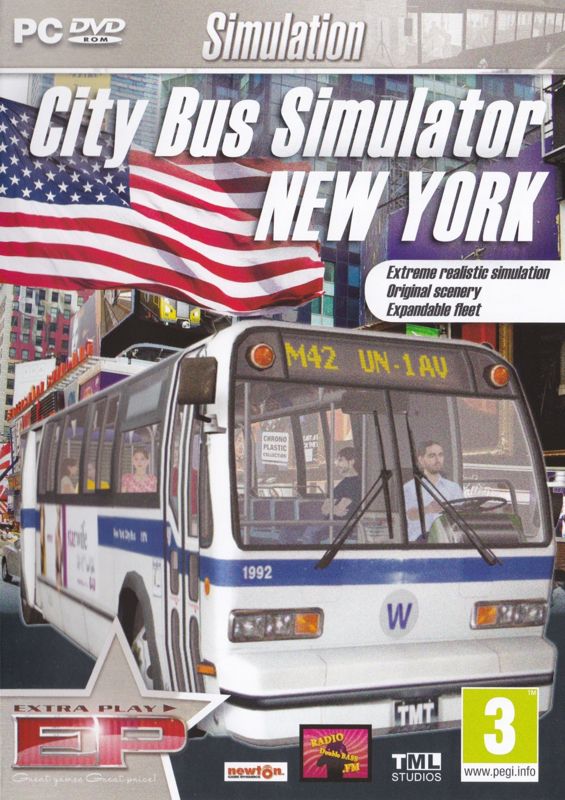
The first hour asks you to meet City Bus Simulator 2010: New York on its own unhurried terms. You play Carlos, a newly trained driver, and the important work is deliberately mundane: drive the route, operate the doors, sell tickets, and manage the separate controls assigned to a bus driver’s daily tasks. If you enjoy simulations that make you perform the whole job instead of skipping straight to the driving, that hands-on approach is this game’s strongest hook.
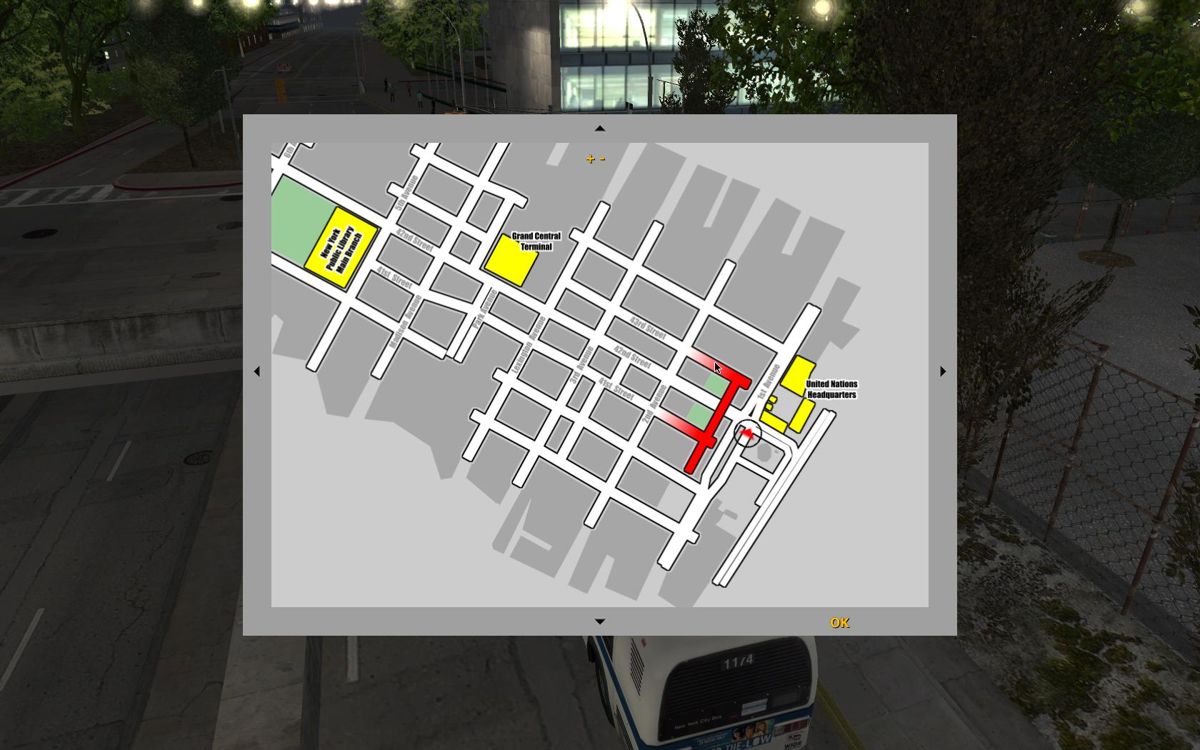
The bus physics aim for realism, which gives route driving more weight than a casual arcade cruise. You are handling a large vehicle rather than simply pointing it toward a waypoint, and that can make getting through the city feel satisfying when the routine starts to click. The game also gives you options beyond its campaign: discrete single missions for a more focused session, plus free roaming where reaching a bus stop lets you begin a route.
Its larger problem is that it encourages you to obey traffic laws without ever making that choice matter. That robs the driving of needed pressure. You can appreciate the intention to role-play a conscientious driver, but a simulator built around routine needs consequences to make careful behavior feel earned. The on-foot exploration and mission triggers add variety, yet they cannot fully replace that missing sense of responsibility behind the wheel.
Graphics
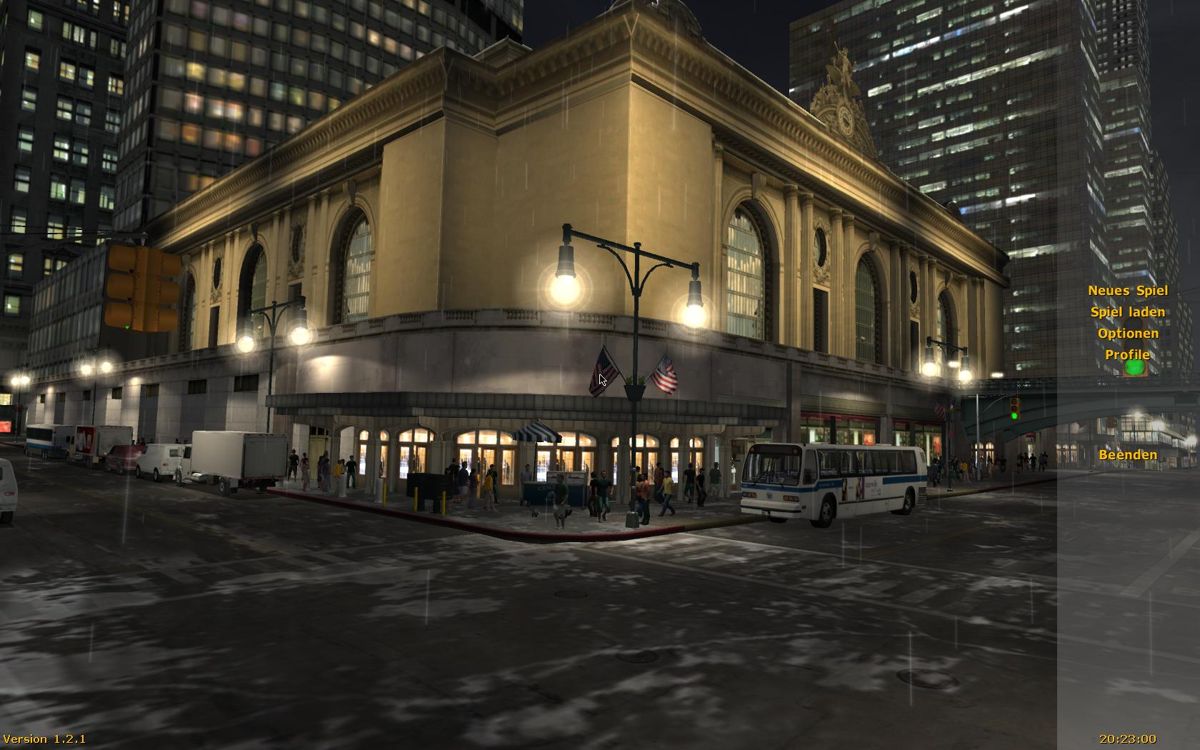
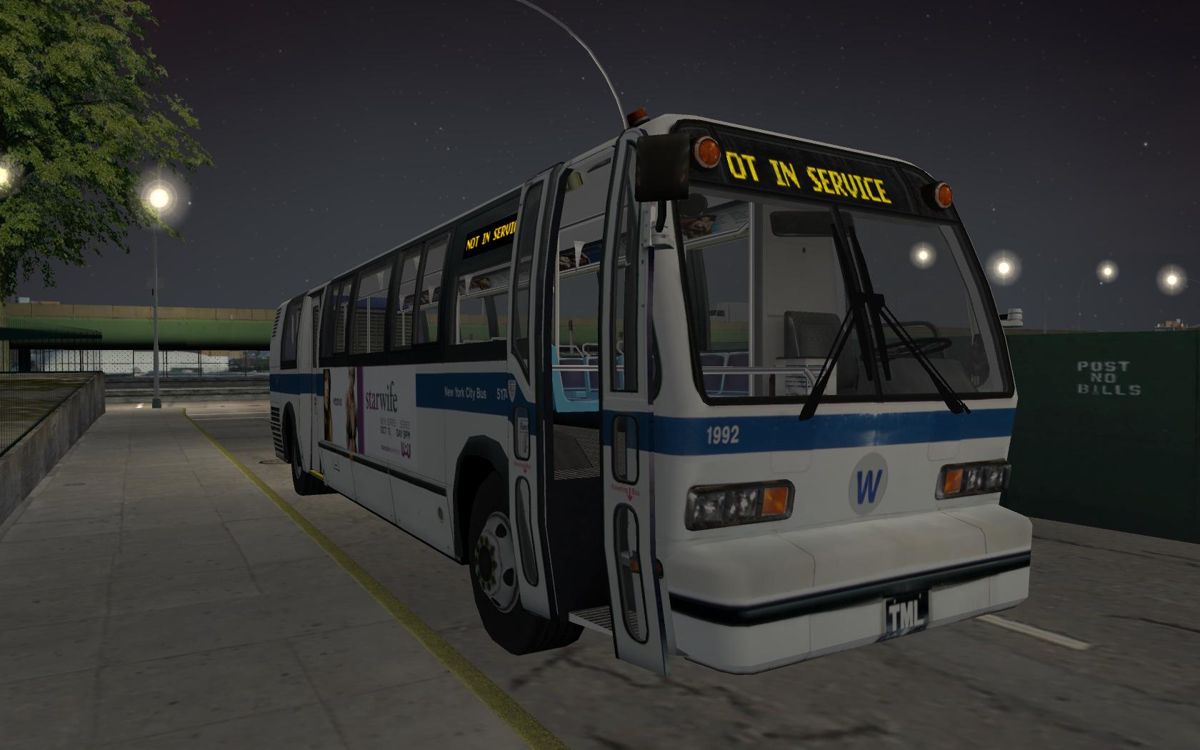
The recreation of Manhattan’s 42nd Street gives every route a recognizable urban backdrop. Wide avenues, dense traffic, storefronts, signs, and tall buildings crowd the view, making the bus feel appropriately boxed into a busy city rather than placed on an empty driving course.
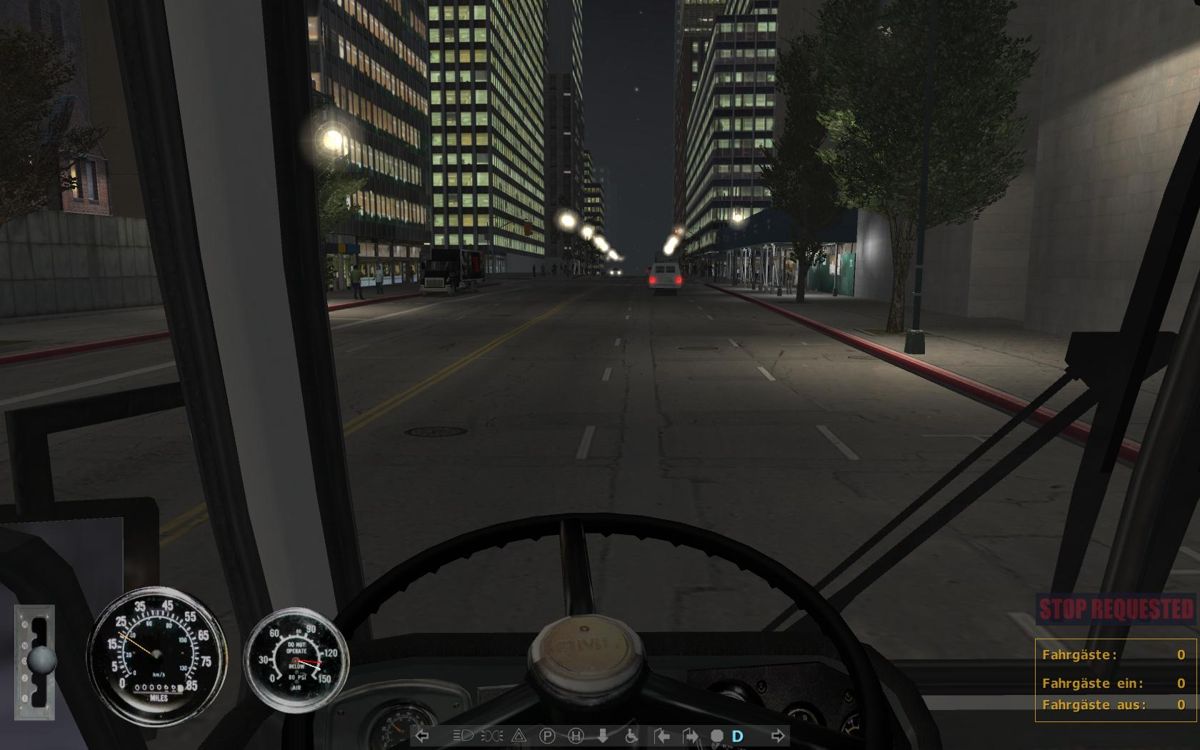
The bus itself receives the strongest visual attention. Its large body, detailed cockpit, mirrors, dashboard controls, doors, and passenger area all support the hands-on routine of the job. The first-person view puts those controls within reach, while the exterior camera helps when you need to judge the vehicle’s length and position in traffic.
Pedestrians and street activity are less convincing, with stiff movement and a city that can feel mechanical when you stop to watch it closely. The broad shapes and road markings remain readable from the driver’s seat, though, and that clarity matters when you are lining up at a stop or threading a full-size bus through an intersection.
Story
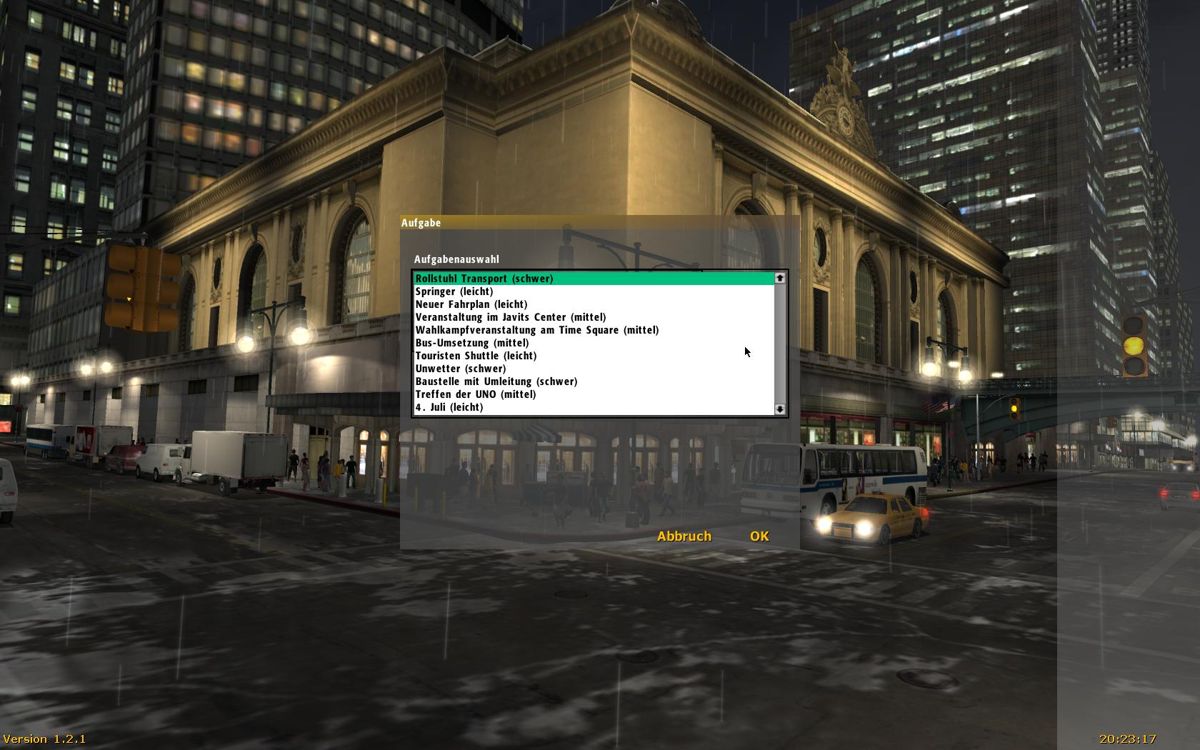
Carlos has just completed his driver training, which is a sensible setup for a game that wants to introduce the duties of the job. The campaign uses cutscenes at certain locations to lead into missions, including assigned route driving, so there is at least a loose framework around the simulation.
Don’t come in expecting a dramatic New York tale. The story primarily exists to move you between driving tasks, and that is appropriate for the subject matter. Its value is in giving a novice driver a reason to keep taking assignments rather than leaving you entirely alone in free roam.
That modest framing works best when you want structure without much fuss. If you need memorable characters or a strong narrative payoff, the campaign’s premise is too slight to carry the experience. Carlos’s new-driver status is more useful as an invitation to learn the controls than as the start of a substantial story.
Overall Experience
City Bus Simulator 2010: New York is at its best when you accept that a successful run can be its own reward. The detailed interaction of doors, tickets, and bus operation gives it more personality than simply driving from point to point, while the radio’s 43 tracks can make a long shift feel less sterile.
Still, the game’s open-city ambition is only partly convincing. Walking around and triggering missions sounds like a welcome change of pace, but the core of the experience remains route work, and the lack of penalties for bad driving weakens the simulation’s central promise. You have to supply much of the discipline yourself.
Give it a chance if the idea of patiently operating a bus around a recreated stretch of 42nd Street sounds relaxing, and especially if you prefer procedural driving duties to high-speed action. Everyone else may find its campaign light and its rule-following oddly optional. There is a decent bus sim underneath the loose structure, but it needs more accountability to make the trip feel truly worthwhile.
The official English manual is worth keeping nearby because it explains the many cockpit controls, passenger procedures, and route systems in practical detail.


Reviews
There are no reviews yet.