 Retro Replay Retro Gaming History, Reviews & Emulation



Retro Replay Review
Gameplay
Date Warp pulls you in before it asks much of you. Janet’s failed date, the car trouble, and the isolated house form an immediately effective chain of bad luck. You know the sensible move is to seek help, but the setup has enough unease that walking through that door feels like a decision with weight. For a visual novel, that opening does exactly what it should: it makes you want to keep reading until the friendly surface of the situation cracks.
Most of your time is spent following printed dialogue and watching Janet’s interactions with the people in the house, but the important choices do more than offer a passing line variation. They alter her relationships with the residents and with her boyfriend, while also feeding into the eventual ending. That makes it worth pausing over key moments rather than treating them as obvious right-or-wrong prompts. If you enjoy replaying a mystery to see how different social choices reshape the outcome, Date Warp gives you a sound reason to return.
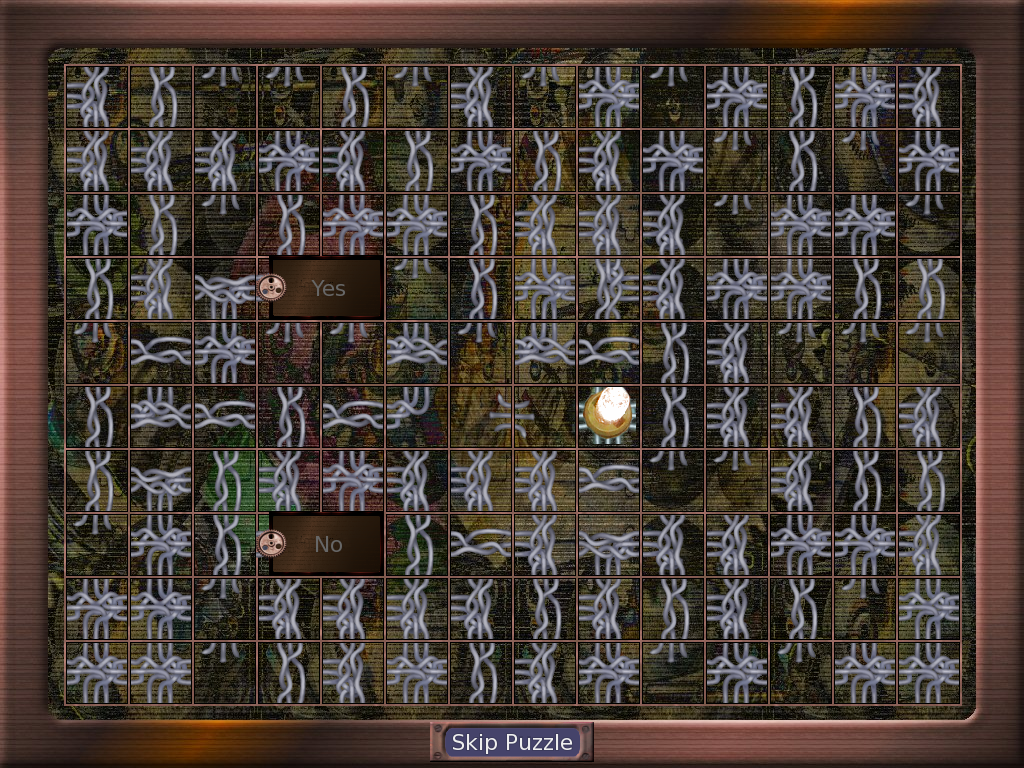
The unusual part is how you make those decisions. Instead of simply selecting an answer from a menu, you connect wires from a light bulb to the response you want. It is a small interruption, and not one that necessarily deepens the drama; when a conversation reaches a tense point, you may wish you could answer immediately. Still, the tactile little puzzle makes pivotal choices feel distinct, and it is more memorable than another plain dialogue box.

Graphics
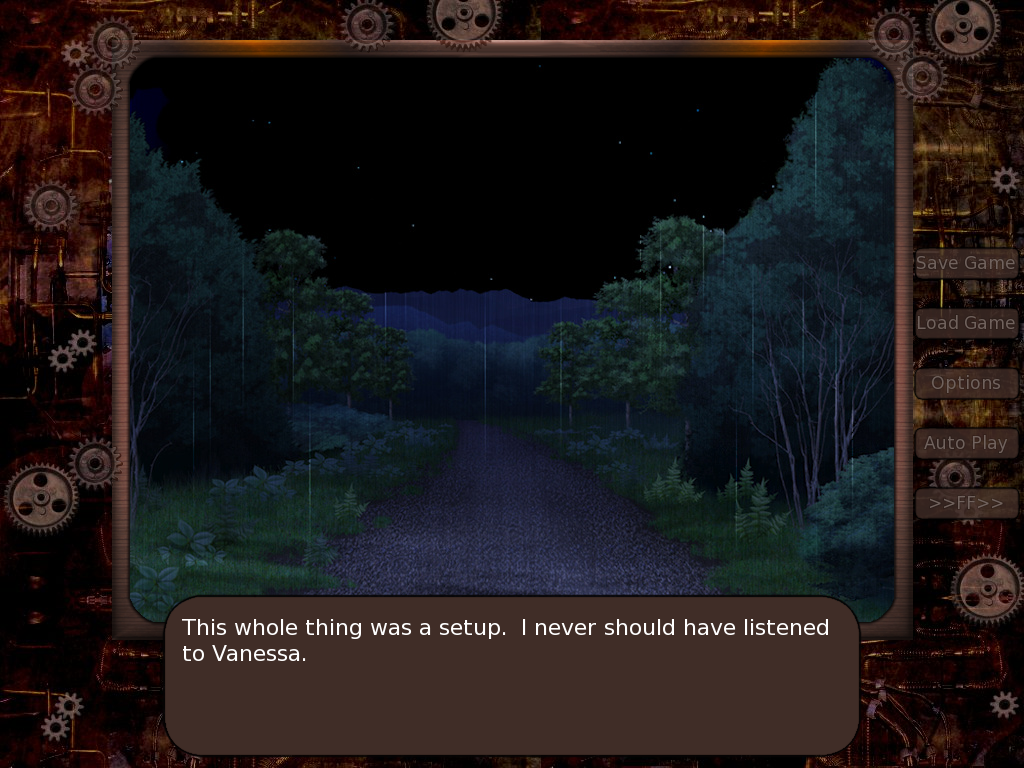
Date Warp uses drawn scenes with the current characters shown alongside the text. The focus stays on following expressions, conversations, and the people Janet meets in the house, which suits a visual novel built around suspicion and shifting relationships.
Story
The mystery works because it begins with an ordinary disappointment rather than a grand crisis. Janet has just endured an unsuccessful first date with a fellow student; then the car fails in a large forest, and the nearest refuge is a house owned by a stranger. That progression gives the premise a pleasingly claustrophobic shape. Help is close at hand, but it comes with the feeling that Janet may have stepped into a problem larger than a roadside breakdown.
The house and its residents carry the story’s central tension. A friendly owner offering a room for the night ought to be reassuring, yet Janet quickly realizes there is something strange about both the place and its inhabitants. Date Warp understands the simple pleasures of this kind of mystery: conversations become evidence, politeness feels potentially suspicious, and your opinion of a character can change as more is revealed.
Because Janet’s choices influence relationships as well as the ending, the story asks you to take some ownership of her path. That is especially welcome in a genre where a protagonist can otherwise feel like a passenger in someone else’s secrets. You are not just uncovering what is unusual about the house; you are also deciding how Janet navigates the people trapped in that uneasy situation with her.
Overall Experience
Date Warp is a good fit when you want a focused, character-driven mystery instead of an action-heavy adventure. Its strongest asset is the escalation from relatable social awkwardness to isolated-house suspicion. The first hour’s pull comes from wanting to know what the residents are hiding, while the longer-term draw is seeing how Janet’s connections and choices shape where the story lands.
The wire minigame will divide you more than the core visual-novel structure. Some will enjoy the extra ritual around decisions; others will see it as friction between them and the next line of dialogue. It never changes the basic recommendation, though. If branching routes, relationship shifts, and a strange-house mystery sound like your kind of evening, Date Warp is worth entering with an attentive eye and a willingness to revisit choices.
It is not a game you play for reflexes or elaborate systems. You play because the car has broken down, the forest is closing in, the host has offered shelter, and every polite conversation raises the uncomfortable possibility that staying may have been Janet’s worst decision. That is a sturdy hook, and Date Warp uses it well.



Reviews
There are no reviews yet.