 Retro Replay Retro Gaming History, Reviews & Emulation

Retro Replay Review
Gameplay
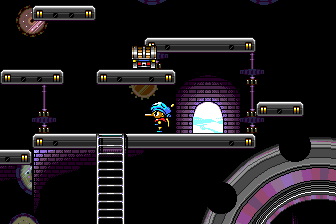
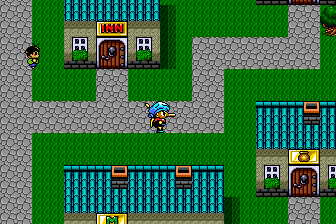
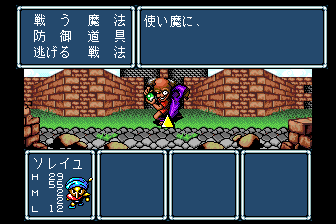
The first hour asks you to accept a very traditional Japanese RPG contract. You guide Soleil and his companions across a top-down world map, enter towns for equipment and supplies, then head into hostile areas that move the story forward. Random battles interrupt travel, and combat shifts to a first-person, turn-based view. There is little ambiguity in the structure, which can be comforting if you want a clean, classic adventure rather than a game constantly trying to surprise you with systems.
Its most worthwhile idea is how character growth is divided. Experience raises levels automatically, but weapon and magic proficiency rises when you actually use that weapon type or spell. That gives your battle choices some longer-term weight. If you want someone to become more capable with a particular tool, you need to make that tool part of their regular routine instead of merely relying on the strongest option in the moment.
The trade-off is the familiar friction of random encounters. Progress through hostile locations can feel slow when battles keep breaking up movement, especially if you are trying to reach the next plot checkpoint. Still, the proficiency system gives those repeated fights a purpose beyond simple experience grinding. Sol Moonarge is for you if that loop feels satisfying: fight often, improve steadily, buy supplies, and press onward.
Graphics
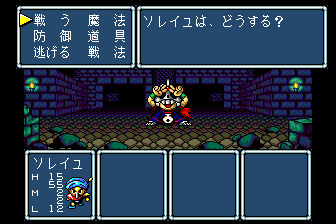
Exploration uses a diagonal, top-down world-map view, while battles are framed from the first-person perspective common to older Japanese RPGs. The shift makes travel and combat feel like distinct parts of the adventure rather than one continuous field view.
Story
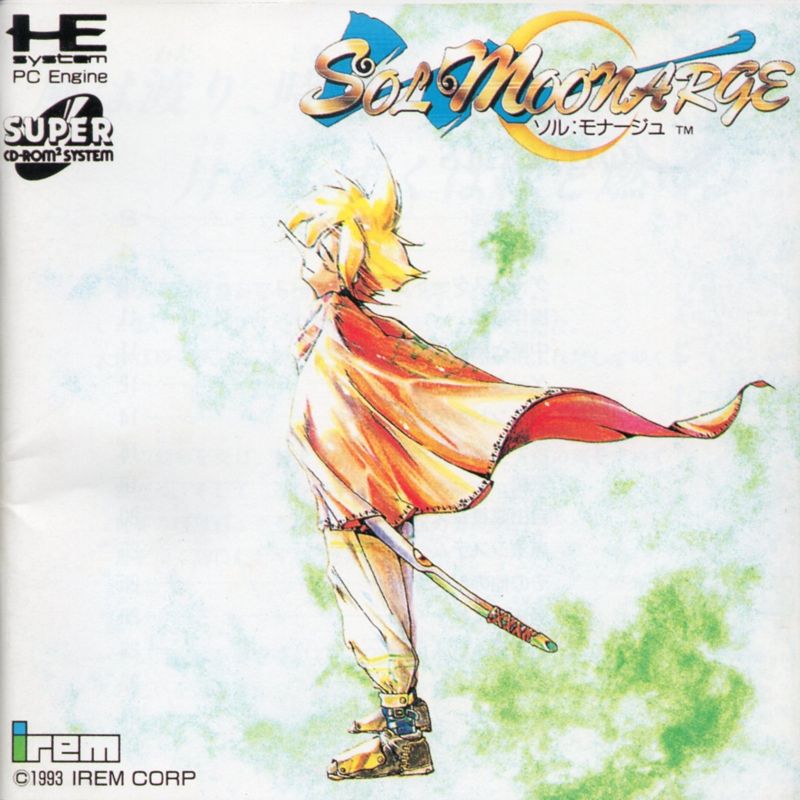
Sol Moonarge opens on a kingdom in obvious trouble. Earthquakes strike Itchy, demons roam the wilderness, and the king fears an ancient prophecy is coming true. Soleil is sent to protect the two Moon goddesses and recover the Sun Sword before the magician Silver can use the Gears of Fate for his own ends.
It is an unapologetically direct fantasy setup: a chosen hero, sacred figures in danger, a powerful artifact, and a villain racing toward catastrophe. The story does not need a complicated structure to establish a useful sense of urgency. You know why you are leaving the capital and what is at stake, which suits a linear RPG built around advancing from one dangerous destination to the next.
The day-night cycle adds a small but welcome bit of texture to that journey. Shops close at night, while certain characters only appear after dark. It encourages you to pay attention to when you arrive in town instead of treating every settlement as a static restock point, and it can reward checking back at a different hour.
Overall Experience
Sol Moonarge is a committed throwback even by 1994 standards: linear progress, random battles, turn-based combat, and a fantasy quest that gets straight to its mission. Its strongest hook is not the prophecy itself but the way repeated use develops weapons and magic. That system makes ordinary fights feel more connected to the party you are shaping.
Patience is the admission price. If random encounters already wear you down, this journey is likely to test your tolerance before its progression ideas can fully win you over. The day-night timing also means you may occasionally need to think about when to visit a town rather than simply arriving and doing everything at once.
For a gamer who enjoys old-school JRPG routines, though, there is a solid pleasure in its straightforwardness. You are not asked to master an elaborate web of rules; you are asked to travel, prepare, fight, and gradually turn repeated choices into stronger skills. That payoff is modest but real, and it makes Sol Moonarge worth a look for genre historians and dedicated fans of classic turn-based RPGs.



Reviews
There are no reviews yet.