 Retro Replay Retro Gaming History, Reviews & Emulation
Retro Replay Review
Gameplay
The first few minutes make ATF’s priorities clear: get airborne, check the target positions on your computer, and decide how you want to cross the island. You are not pushed down a single prescribed route, which is the game’s strongest idea. Picking off objectives in your own order gives the action more purpose than simply circling until something appears in front of the jet.
Combat is only one answer to the problem. You can engage enemy jets directly, but flying low to avoid detection creates a more cautious alternative. That choice gives a sortie a satisfying push-and-pull: aggression may clear your path, while restraint can preserve the fuel and ammunition you need to finish the real job. It is a straightforward arcade framework, though one that asks you to think beyond the immediate dogfight.
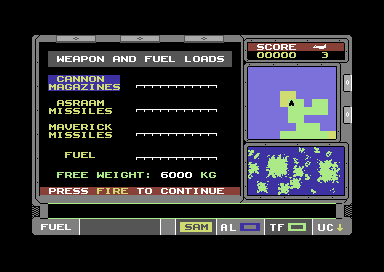
The pressure comes from the limits attached to the fighter. You need to maintain a constant speed or risk crashing, and fuel, ammo, and health can all force a change of plans. When you are close enough to a friendly base, automatic landing lets you repair and restock. That safety net is welcome, but reaching it after overcommitting is where frustration can set in. If you enjoy games that make you manage a run rather than casually restart it, ATF has a useful edge.
The controls and goals sound accessible, but the game asks for discipline. Treat every target run as part of a larger mission, not as an excuse to chase every enemy aircraft you see. The best moments come when a route, a low approach, and a retreat to base all line up cleanly. The weaker moments arrive when the pace feels more like careful maintenance than thrilling flight, so its appeal depends on whether you appreciate that added responsibility.
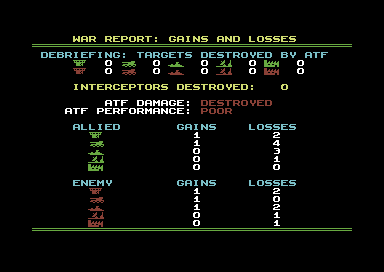
Graphics
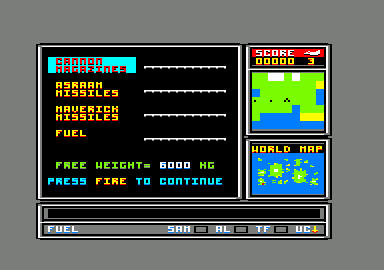
The camera stays fixed behind the fighter, keeping the jet and the airspace ahead in view throughout the action. It is a direct, functional angle for judging your approach to targets and deciding whether to keep low or turn toward an enemy.
Story
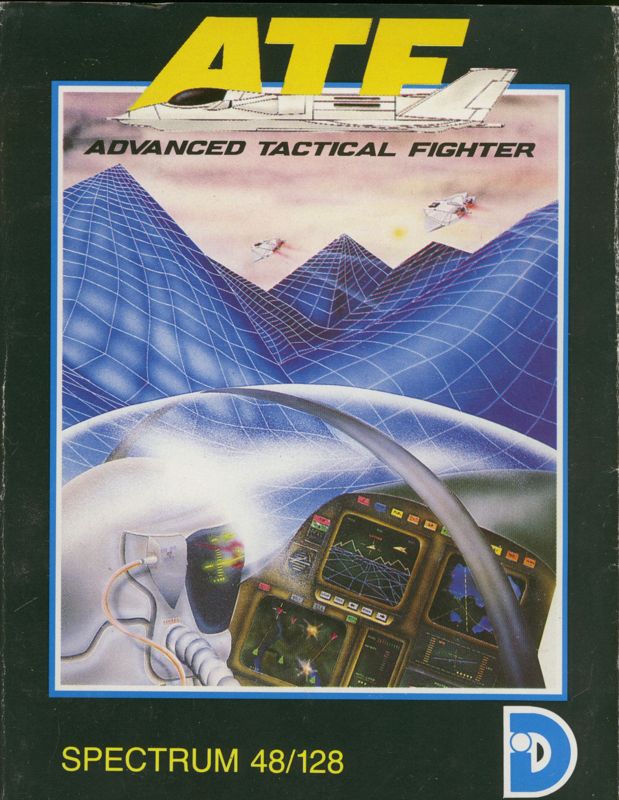
ATF frames its missions with a war between two unnamed sides over an unnamed island. You pilot a Lockheed ATF fighter-bomber for one side, and the campaign’s immediate purpose is to knock out strategic targets and help win the conflict.
That is a very spare setup, and it does not pretend to be more than a reason to fly missions. There are no supported personal stakes or elaborate political details to pull you through; the story lives in the practical question of whether you can get to the next objective and return safely.
For this kind of action game, the thin narrative is not a deal-breaker. The conflict gives target destruction a military context, but the tension comes from your own decisions in the cockpit: how far you can push your supplies, when to avoid a fight, and when to head home.
Overall Experience
ATF: Advanced Tactical Fighter is a compact flight-action game with more tactical texture than its basic premise suggests. Choosing target order, avoiding or confronting enemy aircraft, and managing a limited aircraft make each round feel like a small operation rather than a disconnected arcade stage.
Its limitations are also clear. The game is built around a narrow mission loop, and the same systems that create tension can make it demanding in a less immediately exciting way. You need patience for speed control and for the consequences of dwindling resources; there is little room for reckless sightseeing.
Still, the payoff is worthwhile if you like older flight games that sit between pure arcade action and heavier simulation. ATF does not overwhelm you with procedures, yet it makes landing, refuelling, target selection, and survival matter. Give it a chance if you want a focused 1988 fighter-bomber game where sensible planning is as valuable as a good shot.


Reviews
There are no reviews yet.