 Retro Replay Retro Replay gaming reviews, news, emulation, geek stuff and more!


Retro Replay Review
Gameplay
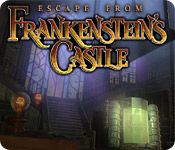
You settle into Escape from Frankenstein’s Castle quickly. Hannah wakes after an accident in a strange bedroom, and the immediate job is clear: search the castle room by room, collect loose objects, and find the sensible spot where each one belongs. It is familiar adventure-game work, but the first-person viewpoint keeps the hunt focused on the contents of each room rather than on wandering a larger world.
The game is built for momentum over stubbornness. Items sit in the inventory along the bottom of the screen, then you drag them onto parts of the scenery to try an action. Locks and mechanisms open in smaller interactive windows, while some larger puzzles move to their own screens. The logic is intentionally simple and casual-friendly, so you are usually making steady progress instead of spending ages deciphering an obscure chain of adventure-game logic.
That friendliness is also where frustration can change shape. You are less likely to be stopped by a brutal puzzle than to fall into the routine of sweeping up every available object and trying the obvious uses. Isabella, a trapped soul who supplies hints, is there when that routine stalls, and some standalone puzzles can simply be skipped. Her memory screens also offer clues, while optional silhouette collections give thorough explorers a small extra task.
This is a good fit when you want a guided, low-pressure puzzle crawl with a spooky coat of paint. If your favorite adventures demand intricate deductions and dense interaction, the straightforward object placement and generous escape valves will probably feel thin. For its intended casual pace, though, the game understands that getting you into the next unsettling room matters more than proving how clever it is.

Graphics
The game frames the castle through first-person room scenes, inviting you to inspect bedrooms and other locations for objects and usable details. Puzzle mechanisms appear in close-up windows when you interact with them, which helps separate a lock or device from the surrounding search scene.
The interface keeps the important aids in view: inventory along the bottom, task list on the left, and Isabella’s ghost on the right. Isabella’s memory screens change the view again to show clue images and object silhouettes for the optional collection goal.

Story
The opening is compact and effective in the old gothic-adventure way. Hannah is traveling through Vienna with her boyfriend when a road accident leaves her waking in a mysterious castle, with no clear explanation for how she arrived. Meeting Dorian the butler gives the place an immediate human presence, but hardly a comforting one.
From there, the mystery draws on Frankenstein rather than trying to retell it faithfully. Hannah’s exploration uncovers horrors connected to Mary Shelley’s classic, and the castle supplies the right sort of setting for that material: enclosed rooms, trapped secrets, and a sense that every new discovery may explain why escape is necessary.
Isabella gives the story a useful second thread. She is not merely a hint device in mechanical terms; as a trapped soul with memories scattered through the castle, she gives the puzzles a reason to point backward into the house’s past. The result is a brisk horror premise that supports the scavenging without asking you to untangle a sprawling narrative.
Overall Experience
Escape from Frankenstein’s Castle knows exactly what kind of evening it wants to fill. You move through a sinister castle, clear simple object puzzles, consult a ghost when needed, and gradually uncover a Frankenstein-flavored mystery. Its best quality is that it rarely lets a puzzle become a wall between you and the next room.
The trade-off is plain: challenge is modest by design. Skippable puzzle sequences and direct hints are welcome if you want the story and atmosphere to keep rolling, yet they reduce the satisfaction of solving everything on your own. The optional silhouette items add a reason to search carefully, but they do not turn this into a deeper or more demanding adventure.
Ultimately, this is an easy recommendation for casual point-and-click fans who enjoy gothic horror and prefer steady progress to punishing riddles. Go in for the castle’s mystery and a few uncomplicated puzzles, not for a rigorous test of adventure-game problem solving. The payoff is modest but appropriate: a comfortably spooky escape room built around Frankenstein’s shadow.


Reviews
There are no reviews yet.