 Retro Replay Retro Gaming History, Reviews & Emulation
Retro Replay Review
Gameplay
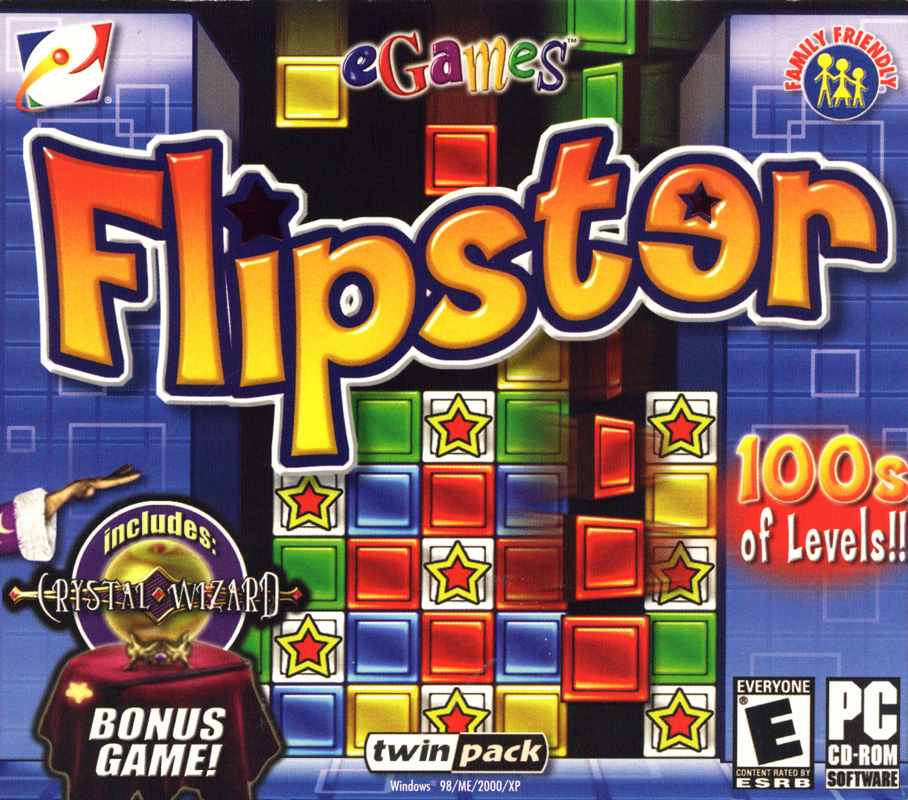
The first few drops tell you what makes Flipster more interesting than a straightforward falling-block game. A block arrives with two possible colors, and flipping it before it lands lets you revise your plan in midair. Matches need three touching blocks of the same color, so the satisfying moments come when one well-placed piece clears a group, drops the stack above it, and creates another match.
That chain-reaction potential gives the game a nice push-and-pull. You want to build compact color groups, but you also have to leave yourself room to exploit the other side of incoming blocks. Once this starts clicking, the board becomes less about reacting to the current piece and more about setting up landing spots for either color. It is a small twist, but it asks for real attention.
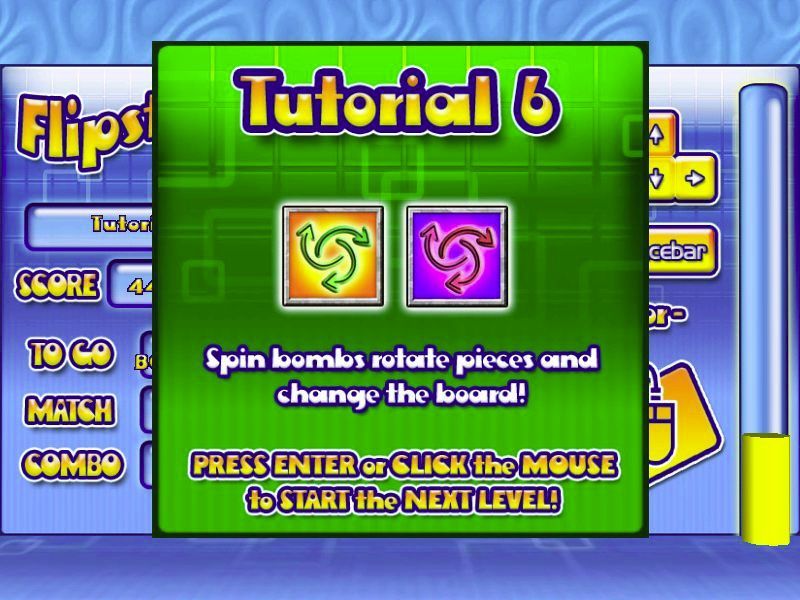
The special pieces keep that attention from becoming too routine. Bombs clear nearby clutter, row destroyers cut a useful line through the board, and color destroyers can erase every block of a chosen matching color. Flippers are more chaotic, randomly changing a row or column, which can either uncover a welcome match or scramble a carefully arranged area. Metal blocks are a particularly awkward obstacle: they crush what sits below them but cannot join a color match. Stars demand their own matches, adding another thing to account for when the stack gets busy.
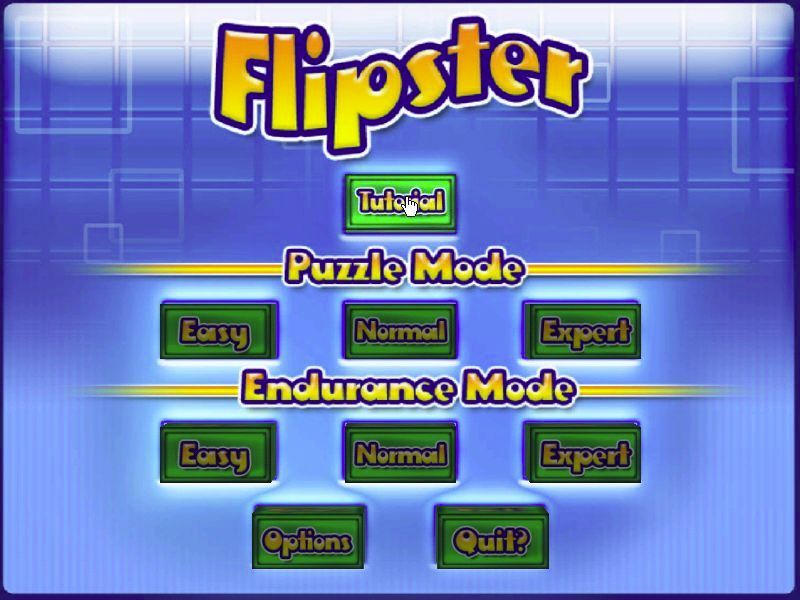
Puzzle mode has over 100 levels and asks you to destroy a required number of blocks, making it the better place to dig into the game’s variations. Three difficulty settings help determine how demanding that climb feels. Endurance mode strips the goal back to survival, and it is the right choice when you want the clean tension of keeping a board alive for as long as possible. The tutorial is welcome, because the flipping idea is simple to explain but easier to appreciate once you see how much it changes placement.
Graphics
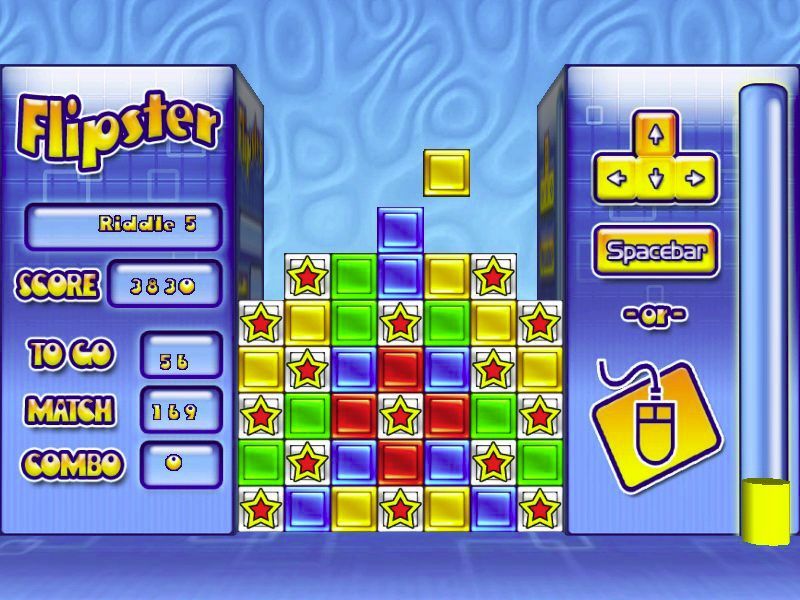
The board is built around brightly colored blocks, with the important visual information carried by color and by the distinct special-piece types. Since every ordinary block can switch between two colors, being able to identify a useful match at a glance matters more than decorative detail, and the game’s block-focused look keeps your attention on the stack.
Story
Flipster is not trying to wrap its puzzles in a narrative. Its momentum comes from the immediate problem on the board: find the match, choose the right face of the next block, and prevent the pile from becoming unmanageable.
That absence fits the format. The levels have enough built-in purpose through their destruction targets, while Endurance creates its own tiny dramas whenever an awkward piece threatens to close off your options.
If you need characters or a plot to carry you from one challenge to the next, this will feel bare. If you are happy letting score, survival, and the next satisfying cascade supply the motivation, it stays focused.
Overall Experience
Flipster succeeds because its central change is both easy to understand and useful almost every second you play. Flipping a block does not bury a simple puzzler under complicated systems; it gives every falling piece a second chance to be clever. That makes ordinary clears feel earned and chain reactions feel like the payoff for planning ahead.
Frustration is most likely to arrive when metal, stars, and random reflips crowd a board that was already tight. Some players will enjoy having to recover from that disorder, while others may prefer a more controlled style of falling-block puzzle. The key is to avoid treating every drop as a single-color decision: preserve flexible spaces, and remember that the block you do not match now may become the link in a later cascade.
With a large level set, adjustable difficulty, and a separate survival mode, there is more staying power here than the modest rules first suggest. It is a good fit for anyone who likes real-time matching games but wants more agency than simply steering a piece into the least bad gap. The idea is focused, the pressure is immediate, and the flip mechanic is strong enough to make the game worth a place in a puzzle rotation.

Reviews
There are no reviews yet.