 Retro Replay Retro Replay gaming reviews, news, emulation, geek stuff and more!

Retro Replay Review
Gameplay
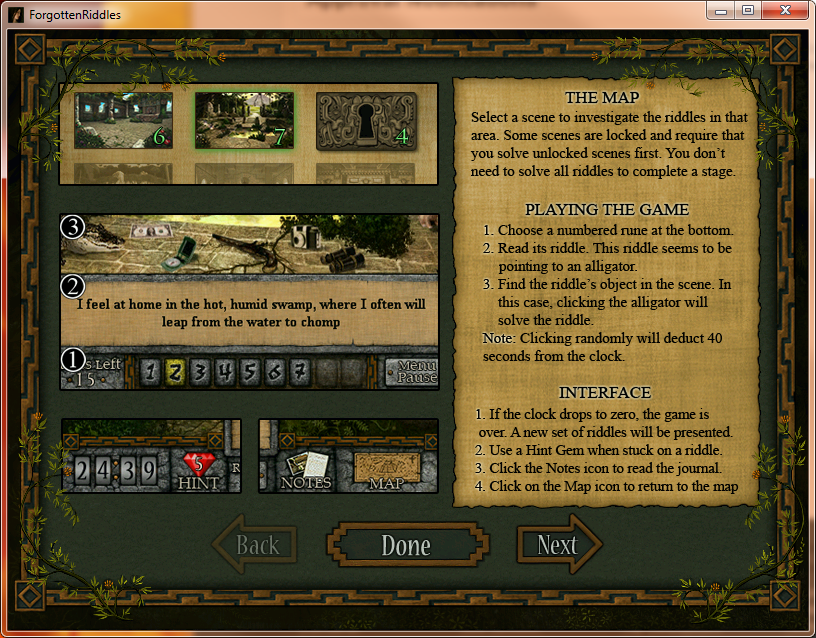
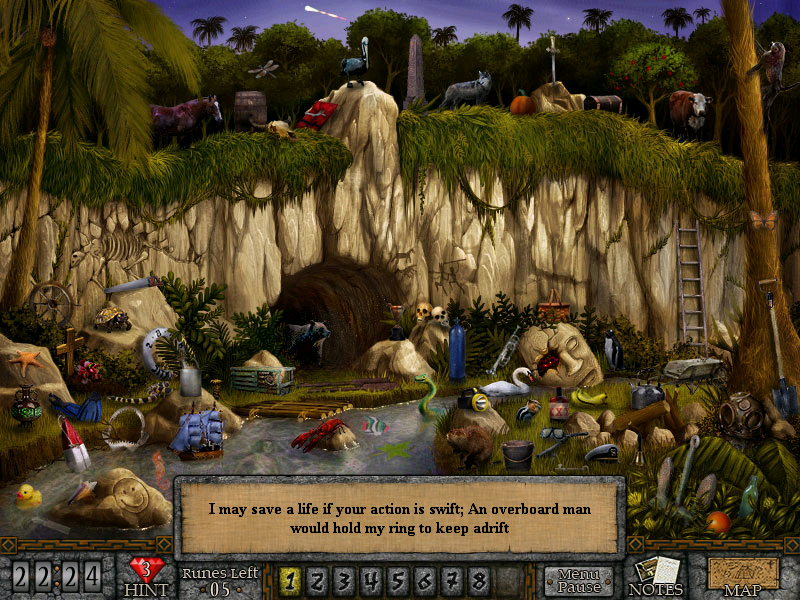
The first few searches ask you to slow down in a way most hidden-object games do not. Instead of scanning a list for a plainly named object, you read a riddle, work out what it describes, then look for the answer in the scene. It is a modest change on paper, but it gives every find a satisfying two-step rhythm. When you immediately crack a clue, you feel clever; when one refuses to yield, the search can turn into a pleasantly stubborn bit of detective work.
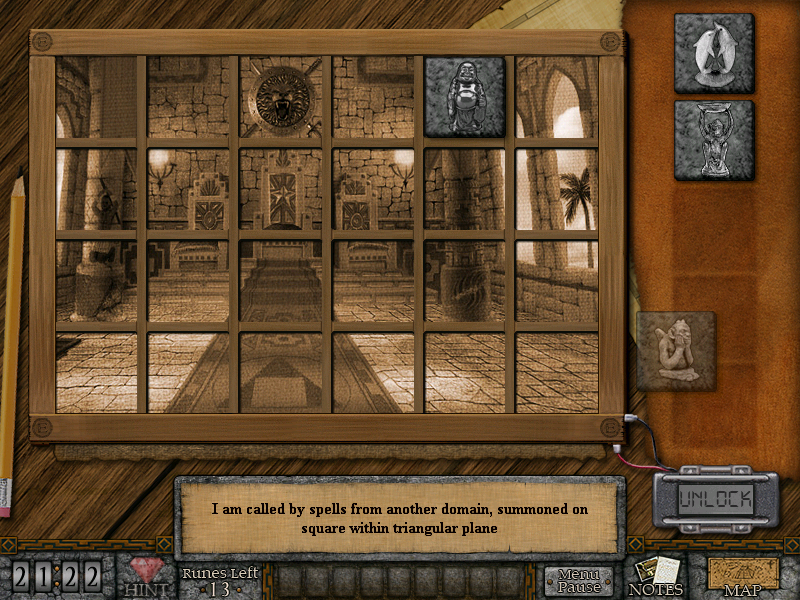
Blue Tea Games also avoids making a single bad riddle a brick wall. Each group of scenes contains more riddles than you need to complete it, and hints give you another escape hatch. That makes the game more welcoming than its premise initially suggests. You can skip around among the scenes in a stage, though some must be opened first by placing tiles in the locations indicated by further riddles. The freedom to choose another scene when your brain is stuck is one of the game’s better decisions.
The tile puzzles between stages are straightforward palate cleansers. You rotate pieces until they form the correct arrangement, with completed rows and columns locking into place. They are unlikely to be anyone’s main reason for playing, but they break up the object searches without demanding a totally different skill set. If timed searching makes you tense, choose Apprentice mode: it removes the time limit and supplies more hints. More experienced puzzle fans will likely get more out of tackling the regular mode first.

Graphics
You view the game through fixed, individual scenes rather than freely roaming spaces. That camera choice suits the riddle hunts, keeping each location a contained picture where you can concentrate on matching a clue to an object.
Story
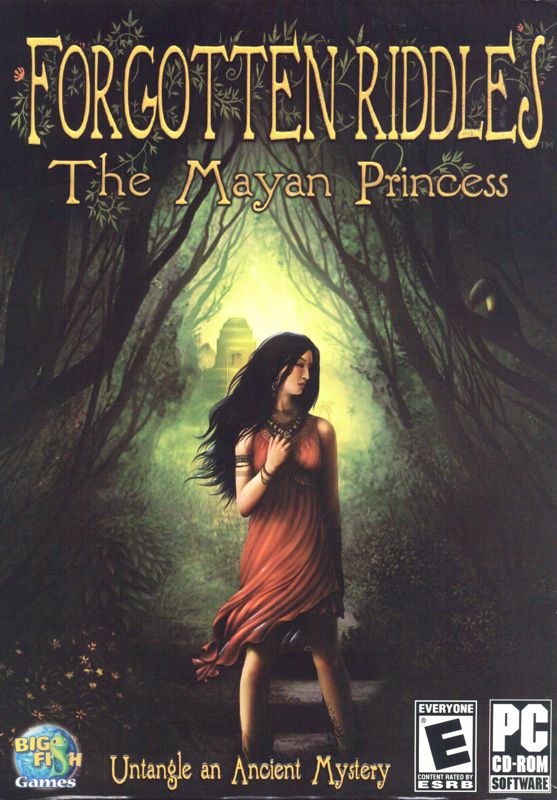
The mystery begins with royal Mayan artifacts appearing after the royal family was believed dead. You are sent to investigate, and the trail points toward the last Mayan princess, who escaped the destruction with help from an unlikely source. It is a clean setup for a globe-trotting-style puzzle mystery, even if the story’s main job is to give your searches a reason to continue.
What works is the immediate question at its center: if the princess survived, what happened, and who helped her get away? That is a more focused hook than a vague treasure hunt. The investigation has forward momentum because each new stage represents another step along her trail.
Don’t come in expecting the narrative to overpower the puzzles. The riddle format is clearly the star, while the Mayan-princess thread supplies the context and destination. Still, it is a stronger frame than random rooms full of unrelated objects, and it gives the game a little mystery-novel flavor between challenges.
Overall Experience
Forgotten Riddles: The Mayan Princess succeeds because it understands that hidden-object games can become mechanical when all you do is match labels to pictures. Replacing the labels with riddles makes you participate before you start scanning. The best moments arrive when a clue suddenly makes sense and you spot its answer almost at once; the weaker ones are the clues that leave you guessing what the game wants.
Its safety nets make that frustration manageable. Extra riddles, hints, selectable scenes, and the no-timer Apprentice mode let you tailor the pressure instead of repeatedly slamming into the same obstacle. That flexibility is especially useful for a game built around wordplay, where difficulty can depend as much on whether a riddle clicks with you as on your eye for detail.
Give it a chance if you enjoy hidden-object games but want each search to begin with a small puzzle. It will not convert someone who dislikes combing through scenes for items, and the tile interludes are fairly light, but the central twist is worthwhile. This is a thoughtful, relaxed puzzle game with enough structure to keep its searching from feeling automatic.



Reviews
There are no reviews yet.