 Retro Replay Retro Gaming History, Reviews & Emulation
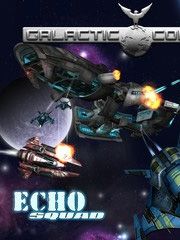
Retro Replay Review
Gameplay
The first hour of Galactic Command: Echo Squad is less about feeling like an unstoppable space ace than realizing how many jobs sit between you and a successful mission. You occupy the cockpit of a spacecraft during a war for the Sol system, and you can take responsibility for maneuvering, combat, and the rest of the ship’s operation. That level of control is the game’s central promise, but it is also its first major hurdle.
Trying to run every task by hand sounds admirable until the control demands make it clear why automation exists. The automatic pilot is not a concession for newcomers; it is a practical tool that lets you focus on the decisions you actually want to own. You can still take direct control when it matters, but Echo Squad is more convincing when you treat it as a command simulation rather than insist on personally performing every duty.
Squad orders give the missions a welcome sense of responsibility beyond your own cockpit. The game asks you to think about directing allies as well as surviving the fight, which suits its realism-focused approach. With only 16 missions, the campaign does not promise endless variety, but the layered workload means a player willing to learn its rhythm can get substantial mileage from each assignment.
Graphics
Echo Squad is presented primarily from the cockpit, and that perspective matters more here than spectacle. It keeps you rooted in the role of a ship operator: you are not simply watching a space battle unfold from a comfortable distance, but working from inside the craft that has to carry out the mission.
The game also supports an external third-person perspective, useful for anyone who wants a broader view of their spacecraft. Still, the cockpit is where its identity is strongest. The presentation serves the simulation mindset, emphasizing your place within a complicated machine rather than selling the action as a lightweight arcade fantasy.
Do not come in expecting the visuals alone to carry the experience. Echo Squad’s draw is the feeling of operating and commanding a spacecraft under pressure. If that premise grabs you, the cockpit framing reinforces it effectively; if you need constant visual flash, the game has a harder time making its case.
Story
The setup is clean, familiar military science fiction: the Gammulans have invaded the Sol system, and Galactic Command answers with a newly developed, powerful spacecraft. You fly that craft as the alliance begins to strike back. It gives the campaign a direct sense of purpose without requiring a complicated political primer before you can get to work.
That straightforward premise fits the mission-based structure. The war is a reason to climb into the cockpit, take orders, give orders, and push into hostile space. Echo Squad does not need a more elaborate hook to justify its action, because the focus remains on the responsibilities attached to fielding an advanced combat vessel.
If you need character-heavy drama or a story that overshadows the simulation, this is unlikely to be the draw. The conflict works best as framing for a campaign about command pressure: the stakes are clear, your side is counterattacking, and your ship is meant to make the difference.
Overall Experience
Galactic Command: Echo Squad has a particular kind of satisfaction. At first, its complexity can feel like friction, especially if you arrive expecting a straightforward space shooter. Once you accept that automation is part of the intended toolkit and start treating squad orders as part of the job, the game’s demanding design starts to make more sense.
Its biggest strength is that it lets you decide how deeply to inhabit the role. You can wrestle with direct ship operation, hand routine work to the automatic pilot, or balance both while directing your squad. That flexibility does not make the game casual, but it does keep the simulation from becoming a purity test for people who do not want to micromanage every action.
Recommend it to space-sim fans who enjoy cockpit procedure, military framing, and the burden of command. The payoff is worth pursuing if you find satisfaction in mastering a busy spacecraft and delegating intelligently. Everyone else may find that the same realism-minded complexity standing between them and the action never fully disappears.



Reviews
There are no reviews yet.