 Retro Replay Retro Gaming History, Reviews & Emulation
Retro Replay Review
Gameplay
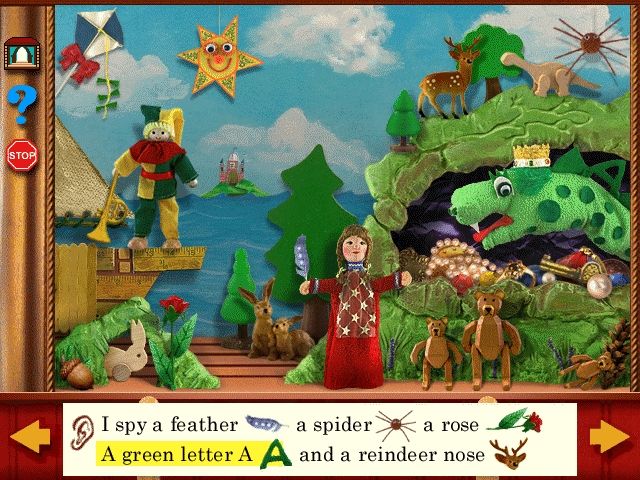
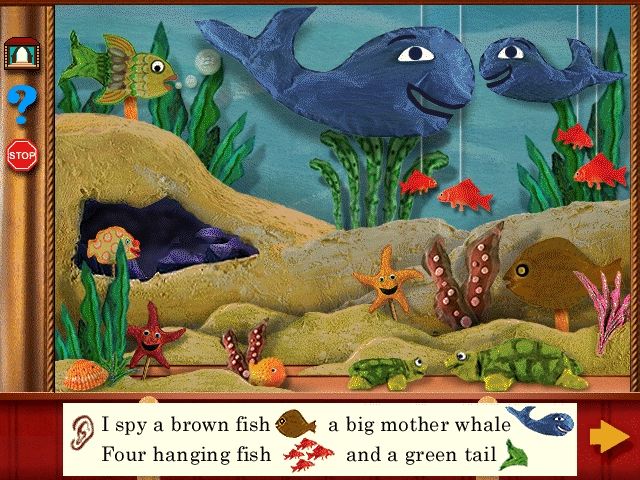
The first few minutes make the game’s intent wonderfully clear: listen for an item, scan the scene, and click when you find it. Puppet Show Riddles is the centerpiece, and it is well chosen for a preschool audience. The request can be read or heard, so a child can work with an adult, practice early reading, or simply rely on listening. Turning each search into part of a puppet-show scene gives the familiar hidden-object routine a little warmth.
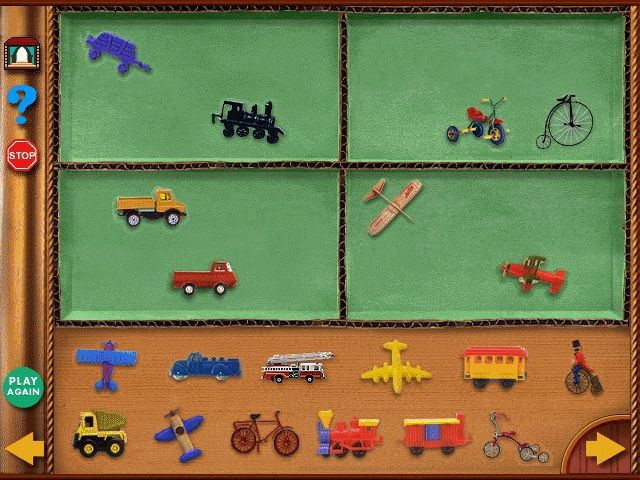
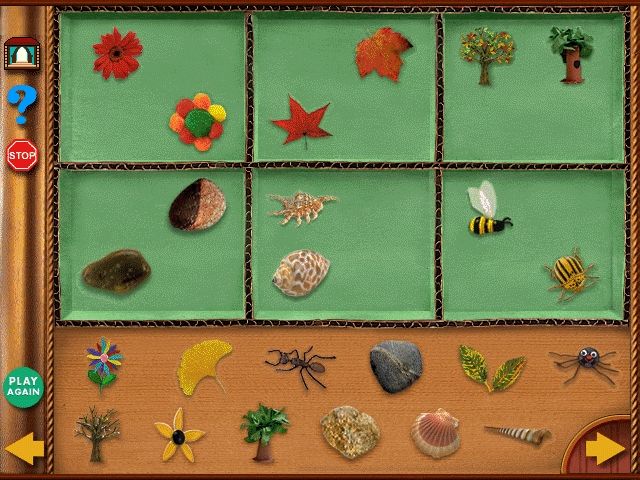
The other activities stop the game from becoming one long sequence of object hunts. Prop Box asks you to drag items into boxes with related objects, which is a straightforward sorting exercise with three levels. Puppet Maker shifts attention to following spoken placement instructions as you assemble one of six puppets. Neither idea is complicated, but that is exactly the point: children can understand the goal quickly and spend their energy noticing connections, listening carefully, and making choices.
Make Your Own I Spy is the smartest extra here. Dragging objects into a picture lets a child move from solving someone else’s puzzle to arranging one of their own, and save/load support means a work-in-progress does not have to vanish. Printing is especially welcome for a game aimed at young children; it creates an easy handoff from screen time to a picture they can share. The limited number of shows, levels, and puppets means adults should not expect an endless activity box, but the variety is enough to make repeat visits feel purposeful.
Graphics
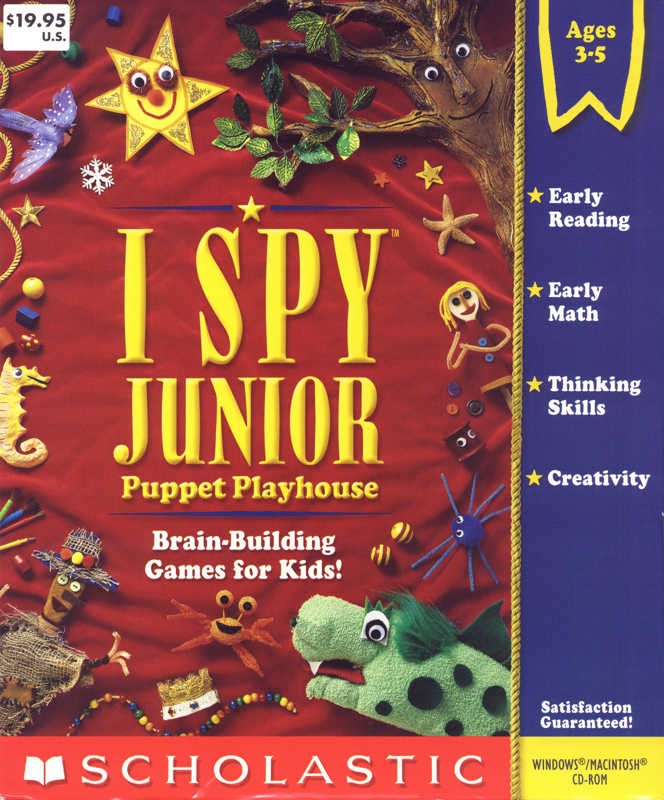
The game is built around puppet-show scenes and puppets you construct piece by piece, so its pictures are easy for a young child to parse: look at the stage, spot the requested object, then place parts where they belong. The point-and-click layouts and draggable props suit the activities cleanly, with the puppet framing giving the searches more character than a plain object board.
Story
Rather than telling one long tale, Puppet Playhouse uses four puppet shows as the frame for its riddle scenes. That is a sensible scale for the audience. You are not asking a three-year-old to hold onto a complicated plot before they can begin playing; the show exists to make each round of looking and clicking feel like a small occasion.
The strongest narrative touch is simply the sense that the activities belong in the same playhouse. Searching a staged scene, sorting props, and building puppets all circle the same theme, which makes the package feel more coherent than a random collection of preschool worksheets. A child can grasp the connection immediately.
Adults looking for a deep story to follow alongside their child will find the focus firmly on activities instead. That is not a weakness in this case. The puppet-show wrapper gives the game enough imaginative context, then gets out of the way so the riddles, categorizing, and construction tasks can do their job.
Overall Experience
This is a good fit when you want calm, guided computer play for a child who is beginning to enjoy matching games, simple instructions, and picture-based puzzles. The early pull comes from the directness of the tasks: hear what to find, find it; see a prop, decide where it belongs; hear a puppet’s request, put a piece in place. There is very little conceptual clutter between a child and the next small success.
What starts to click is the range of skills tucked into that simple loop. Puppet Show Riddles encourages careful looking and listening, Prop Box asks for basic grouping, and Puppet Maker reinforces attention to directions. Because the games ask for different kinds of thought without abandoning the same familiar click-and-drag language, young children can switch activities before repetition turns into frustration.
The payoff is gentle confidence rather than a grand challenge. Older children will likely outgrow its small set of activities quickly, and even its intended audience may benefit from an adult nearby for reading help or encouragement. But for ages 3–5, it is a thoughtfully targeted collection: friendly, understandable, and made better by the chance to create and print a personal I Spy picture. Give it a chance if you want early-learning software that treats play as the route into listening, sorting, and observation.


Reviews
There are no reviews yet.