 Retro Replay Retro Gaming History, Reviews & Emulation
Retro Replay Review
Gameplay
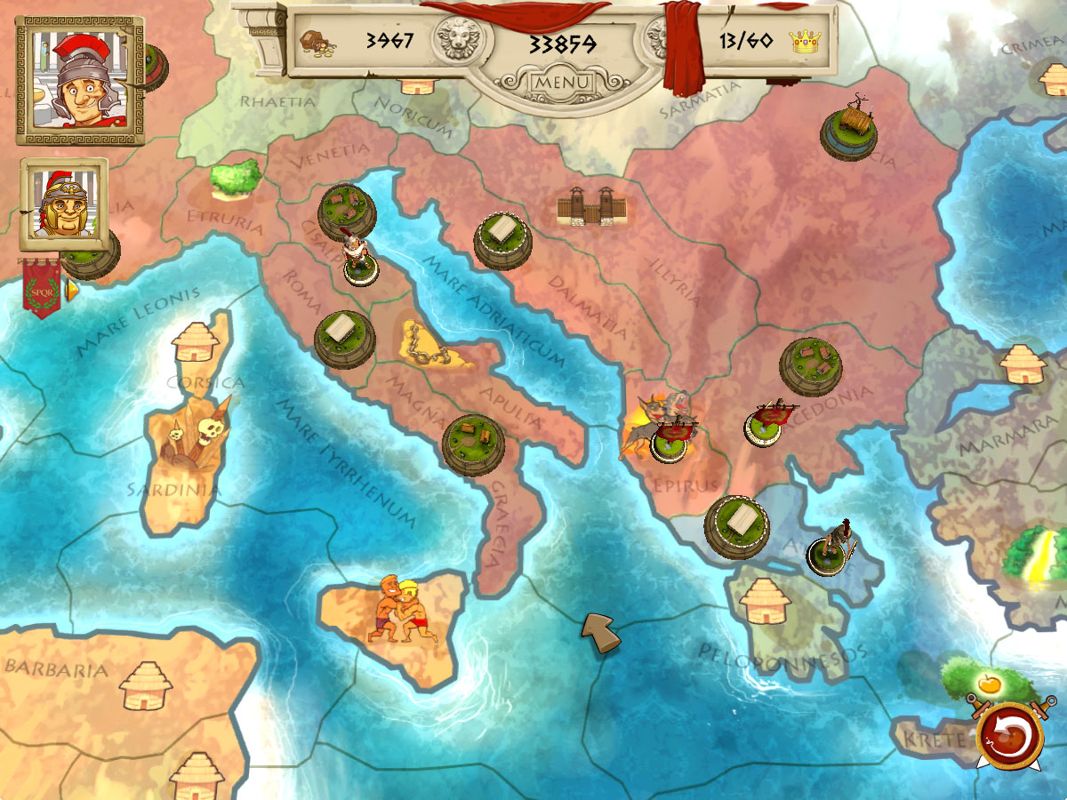
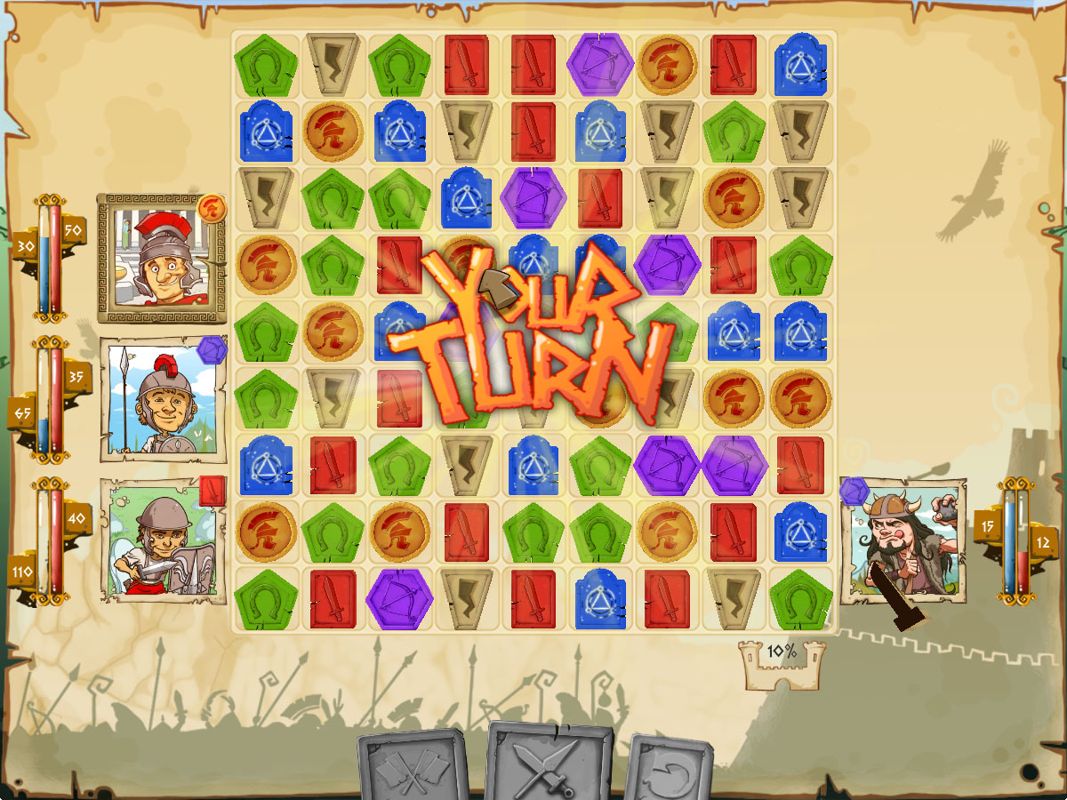
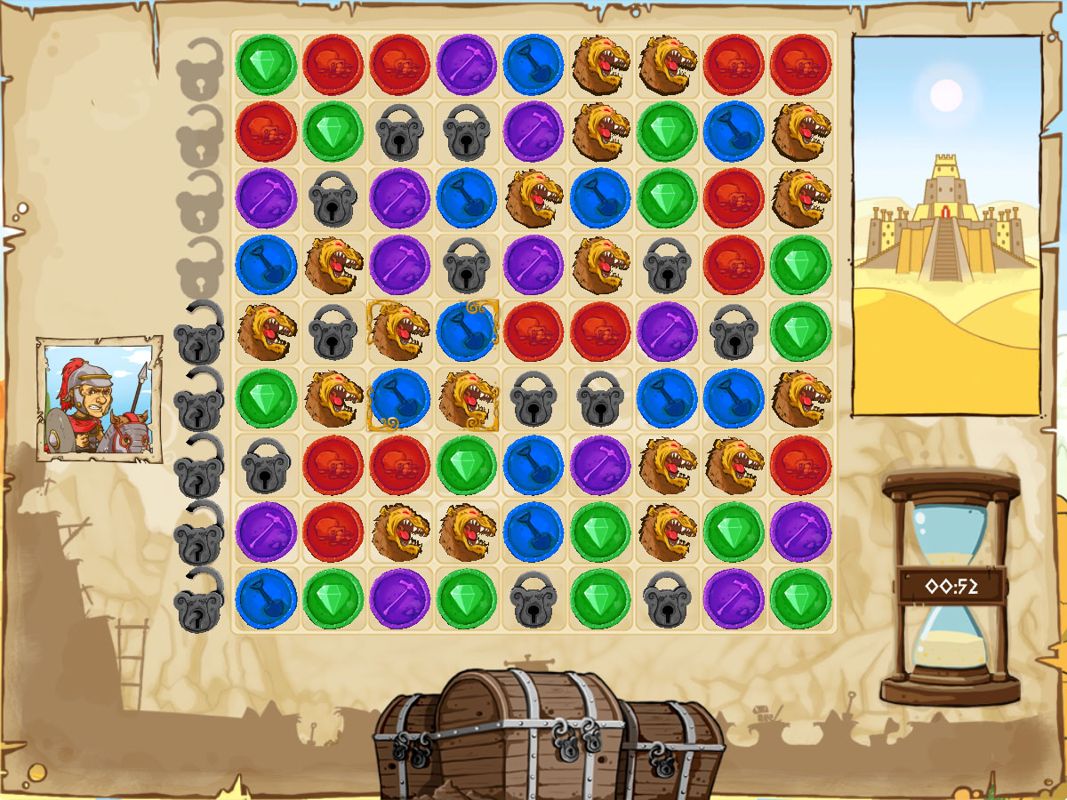
The first hour of Tiny Token Empires is disarmingly simple: claim territory, grow cities, recruit troops, and push your army across the Mediterranean. Then a fight begins and the game reveals its real trick. Every battle is a match-3 puzzle, but matching gems is not merely about clearing a board or chasing a score. Each color feeds a troop or monster ability, filling that unit’s attack bar until it can act. A red match, for example, charges close-combat infantry; bring two such units and both benefit. Suddenly, army composition matters even when you are staring at a pile of gems.
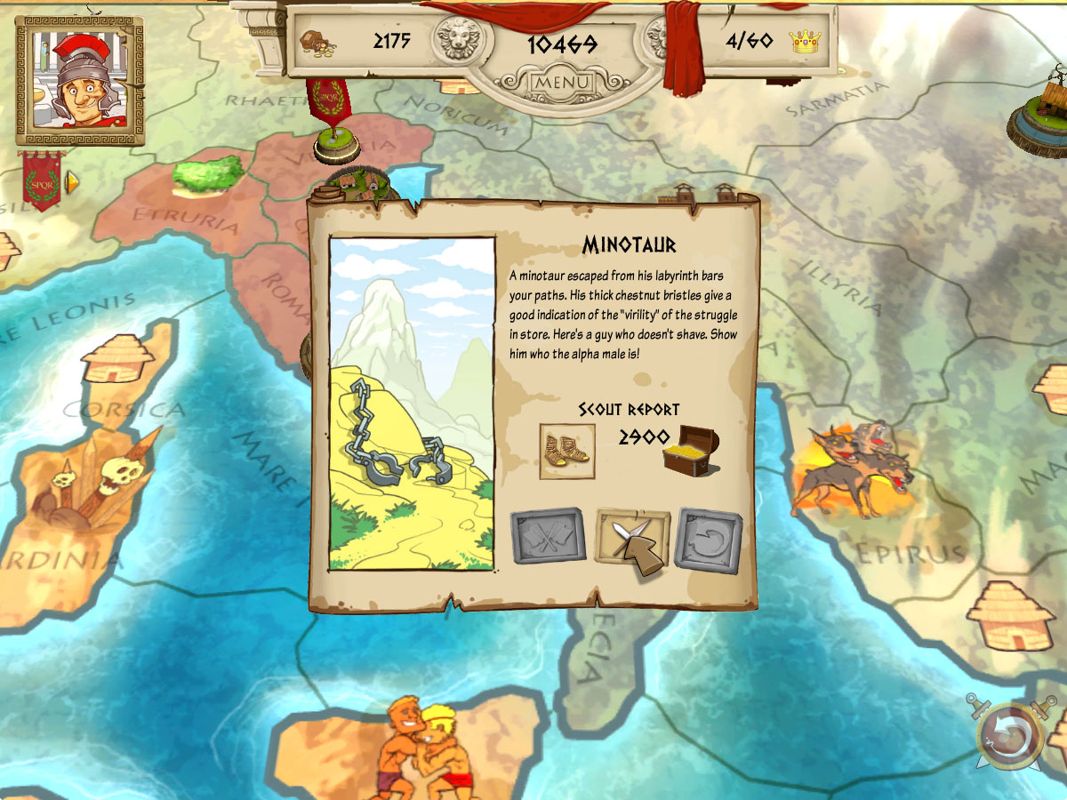
That link between the world map and the battle board gives the game more bite than either half would have alone. You can only field five troops per army, so there is a useful tension in building a force with different needs versus doubling down on units that benefit from the same matches. Cities let you create and expand your foothold, recruit more soldiers, and erect defenses that influence battles. Exploring also has a purpose beyond map cleanup: barbarian territories must be beaten to be taken, treasure sites can produce gold and equipment, and mythological monsters guard their own difficult territory.
The catch is that puzzle-board uncertainty can make a sensible strategic plan feel briefly hostage to the draw. You may know exactly which unit needs charging, only to have the board refuse to cooperate. That frustration is part of the design rather than a total deal-breaker, because it forces you to consider several units and priorities instead of waiting for one perfect attack. Still, gamers who want deterministic turn-based combat may find the match-3 layer too fickle. If you enjoy adapting on the fly, it turns routine fights into small, surprisingly tense decisions.
There is a healthy amount to play through. Rome, Greece, Egypt, Persia, and Carthage each receive a four-scenario campaign, and the scenario generator extends the format into single-player and multiplayer matches. The PlayStation 3 version also includes a Mythological Monsters campaign. None of this changes the core loop, but that core is sturdy: expand, equip, take a risky fight, and use the next reward to reach further.
Graphics
Tiny Token Empires moves between a top-down Mediterranean overview map and side-view match-3 battle screens. The map keeps cities, armies, and unclaimed territories distinct enough for the conquest layer to make sense at a glance, while the battle boards put colored symbols front and center so you can quickly see which troop abilities you are charging.
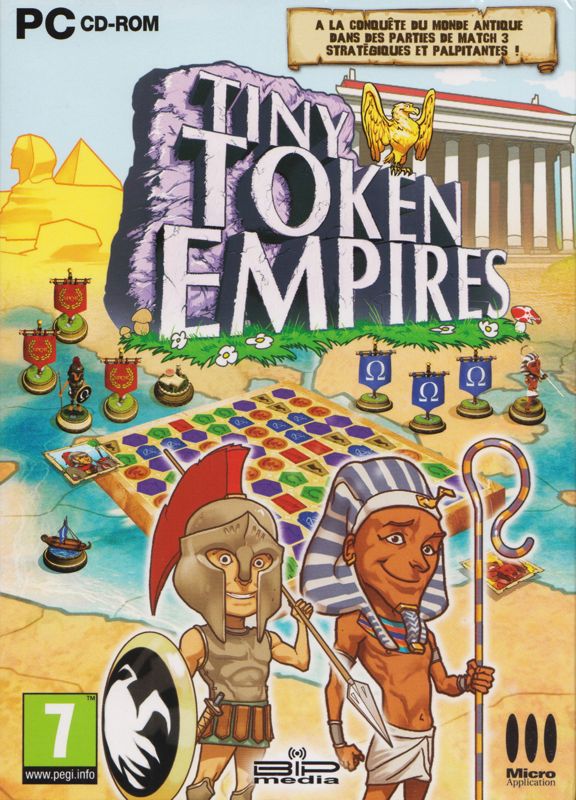
The historical empires share space with fantasy threats such as the Minotaur, giving the journey a playful classical-antiquity flavor rather than treating the setting with strict seriousness. Its 2D look serves the puzzle-strategy mix cleanly: you are rarely confused about whether you are planning a campaign move or preparing an attack.
Story
This is a conquest game first, not a character-driven epic. You choose one of five ancient empires and set out to control the Mediterranean, with each faction receiving its own campaign. The immediate motivation is territorial: establish cities, press into hostile land, and remove whoever stands between your empire and the next region.
What gives the campaign map some texture is the mix of barbarians, hidden treasure, artifacts, generals, and monsters from mythology. Finding equipment for your main hero or army generals provides a concrete reward for taking detours, while monster territories promise a tougher challenge than ordinary expansion. These elements make the map feel less like a sequence of identical squares to color over.
Do not come expecting a heavily scripted historical drama. Tiny Token Empires uses Rome, Greece, Egypt, Persia, and Carthage as different banners for its campaign structure, then happily folds in fantasy creatures. It works because the game is honest about its priorities: the story is there to keep the next conquest, treasure hunt, or monster battle moving.
Overall Experience
Tiny Token Empires earns its place by making two familiar genres pull on each other. The strategic map prevents the match-3 battles from feeling disposable, while the gem boards keep turn-based territorial warfare from becoming slow and procedural. When the loop clicks, you are not simply solving puzzles or moving tokens; you are trying to make the army you built actually function under pressure.
Its biggest strength is that it asks for tactical thought without demanding the patience usually associated with grand strategy. You have city development, recruiting, defenses, territory control, artifacts, and army limits, but the decisions remain compact. A five-unit army is manageable, and a battle resolves through immediate puzzle choices rather than long turns of calculation.
The trade-off is clear. Random board layouts can blunt the satisfaction of perfect preparation, and anyone who dislikes match-3 games will not be converted merely because armies are attached. But for you if both genres already sound appealing, the compromise is more often a feature than a flaw. The puzzle layer creates momentum, and the map gives each match consequence.
At 7.1, Tiny Token Empires lands as a genuinely good hybrid rather than an essential classic. Give it a chance if you want a compact campaign game where clever gem matching can decide the fate of a city, a treasure expedition, or a border war. Skip it only if you need your tactical combat fully under your control; everyone else may find its odd little blend much more compelling than it first appears.


Reviews
There are no reviews yet.