 Retro Replay Retro Gaming History, Reviews & Emulation
Retro Replay Review
Gameplay
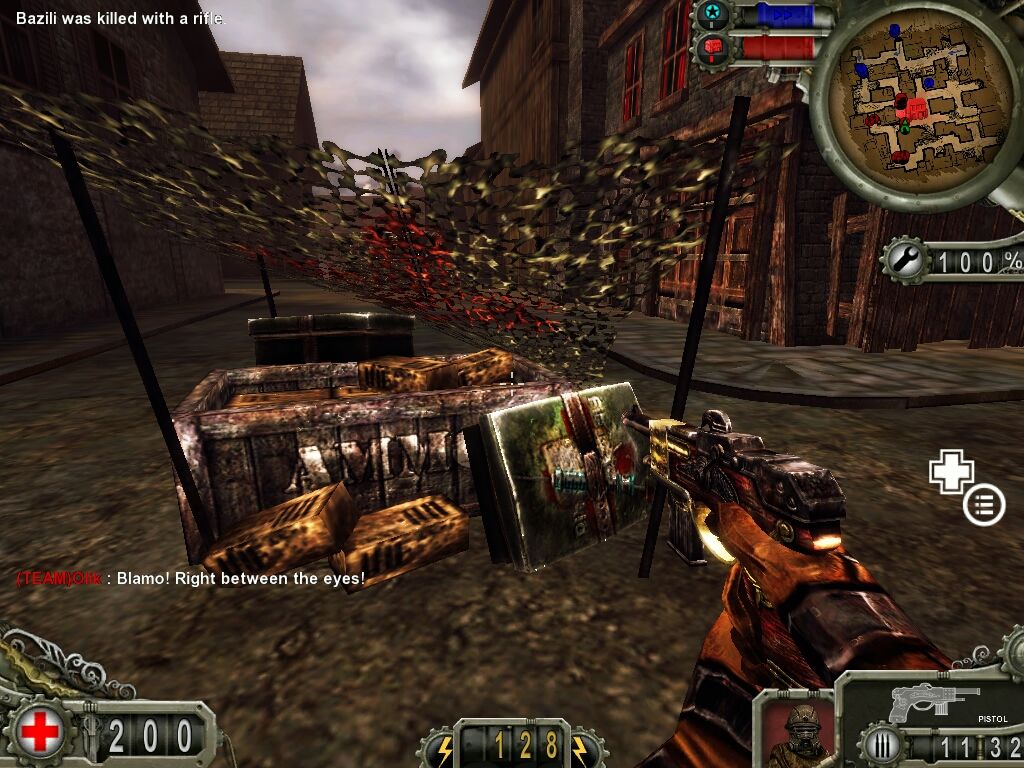
The first hour of Iron Grip: Warlord has a pleasingly scrappy rhythm: spend what Power you have, set up a few defenses, and then get your hands dirty when the attack comes. You are not only placing machine-gun nests and anti-tank turrets from an overhead view; you are also stepping into first-person combat to help hold the same ground. That combination gives the battles more urgency than a detached tower-defense match and more purpose than a straightforward shooter.
Power is the thread tying its ideas together. At the start of a level, you decide whether to invest in structures or improve your weapons and personal abilities. More Power arrives slowly if you stay alive, and faster through kills, destroyed enemy units such as tanks and mech walkers, and treasure found on the battlefield. The result is a steady push-and-pull between spending now to survive and building toward a stronger defense later.
The leader targets are a smart touch because killing one does more than add another enemy to your tally: it demoralizes opposing troops. That makes the battlefield priorities feel broader than pointing at the nearest soldier. Still, the game’s premise asks you to enjoy switching mental gears. If you only want a pure FPS or a deeply methodical strategy game, the back-and-forth may feel like a compromise. If you like reacting to a collapsing defensive line while trying to improve it, this is where Iron Grip finds its footing.
Co-op multiplayer suits the design well. Defending against a numerically stronger force naturally benefits from extra hands, whether that means more guns facing the enemy or more room to recover when a plan goes wrong. The game is strongest when its building, shooting, and resource decisions are all demanding your attention at once.
Graphics
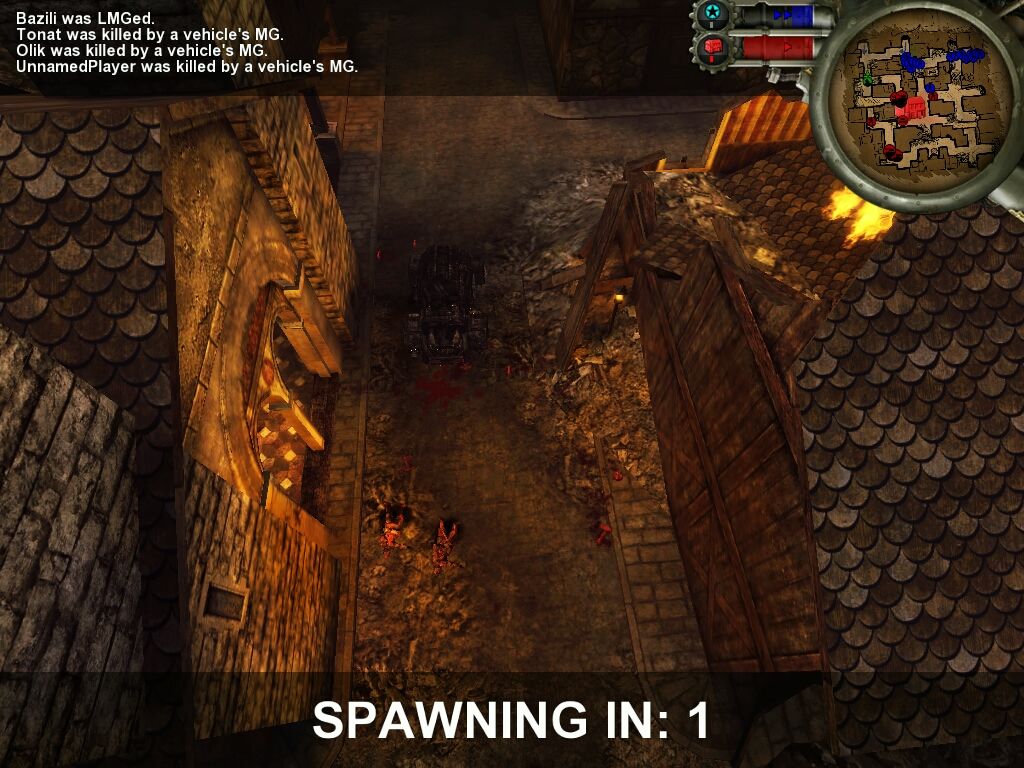
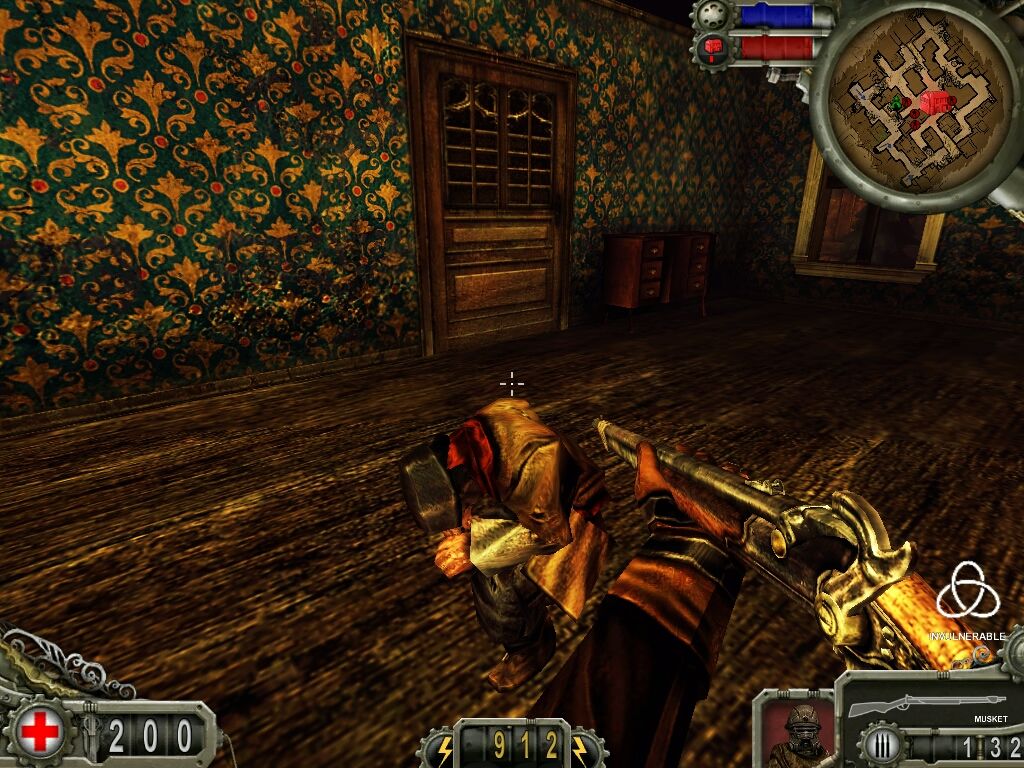
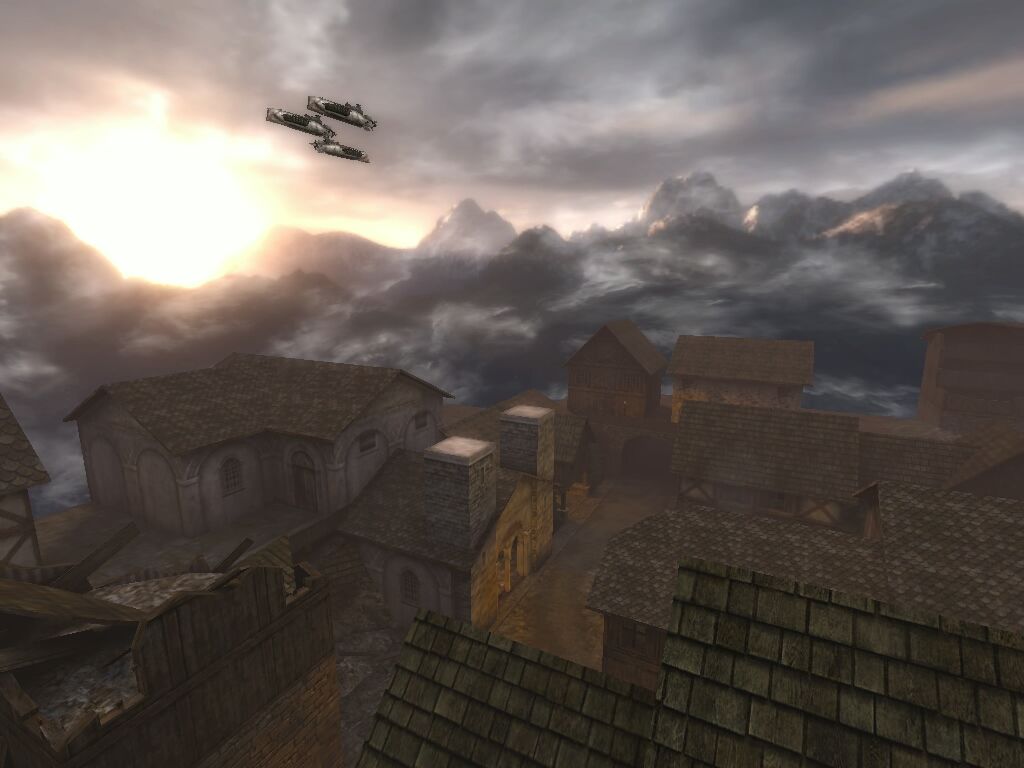
Iron Grip: Warlord uses the Quake 3 engine, with urban battlefields viewed either from above while you place defenses or through your character’s eyes during combat. The changing camera perspective is the clearest visual strength: the overhead view lets you judge where nests, turrets, and traps belong, while the FPS view puts you in the middle of the infantry, tanks, and mech walkers you are trying to stop.
Story
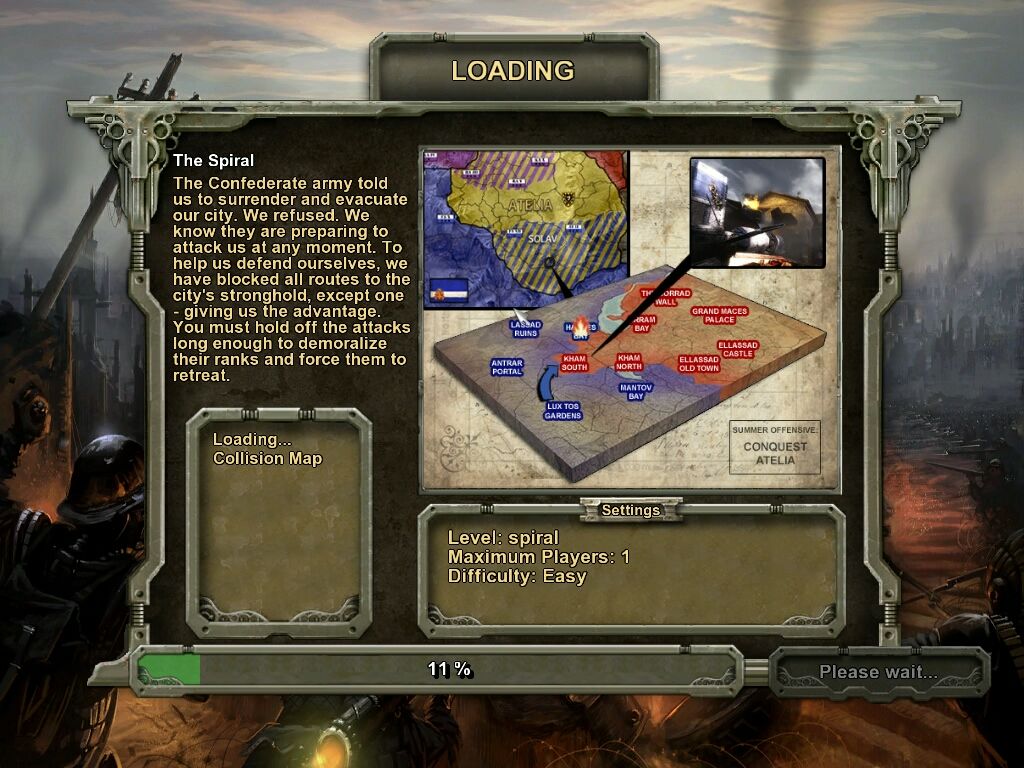
The conflict is clean and functional: the imperialist Confederation wants to conquer Atelia’s independent city-states, and you fight alongside rebels in urban warfare against a much larger force. It gives every barricade and turret a simple purpose. You are not defending an abstract score counter; you are trying to keep your side from being swallowed by an invasion.
Iron Grip does not need a tangled political drama to make its battles work. The unequal conflict is enough to frame the resource pressure, since you are repeatedly asked to make limited Power stretch against a better-supplied enemy. Tanks and mech walkers reinforce that sense that the opposition is bringing more force than your improvised defenses can comfortably handle.
The enemy leader mechanic adds a useful dramatic target within that broader war. Taking one down weakens morale, turning a difficult opponent into an opportunity to change the shape of the fight. It is a modest narrative beat, but it matches the game’s underdog tone well: your resistance wins ground through decisive actions, not overwhelming strength.
Overall Experience
Iron Grip: Warlord is worth trying for the unusual friction between commander and combatant. You lay the groundwork from above, then must personally help prove that the groundwork was enough. When a defense holds because you spent Power wisely and also showed up with your own weapon at the right moment, the hybrid structure earns itself.
Frustration can set in if you dislike being pulled away from one discipline to serve another. Defensive planning needs attention, but so does surviving long enough to keep earning Power; heavy enemy units add another demand to an already busy battlefield. That pressure is central to the game, not a side distraction.
For a 2008 action-strategy hybrid, it remains a solid, specific recommendation rather than a universal one. Give it a chance if co-op defense, battlefield upgrades, and switching from overhead tactics to first-person shooting sound more exciting than exhausting. Its ideas do not always leave you room to relax, but the payoff is a more hands-on siege game than either half of the genre mix would deliver alone.


Reviews
There are no reviews yet.