 Retro Replay Retro Replay gaming reviews, news, emulation, geek stuff and more!
Retro Replay Review
Gameplay
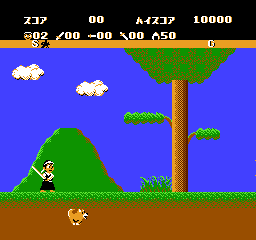
The first minutes make Musashi no Ken feel more urgent than a standard side-scrolling sword game. Musashi advances through training stages, cutting down enemies with his sword, but his dog is always moving toward the same finish line. Getting overtaken costs a life. Suddenly, simply reaching the exit is not enough; you have to decide whether a tucked-away sword piece is worth the seconds it takes to grab it.
That race is the game’s strongest idea because it stops the collecting from becoming automatic. Sword pieces are scattered and hidden through each level, and collecting them has a purpose beyond a higher tally: they pay for special moves during the Kendo matches. A careful run can leave you better equipped for the tournament, while a direct dash may preserve lives but restrict your options later. You are constantly making a small but meaningful trade between stage survival and fighting resources.
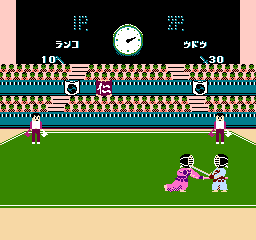
Then the game changes gears into one-on-one Kendo bouts. This is not a separate bonus tacked onto the platform action; it is where the training-stage choices come due. Spending special moves costs the pieces you earned, so a win can depend on how well you managed the earlier levels as much as your decisions in the match. That structure gives the game a satisfying throughline, though it can also frustrate you when a weak collection run leaves little room to lean on stronger techniques.
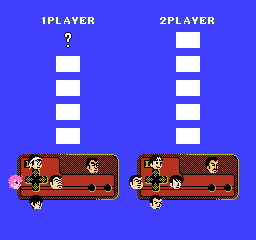
The two-player mode is a welcome reason to return once you know the fights. Two opponents play a five-match Kendo series, with the first to three wins taking the overall contest. It is a clean format with no fuss: sit down, fight, and let a short set decide who has the better timing and nerve.
Graphics
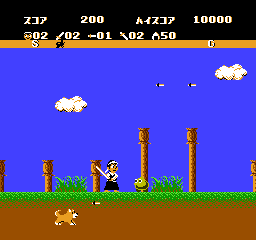
The action is shown in side view during the training stages, keeping Musashi, his pursuing dog, enemies, and the route to the goal in the same clear plane. The Kendo portion shifts the focus to one-on-one matches, which suits its more concentrated dueling pace.
Story
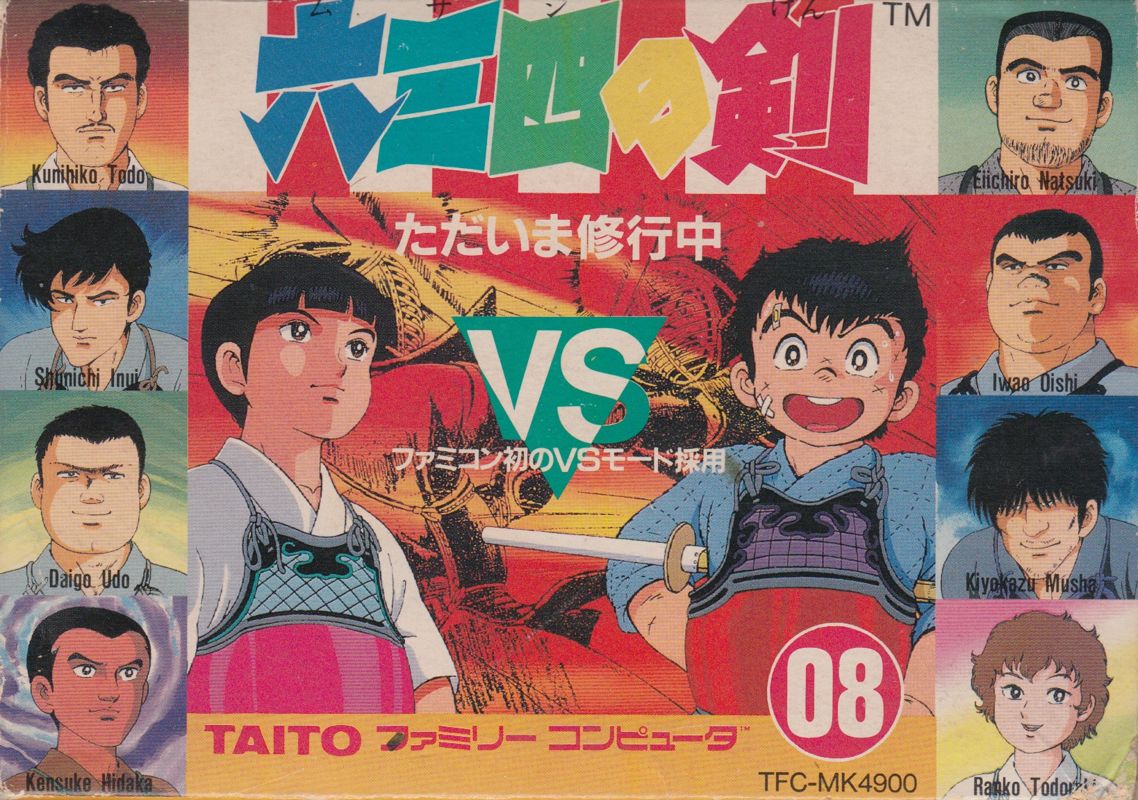
This is a straightforward training story: Musashi is preparing for an upcoming Kendo tournament, and the game treats the platform stages as part of that preparation rather than a disconnected adventure. You train, gather the tools that may help in competition, and then enter the matches that determine the result.
That modest setup works because the game’s structure carries the theme. The dog race makes training feel demanding, and the sword-piece economy makes the tournament feel like the consequence of your preparation. It is not trying to build a complicated narrative around the manga and anime license; it uses Musashi’s tournament goal to tie two different action styles together.
If the premise leaves you wanting more time in this world, the series also includes the related Musashi no Bōken. Here, though, the focus remains firmly on Musashi’s route from practice to competition.
Overall Experience
Musashi no Ken: Tadaima Shugyō Chū earns its place through a genuinely good structural idea. Racing the dog gives its platforming a deadline, while sword pieces turn exploration into a tangible investment for the Kendo bouts. Neither half has to carry the whole game alone, because each makes the other more interesting.
The catch is that its pressure can be unforgiving. A player who wants to search every corner may resent the dog forcing the pace, and a player who mainly wants immediate head-to-head fighting may find the resource-building detour less appealing. But that tension is also what separates it from a routine licensed platformer or a bare-bones fighter.
Give it a chance if you enjoy 8-bit action games that ask you to plan ahead without losing their arcade bite. The tournament payoff makes a successful training run feel earned, and the two-player Kendo series adds a concise competitive bonus. It is a compact game, but its platforming and dueling are connected in a way that still feels clever.



Reviews
There are no reviews yet.