 Retro Replay Retro Gaming History, Reviews & Emulation
Retro Replay Review
Gameplay
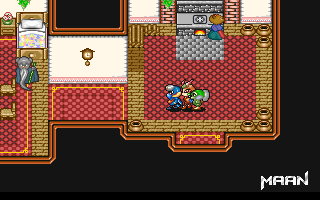
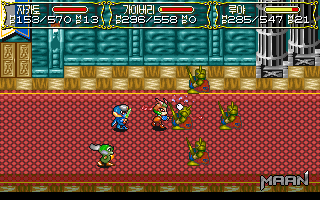
The first hour has an easy hook: one moment you are following a kid whose gaming session has gone badly wrong, and the next he is living out the kind of fantasy adventure he presumably wanted to play. Once Zakato reaches the other world, the game leans into a classic Japanese RPG loop rather than trying to reinvent it. You explore from a top-down view, see enemies before fighting them, and meet them directly in the surrounding area instead of being yanked into a separate battle screen.
That visible-enemy approach is one of Zakato: Maan’s better calls. It gives you a little more control over the tempo of exploration and makes the world feel less chopped into “walking” and “combat” modes. Battles use turn-based commands governed by an active-time element, so you cannot linger forever over every choice. If you enjoy the pressure of Final Fantasy-style ATB battles, this should click quickly; if you prefer leisurely, fully turn-based planning, the timing may become a source of irritation.
Your options are straightforward: regular attacks and elemental magic do the work. That simplicity makes the combat easy to read, but it also limits how much room there is for elaborate tactics or flashy character-specific tricks. The comparison point is clear—its battles resemble Chrono Trigger’s on-map encounters and Final Fantasy’s active-time structure—but Zakato: Maan is more of a stripped-back variation than a peer with the same breadth. Give it a chance if a clean, old-school battle routine sounds comforting rather than restrictive.
Graphics
The game uses a top-down view for exploration, with enemies visible in the areas you travel through and battles unfolding in those same environments. Its fantasy world is populated by anthropomorphic animals and other creatures, matching the deliberately offbeat jump from an ordinary schoolboy’s life into a strange adventure.
Story
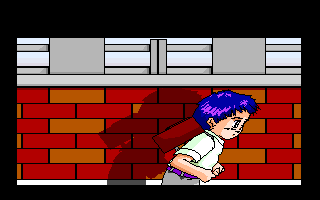
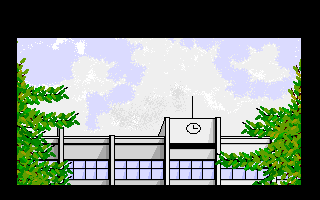
Zakato: Maan earns points immediately for not easing you into its premise. A mother punishes her son for trying to play a video game; he cries; then a miracle turns that frustration into an escape to another world. It is a direct, almost storybook setup, and its oddness gives the game more personality than a standard “chosen hero begins in a village” opening.
In the fantasy world, the boy becomes the warrior Zakato and takes on a grander mission: stop an evil goddess by locating two benevolent goddesses and joining with them. That is a familiar RPG objective, but it fits the game’s transformation fantasy nicely. The contrast between a kid denied a game and a kid becoming the hero of one is the strongest idea here.
Do not come in expecting a subtle modern drama. The setup is broad, the stakes are mythic, and the quest is clearly built around a straightforward search for allies. Still, the premise has enough charm to carry you if you enjoy RPG stories that move from everyday embarrassment to full fantasy destiny without apology.
Overall Experience
Zakato: Maan feels like a compact meeting point between two beloved 1990s RPG approaches: visible foes and battles in the field on one side, active-time command selection on the other. That combination gives it a stronger moment-to-moment identity than its limited combat command set might suggest. You know what kind of game it wants to be almost immediately, which is often a virtue in an older RPG.
The limitation is equally plain. With only standard attacks and elemental magic, the battle system may not keep surprising you over a long stretch, especially if you expect lots of special moves and elaborate party customization. Its systems are serviceable rather than expansive, and your enjoyment depends heavily on whether that no-frills structure feels focused or thin.
For the right gamer, though, there is real value in its peculiar setup and familiar mechanics. If you have affection for DOS-era role-playing games, Japanese console-RPG conventions, and stories where an ordinary kid gets to become a fantasy champion, Zakato: Maan is worth seeking out. It is not an essential genre landmark, but it is a likable, unusual artifact with a solid enough core to reward curiosity.


Reviews
There are no reviews yet.