 Retro Replay Retro Gaming History, Reviews & Emulation
Retro Replay Review
Gameplay
The first thing Jazzpunk teaches you is that the objective is rarely the whole point. You may be sent to steal espionage information, but the real pleasure comes from wandering through an area and interacting with whatever looks even slightly suspicious. A routine prop can turn into an absurd sight gag, and that possibility gives exploration a playful tension that more serious adventure games often lose.
Polyblank’s assignments mix item use, environmental puzzle solving, and oddball gadgets, with optional distractions scattered around the open areas. Golf, arcade spoofs, and a wedding-themed shooter pull the game sideways into parody, often at exactly the moment you expect it to settle down. These diversions make the world feel like it is constantly trying to derail the spy story, which is very much the point.
Do not come in looking for tough logic puzzles or combat that carries the experience. Most challenges are light, and traditional adventure fans may wish the puzzle chains asked more of them. Jazzpunk works when you accept that the joke is often the reward for interacting, rather than a prize at the end of a difficult solution. If a gag falls flat, the next door, object, or optional activity is usually close enough to keep you moving.
Graphics
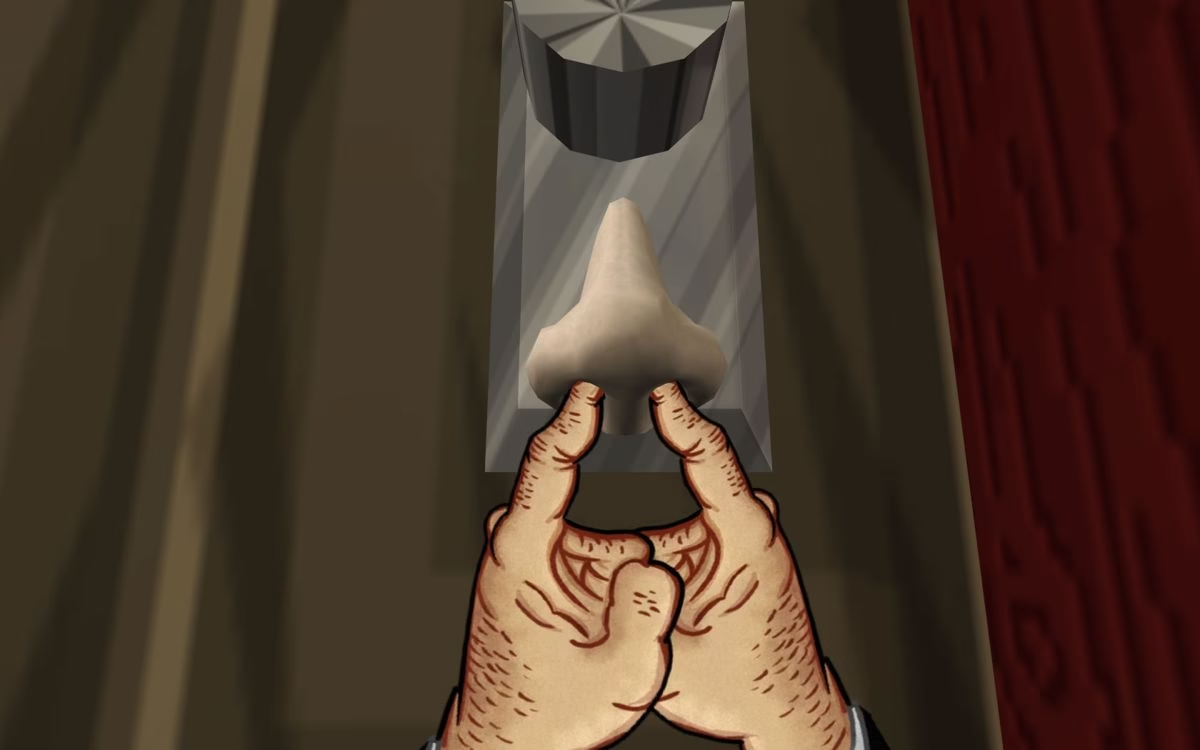
The first-person view pairs deliberately simple, faceted 3D spaces with flat, heavily outlined illustrated hands in the foreground. One close-up can put a fleshy nose beneath an angular dark-metal doorknob, framed by brown wall panels and a deep red curtain. It is crude in a purposeful cartoon way, and the clash between the cutout hand and chunky objects makes the visual joke land instantly.
Story
An alternate Cold War built around corporate espionage gives Polyblank’s missions a useful comic frame, but Jazzpunk is not interested in building a tightly plotted spy thriller. The assignments point you toward the next location and the next bit, then happily let the surrounding nonsense steal attention.
That looseness is both a strength and a limitation. It keeps the game from bogging down in explanation, and it suits the rapid-fire parody, but the mission plot does not gather much dramatic weight. You are here for the detours, not for a story that demands close tracking.
Fans of funny games with more character-driven structure may think of Psychonauts, though Jazzpunk takes a different route. Where that game uses platforming and its cast to carry the comedy, Jazzpunk builds laughs through first-person interaction and visual interruptions.
Overall Experience
Jazzpunk is funniest when you slow down. Rush from marker to marker and you will still get a strange spy comedy, but you will miss the optional interactions that give it its personality. Let yourself be distracted by a room, test the odd props, and treat every apparently normal object as a possible setup.
Not every joke works, and the light puzzle design means the game can feel thin if you need each mission to develop into a substantial challenge. Still, its willingness to make a ridiculous interaction the centerpiece rather than a throwaway detail gives it a distinct rhythm. The unevenness feels like part of the gamble: a dud bit passes quickly, while a good surprise sticks.
For a compact comedy adventure, the payoff is worth it. Jazzpunk is a strong recommendation for anyone who likes exploratory humor, playful genre parody, and games that reward curiosity more than mastery. The original Windows release arrived on February 7, 2014, as confirmed by Adult Swim Games’ original Jazzpunk announcement.


Reviews
There are no reviews yet.