 Retro Replay Retro Gaming History, Reviews & Emulation



Retro Replay Review
Gameplay
The best thing about Moonbase Alpha is that its central problem is easy to understand and hard to solve cleanly. A meteor strike has damaged the settlement’s solar array and life-support system, so your crew must restore oxygen before the clock runs out. That deadline gives every decision a purpose. You are not just wandering around a Moon base; you are deciding what needs attention first and who should handle it.
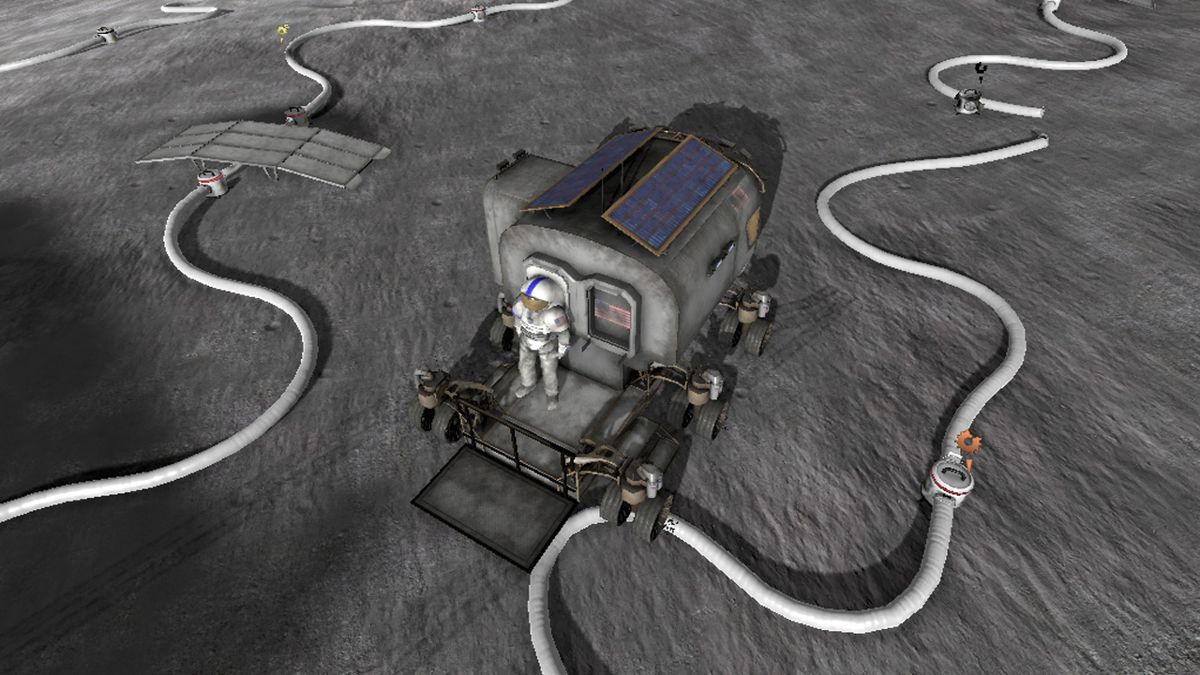
Up to six astronauts can tackle the emergency together, and cooperation is more than a polite suggestion. You have a lunar rover, mobile robotic repair units, repair tools, and equipment from the shed, but the challenge lies in allocating them intelligently. A group that communicates can split work and keep the recovery moving. A group that does not will waste precious time duplicating effort or committing the wrong resource to the wrong job.
There are multiple successful routes to restoring the base, which gives repeat attempts real value instead of turning the mission into a single fixed routine. Timed scoring and map-specific leaderboards push you to learn from earlier runs and tighten the plan. The selectable maps are built around particular team sizes, so it is worth choosing one that matches the number of friends actually joining you rather than forcing an awkward fit.

Graphics
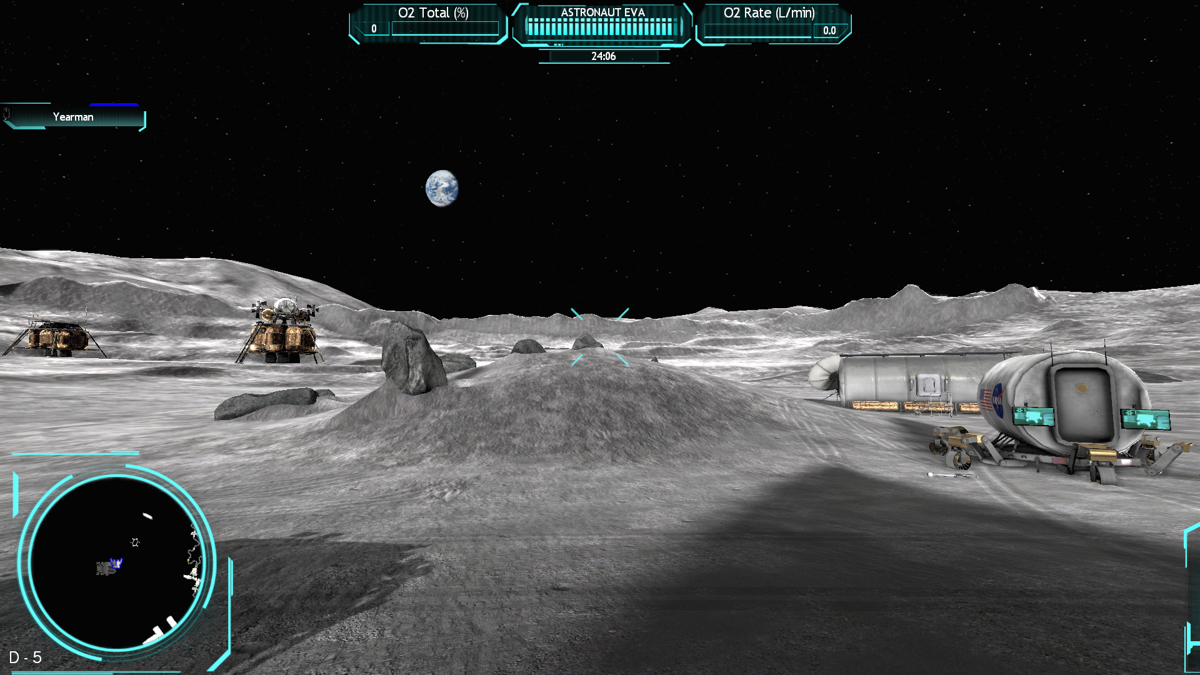
Moonbase Alpha uses a first-person view to put you in the role of an astronaut moving through a lunar settlement after a damaging impact. The concrete sights supported by its scenario—the Moon’s south-pole research base, damaged solar equipment, rover, and robotic repair units—keep the focus on a practical rescue rather than a fantasy version of space travel.
Story
This is a compact disaster premise, not a character-driven space drama. A small research crew returns from a field mission just in time to see debris from a nearby meteor impact hit the colony’s solar array and life-support system. From there, the story is the emergency itself: restore power, repair life support, and get oxygen flowing again.
That simplicity works in the game’s favor. You always know why the mission matters, and the oxygen deadline gives the scenario enough pressure without requiring a pile of exposition. The lunar setting is grounded in a research settlement at the Moon’s southern pole, which fits the simulation-minded tone.
Do not come in expecting branching relationships or elaborate plot turns. Moonbase Alpha treats the crew as a working team facing a shared technical crisis. Its drama comes from whether your plan holds together before the settlement’s time runs out.
Overall Experience
Moonbase Alpha is most rewarding when you treat it like a cooperative problem-solving exercise rather than a conventional shooter or a broad sandbox. The first run teaches you the shape of the emergency; later runs are where coordination, resource choices, and route planning begin to click. That loop gives the game a sturdy reason to return with the same group.
The leaderboard angle adds a welcome edge. Finishing the rescue is one goal, but finishing it faster gives experienced teams something concrete to chase. Because maps are tracked separately, improvement has a useful focus: you can work on a specific team-size scenario instead of measuring every run against unrelated conditions.
Give it a chance if you enjoy science-themed simulations and co-op games where clear communication is part of the challenge. NASA’s educational intent is evident, yet the ticking-clock rescue structure keeps it from feeling like a dry lesson. It is a modest, focused experience, but a well-organized crew can get satisfying mileage out of trying to make each lunar rescue cleaner and quicker.



Reviews
There are no reviews yet.