 Retro Replay Retro Gaming History, Reviews & Emulation

Retro Replay Review
Gameplay
Oval Office: Commander in Chief starts with a pleasingly intimidating proposition: you have taken office, and now every big idea has a political cost. You appoint a cabinet, set policies, and try to steer the country without burning through your political capital. That creates the central tension immediately. A policy may sound right to you, but it can still be a bad move if you cannot pay for it now or survive the voters it alienates.
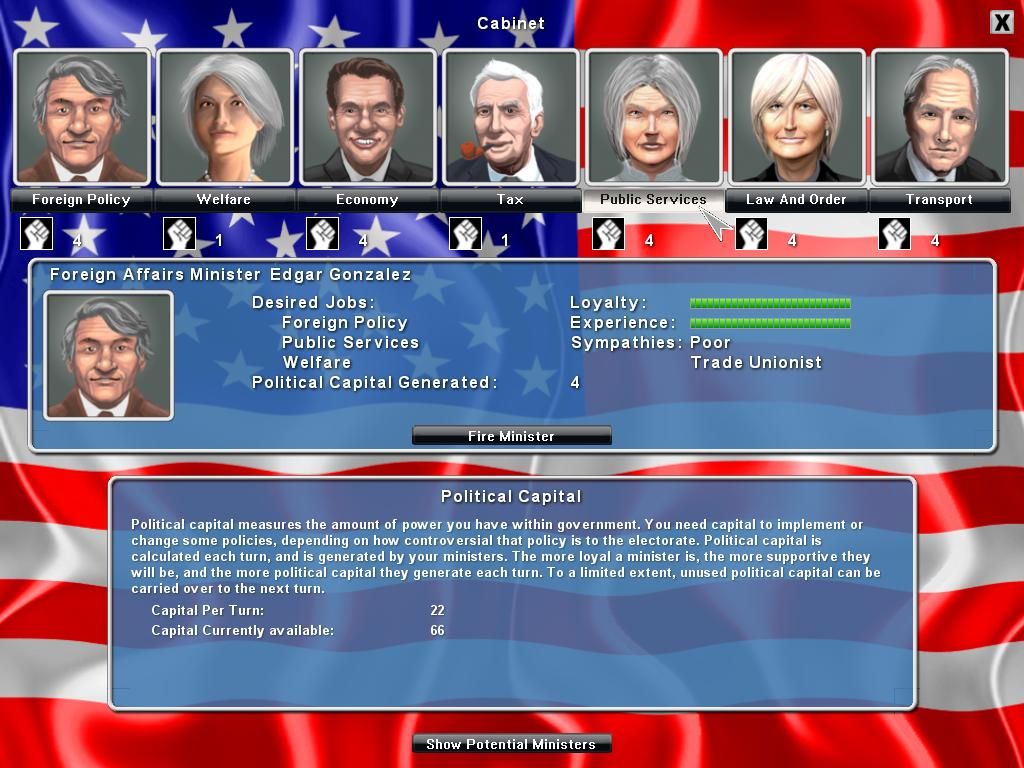
The three-month turn structure gives decisions room to breathe without making the game feel glacial. Political capital regenerates over time, with your cabinet affecting that recovery, so you are encouraged to think about both your immediate agenda and the administration you build around it. The cabinet is not just an opening chore; it directly shapes how freely you can act later.
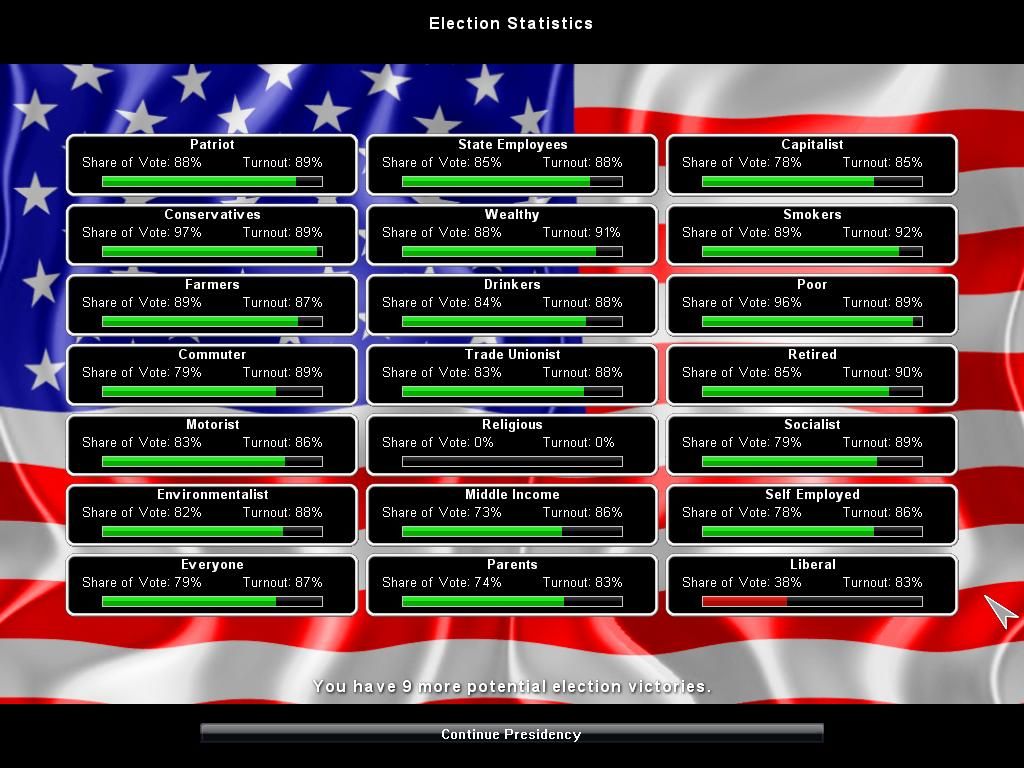
What makes the simulation interesting is that voters do not fit into one clean box. A person can be poor, an environmentalist, and a smoker at once, and their vote comes from that mix rather than a single label. That is where the simple goal of keeping more than half the electorate happy becomes slippery. You cannot assume that winning over one constituency tells you how the rest of the country will react.
The frustration is deliberate and, for the most part, worthwhile. You will have to accept that policy changes create losers, and a succession of individually reasonable choices may still leave you politically exposed. This is strategy about managing compromises, not imposing a perfect plan. If that sounds draining rather than exciting, the election pressure will probably feel punishing; if it sounds like the point, Oval Office has a sharp hook.
Graphics
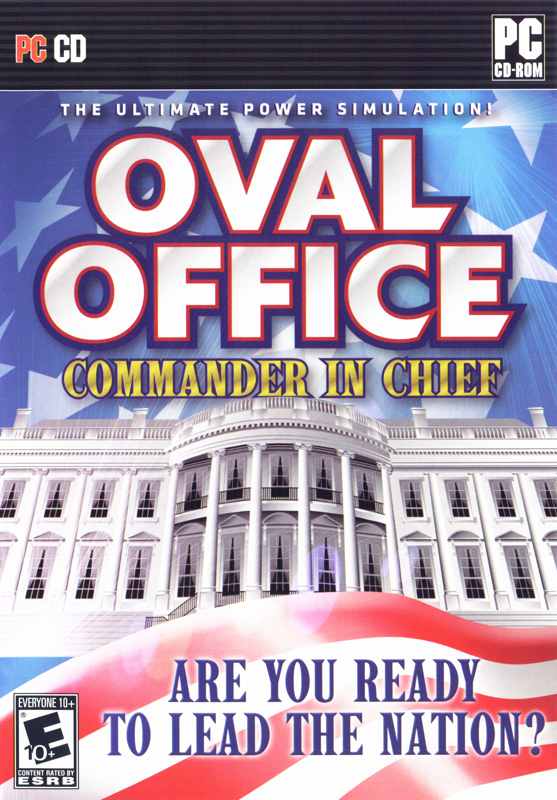
Oval Office is framed around the practical business of running the United States: cabinet appointments, policy choices, voter groups, and election results. Its subject is institutional politics rather than a character-driven or action-focused fantasy.
Story
There is no authored campaign drama at the center of Oval Office. Instead, the story is the record of your administration: which priorities you pursue, which constituencies you disappoint, and whether you can remain in office when the next election arrives.
That makes its political narrative unusually personal. Two presidencies can begin from the same premise and still produce very different arcs because every policy choice rearranges who feels represented. The meaningful moments are not scripted twists; they are the realization that a decision meant to help one part of the electorate has put another part out of reach.
The election gives that emergent story a clean ending point. You are not merely moving numbers around for their own sake. You are trying to build an administration whose choices add up to a majority, and losing that majority turns the whole term into a cautionary tale about priorities and compromise.
Overall Experience
Oval Office: Commander in Chief is a focused political strategy game with a clear understanding of why governing is hard. Its American-only scope keeps attention on the presidency, and the combination of limited political capital, cabinet management, overlapping voter interests, and recurring elections produces a satisfying web of consequences.
It is also a game that asks you to enjoy trade-offs. There is no promise that you can make everyone happy, and chasing popularity without considering your larger direction can be as damaging as pursuing policy with no regard for the electorate. The best sessions should come from testing a governing approach, adapting when support shifts, and seeing whether it holds together at election time.
Give it a chance if you like turn-based strategy built around decisions rather than battles, especially if you enjoy games that make a narrow political majority feel like a hard-won achievement. Its cut-down scope may be more inviting than a sprawling government simulation: Oval Office concentrates on the anxious, absorbing work of being president and having to answer to voters.


Reviews
There are no reviews yet.