 Retro Replay Retro Gaming History, Reviews & Emulation
Retro Replay Review
Gameplay
The first rooms make a strong case for Saru Ga Daisuki because its monkey hero does more than merely hop over trouble. You can run, jump, and cling to walls and ceilings, so each enclosed challenge has the potential to become a small climbing route rather than a flat obstacle course. That freedom is the hook: you look at a room full of hazards and start searching for surfaces that can carry you around the obvious danger.
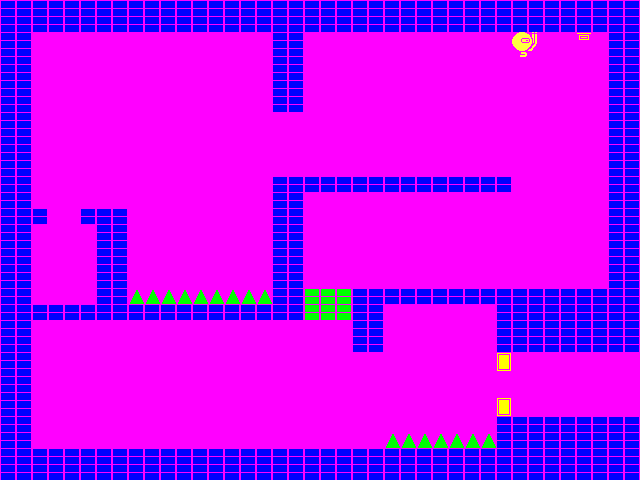
The yo-yo gives the movement a useful purpose. It can break green blocks and flip switches, which means it is not just an attack bolted onto a platformer; it is part of how you open routes and alter a room. Cannons, spikes, and flames create the immediate pressure, while blocks and switches ask you to slow down long enough to work out the safer path. When the balance lands, it should feel less like brute-forcing a jump and more like finding the intended trick.
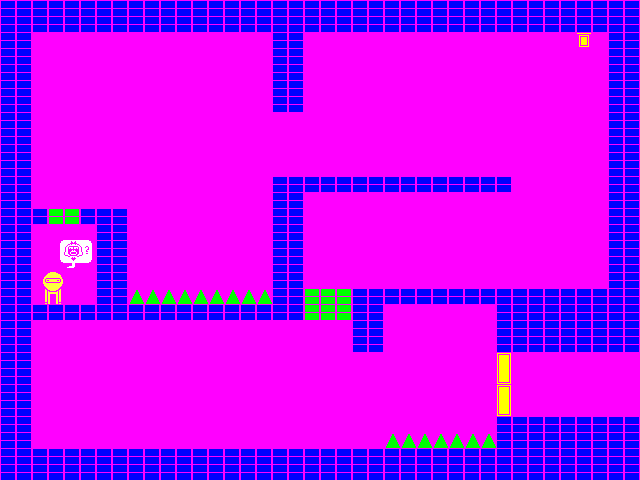
Character switching is where the puzzle side becomes more pronounced. Some barriers require another character’s particular skill, such as a faster ninja with a higher jump, and certain problems call for an item like the water-spraying backpack that extinguishes flames. That makes progress depend on using the right tool rather than demanding that one hero do everything. If you enjoy platform games that interrupt the running and jumping with a bit of practical problem-solving, that is the reason to give this one a chance.
Graphics
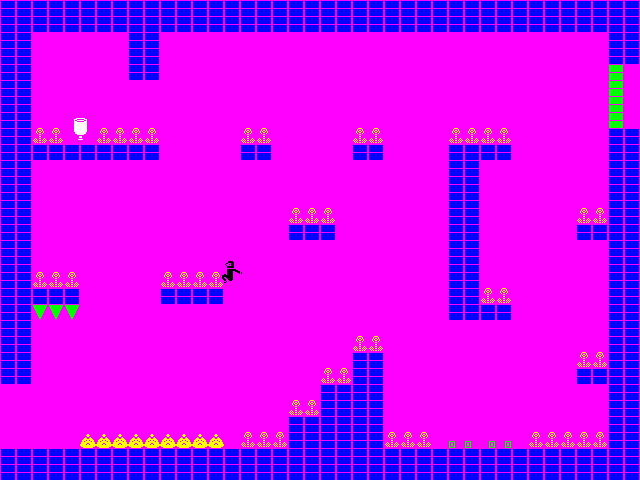
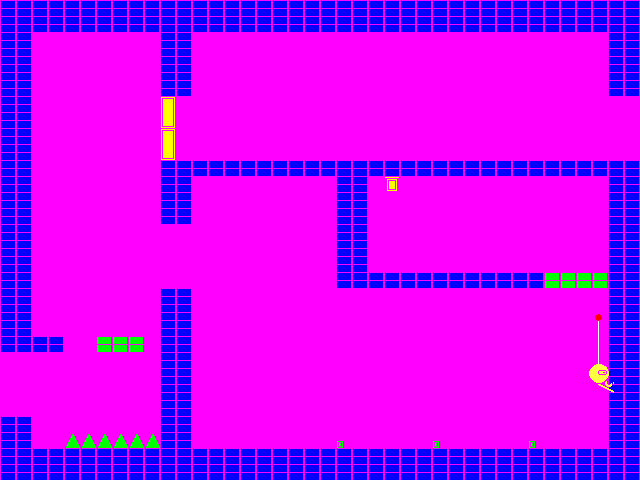
The game uses a side-view, room-by-room layout that keeps the important pieces in view: the ninja monkey, green breakable blocks, switches, and hazards such as spikes, cannons, and fire. Its clearest visual strength is simple clarity—each room presents the obstacle and the possible route in a way that suits puzzle platforming.
Story
The story is deliberately lean: an evil doctor has kidnapped the ninja monkey’s girlfriend, and you set out to rescue her. It is a classic excuse to get moving, with no indication that the game wants to bury its platform puzzles under a complicated plot.
That simplicity works for this kind of adventure. The rescue goal gives the succession of hazardous rooms a basic sense of direction, so the game does not need to pause for elaborate narrative detours to explain why you are pushing forward.
Do not come here expecting the story to carry the experience. The hook is familiar, but it is functional: save the girlfriend, outwit the doctor’s defenses, and get through the next room.
Overall Experience
Saru Ga Daisuki earns its interest through the overlap of nimble platform movement and straightforward environmental puzzles. Wall and ceiling clinging makes the monkey feel more capable than the premise initially suggests, while the yo-yo, character abilities, and occasional items keep the rooms from becoming a one-note series of jumps.
Frustration is most likely to come when a room’s answer is not immediately obvious, especially once character-specific skills and tools enter the mix. But that is also the point: this is built for the moment when you reconsider the obstacle, notice what can be switched, broken, climbed, or put out, and finally make the route work.
Give it a look if you want a focused puzzle platformer with a playful ninja-monkey lead and a preference for self-contained challenges. It does not need a grander premise than that. The payoff is in turning a threatening little room into a solved problem, then moving on to the next one.



Reviews
There are no reviews yet.