 Retro Replay Retro Gaming History, Reviews & Emulation
Retro Replay Review
Gameplay
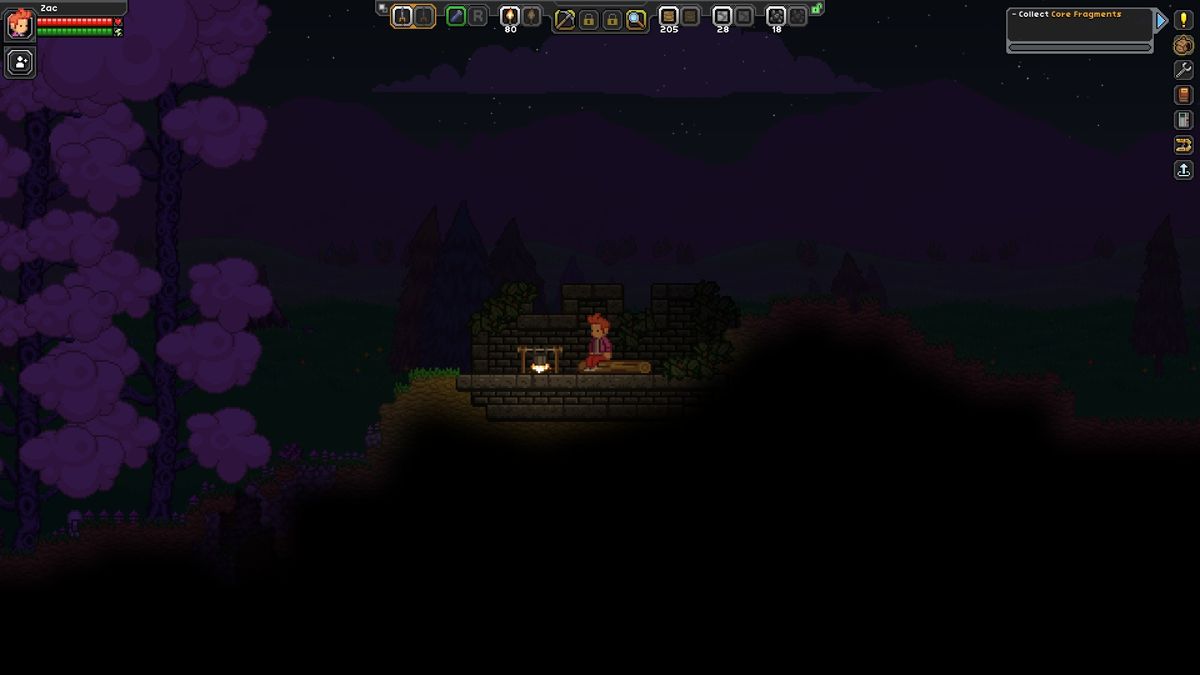
The first hour has a strong survival-game hook because it gives you an immediate, practical problem: get off the stranded ship, find resources, and make yourself safe. Mining into the ground for ore, gathering materials, and assembling the first tools creates that pleasant rhythm where every small find matters. Starbound understands that a pile of dirt and wood is more exciting when it is the difference between scraping by and having a usable base.
Once you repair the ship and begin moving between systems, the game opens up in the right way. Planets are not just new backdrops; they bring wildlife, settlements, hostile areas, dungeons, climates, and hazards that ask you to prepare differently. Heat, cold, radiation, poisonous atmospheres, and volcanic terrain give equipment progression a purpose beyond raising numbers. Hunting rare ores can be routine, but it is easier to tolerate when the reward is access to another stretch of space rather than merely a stronger sword.
Combat has enough variety to stop exploration from becoming a pure mining chore. You can lean toward melee weapons, guns, bows, or staves, then mix in armor abilities and tech upgrades such as dashes and double jumps. That mobility matters especially in platforming-heavy missions and when a dangerous creature decides your tidy excavation needs interrupting. Procedurally generated weapon variants add some surprise, although the broader loop still rests on gathering, crafting, upgrading, and gathering again.
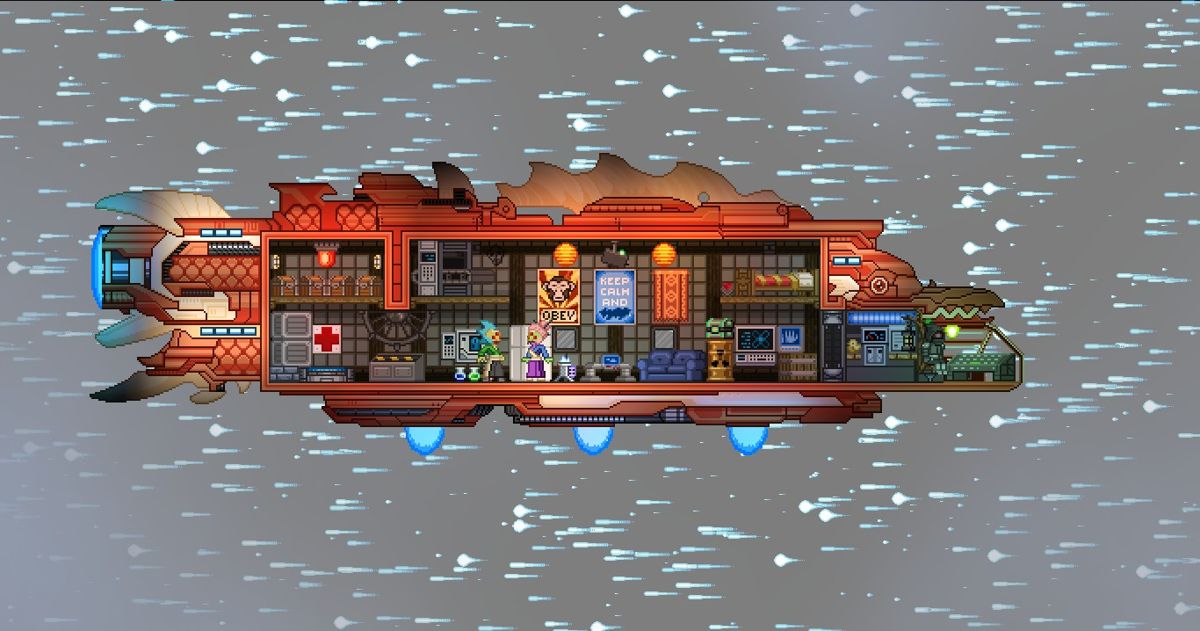
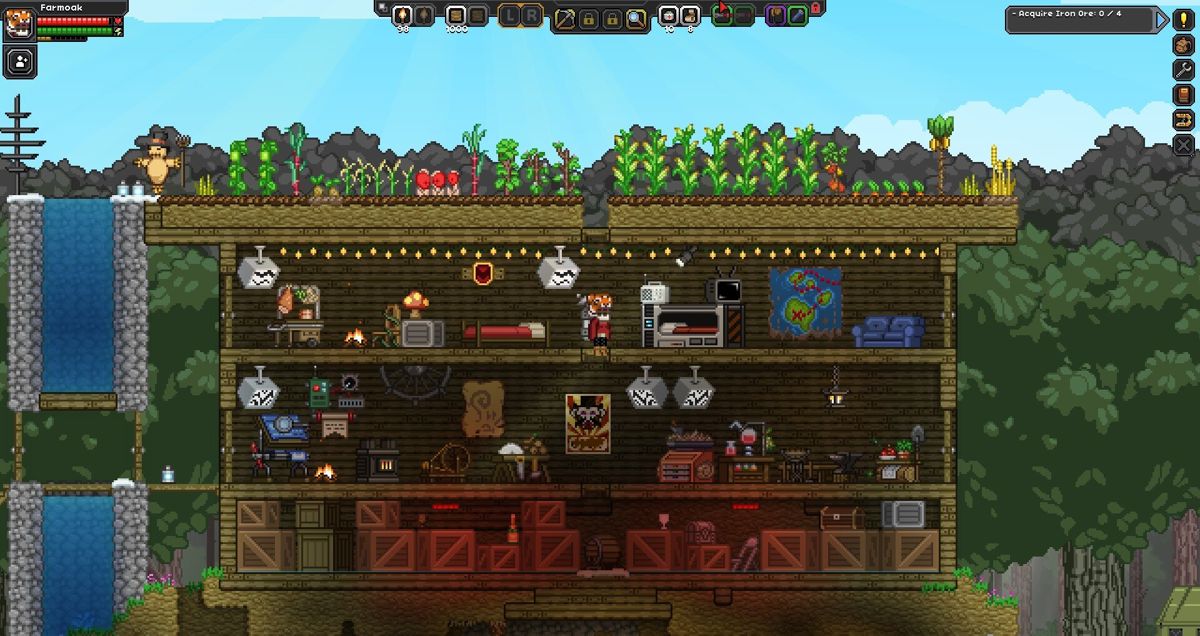
Building is where Starbound can become absorbing for a different kind of player. The tile-based construction tools let you make a humble shelter, a heavily decorated home, or a settlement designed to attract colonists. Farming and cooking give that home a practical side, while ship customization and bookmarks make it easier to maintain a personal network of useful places. In co-op, the workload and creative possibilities naturally expand; solo, you still have a huge amount to do, but the resource grind is entirely yours.
Graphics
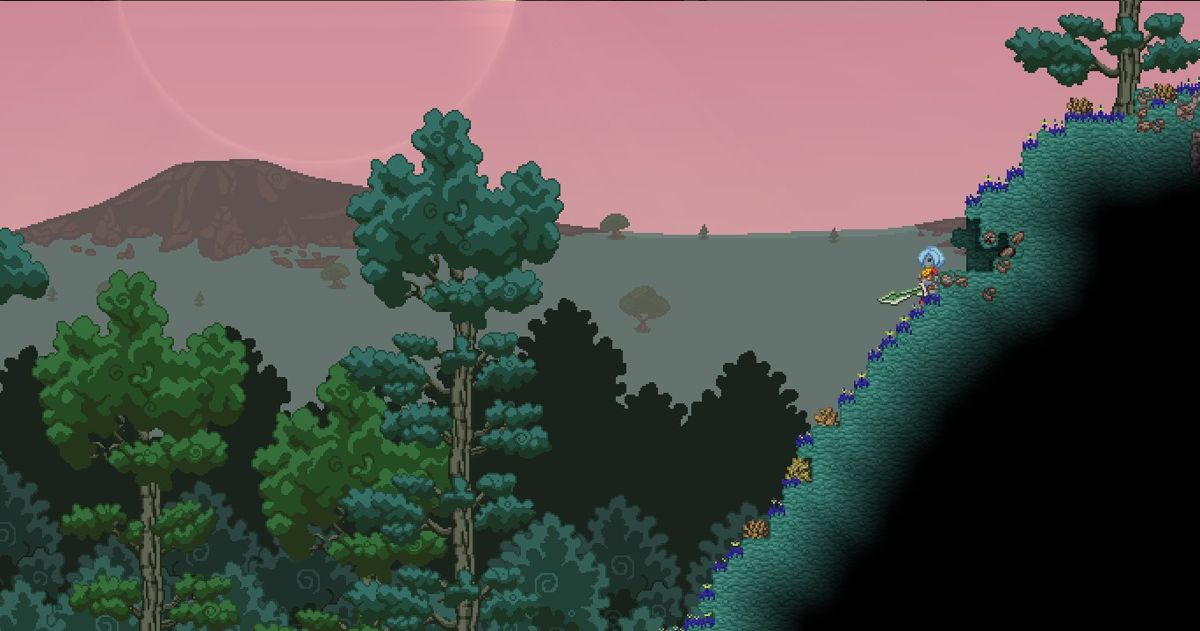
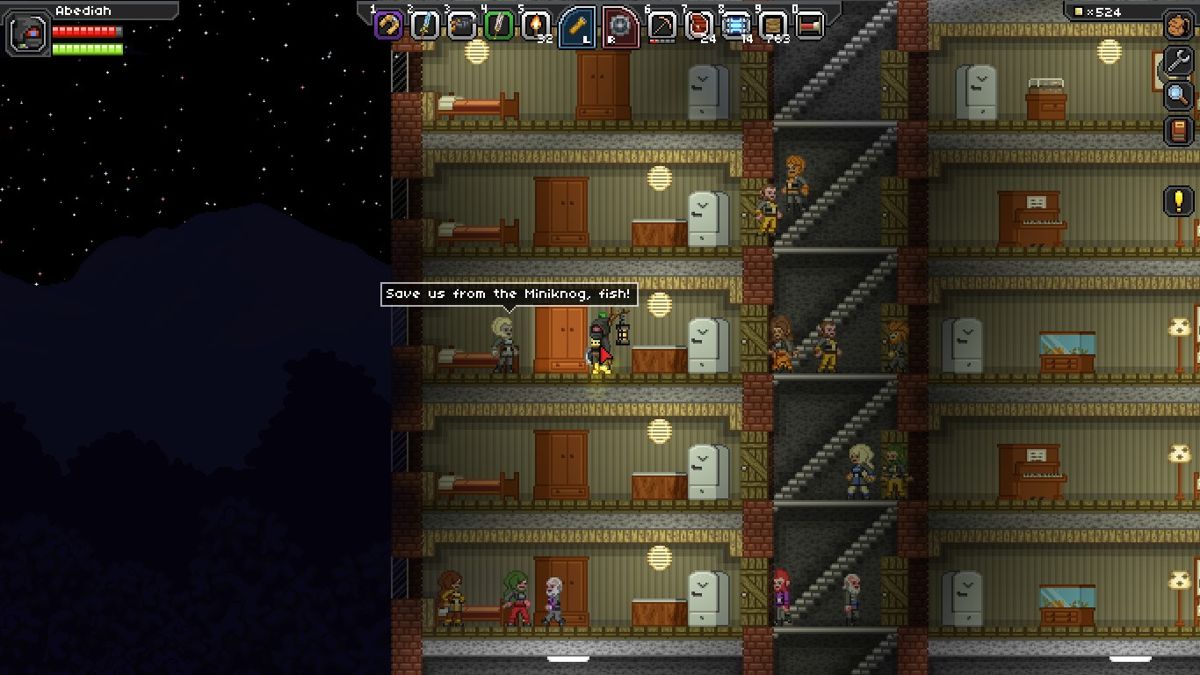
Starbound uses a side-view 2D pixel-art look that suits its block-by-block building and underground mining. You spend much of your time moving across layered terrain, digging into planets, and filling rooms with furniture and decorations, so the simple tile format makes your construction readable and personal.
The changing planets do much of the visual heavy lifting. Different environments, alien wildlife, settlements, and handcrafted locations such as temples, laboratories, and space stations keep the journey from looking like one long expedition through the same dirt and stone.
Story
There is a proper campaign here, not just a loose excuse to roam. After the opening stranding, your traveler becomes involved with an interstellar peacekeeping organization and an ancient threat to the universe. That structure gives the sandbox a welcome spine: when freeform projects start to lose momentum, there is always another mission or region to push toward.
The story missions are the more deliberately authored side of Starbound. Temples, laboratories, and space stations break up the randomized planetary wandering with platforming challenges, bosses, and specific objectives. They are useful palate cleansers after long stretches spent extracting ore or arranging a colony.
Still, the narrative is not the main reason to stay for dozens of hours. Its real value is how it directs you toward new tools, systems, and areas of space without taking away the freedom to disappear into your own projects. If you want a tightly plotted sci-fi adventure, the campaign may feel more like a guide rail than the destination. If you want a reason for your exploration, it does the job.
Overall Experience
Starbound is at its best when you follow your curiosity instead of treating every planet like a checklist. You land intending to collect a particular ore, find a settlement or a dungeon on the way, return to your ship with too much loot, and decide that your current base suddenly needs a greenhouse and a new wing. That sense of one more stop before logging off is the game’s strongest pull.
The trade-off is that its progression is built around repeated resource collection and tiered equipment. Crafting specialized protection for harsher worlds and seeking rarer materials gives the universe structure, but it can also make advancement feel laborious when you would rather keep exploring. Starbound rewards patience and self-direction much more than it rewards a rush to the next objective.
At 7.2, it lands as a generous, enjoyable sandbox rather than an essential one for every sci-fi fan. Give it a chance if the idea of building a home among procedurally generated planets, then leaving it behind for the next strange world, sounds relaxing rather than distracting. The story and combat help carry the journey, but the lasting payoff is making a corner of this enormous universe feel like yours.



Reviews
There are no reviews yet.