 Retro Replay Retro Gaming History, Reviews & Emulation
Retro Replay Review
Gameplay
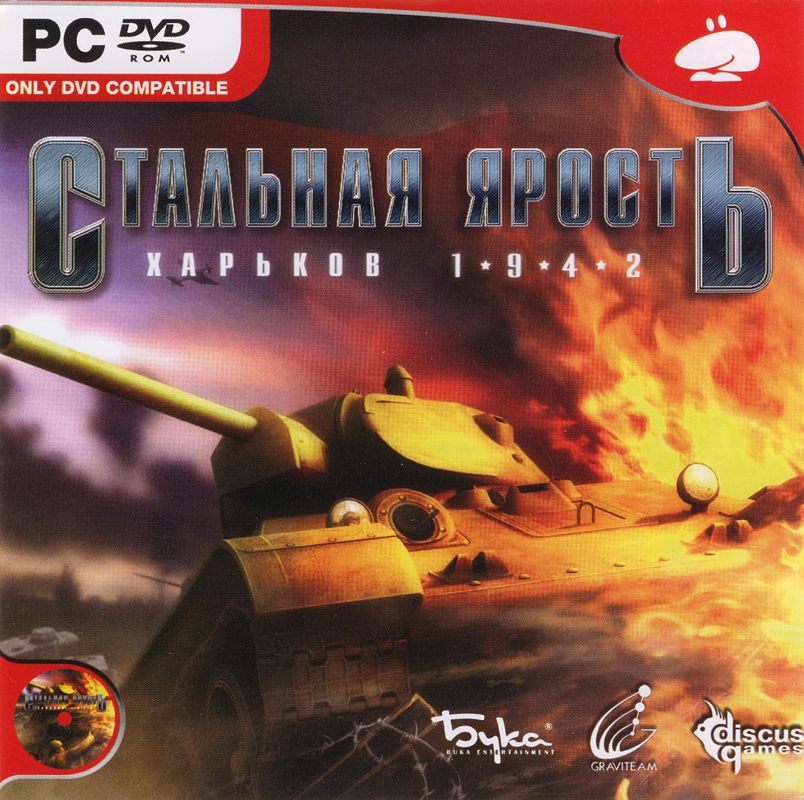
Steel Fury: Kharkov 1942 is built around armored warfare during a tightly defined and consequential period of the Second World War: the Soviet offensives of 12–28 May 1942 and the German counterattacks that followed after 17 May. Its central appeal is the opportunity to command period-specific armored vehicles in missions based on historical events, rather than treating the setting as a loose backdrop for generic tank action.
The game offers three campaigns, each centered on a different vehicle: the British MKII Senior Matilda, the Soviet T-34, and the German PzKpf IV. This structure gives the campaigns a potentially distinct tactical character, as the supplied description emphasizes that each vehicle has its own abilities and handicaps. Players looking for a single all-purpose machine may instead need to adjust to the strengths, weaknesses, and battlefield roles associated with each campaign’s assigned vehicle.
Damage modeling is one of the game’s defining ideas. Hits are evaluated according to the location struck on a vehicle, making armor placement and shot selection important considerations rather than simple matters of reducing a universal health bar. The same emphasis extends to the environment: scenery can be destroyed or deformed, giving combat a tangible effect on the battlefield and supporting the game’s simulation-minded approach.
Story
Steel Fury: Kharkov 1942 tells its story through military operations rather than through a described cast of named characters or a cinematic narrative. The campaigns are rooted in the fighting around Kharkov in May 1942, covering both the initial Soviet offensives and the subsequent German counterattacks. This gives the game a strong historical premise and a clearly bounded period of conflict.
The missions are stated to be based on events from that time, a point likely to matter most to players interested in the conflict’s historical context. Instead of presenting an invented war story, the game aims to ground its scenarios in real operations. That approach can make each mission feel connected to a broader campaign, especially for players who value the strategic and historical significance behind individual armored engagements.
Beyond that historical framework, the supplied material does not establish whether the campaigns include cutscenes, briefing narration, recurring commanders, dialogue, or a detailed account of the wider battle. Players seeking a character-led drama should therefore not assume one is present. The narrative strength here is better understood as the recreation of a particular military campaign and the differing viewpoints offered by its vehicles.
Overall Experience
For players drawn to historically framed tank simulation, Steel Fury: Kharkov 1942 has a focused proposition: command armored vehicles across three campaigns set during a specific 1942 operation, while accounting for localized damage and a destructible battlefield. Its design priorities appear to favor authenticity, mechanical consequences, and period context over broad, arcade-style spectacle.
The selection of the Matilda, T-34, and PzKpf IV gives the game useful variety without abandoning its concentrated setting. Because each campaign vehicle is described as having distinct advantages and limitations, the game should particularly appeal to players who enjoy adapting their tactics to the machine under their command. The location-based damage model further suggests that careful positioning and target choice are central to success.
Potential buyers should keep their expectations aligned with what is confirmed. The description supports a historically oriented tank simulator with event-based missions, vehicle-specific campaigns, and environmental destruction, but it does not detail controls, mission count, multiplayer options, interface design, technical performance, or the depth of narrative presentation. Within those limits, Steel Fury: Kharkov 1942 stands out as a specialized armored-combat experience aimed at players who want the Battle of Kharkov’s 1942 fighting to be more than a generic backdrop.


Reviews
There are no reviews yet.