 Retro Replay Retro Gaming History, Reviews & Emulation
Retro Replay Review
Gameplay
The first thing A.I.R. Play gets right is how quickly it strips football down to a duel. You have one outfield robot and one goalkeeper against the same pair on the other side, so there is nowhere to hide a bad decision and no crowded midfield to slow the action. It sounds simple, but that two-versus-two structure should make each goal feel personal: you either created the opening or failed to stop it.
The plasma football is the game’s best idea. It gradually gets hotter over the course of a match and eventually explodes, turning the ball itself into a source of rising tension rather than a passive object everybody chases. You are still trying to outscore the other team, but you also have to live with a clock-like threat built into every possession. That twist gives A.I.R. Play a more frantic identity than a straightforward futuristic football game would have had.
There are 14 robotic players to choose from as you guide a team toward the AirPlay Tournament, and seven arenas for local matches. That is enough selection to keep the basic format from feeling locked to a single matchup, especially if you have someone on the same couch ready for a rematch. The two-player local mode is where the lean roster and small teams make the most sense: a quick contest, a close score, and an increasingly dangerous ball are a solid recipe for competitive arguing.
Graphics
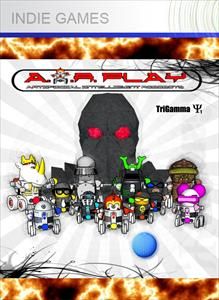
A.I.R. Play puts robots on the pitch instead of human footballers, and its seven arenas give its future-sport setting a few different backdrops for local contests. The reduced four-robot setup should also keep the field easy to parse compared with a conventional football game packed with players.
Story
This is a tournament goal rather than a story-heavy sports campaign. You choose from the robotic players and try to take a futuristic team to the AirPlay Tournament; that is the through-line.
That light framing suits the premise. A sport built around robots and an overheating plasma ball does not need much ceremony before it gets you back into a match, and the tournament gives repeated games a clear destination beyond isolated exhibition play.
Don’t come to A.I.R. Play for a sweeping narrative or a cast-driven drama. Its fiction is useful because it gives the competition its oddball edge: this is football in a future where the ball can become as dangerous as the opponent.
Overall Experience
A.I.R. Play has a genuinely fun elevator pitch, and importantly, its rules support it. Four robots, two goals, and one ball that will eventually explode is a compact setup with immediate stakes. The match format sounds built for players who prefer direct competition over the slower buildup and larger tactical shape of standard football.
The limitation is also clear: with one goalkeeper and one outfield player per team, this is not trying to replace a full football game. If you want eleven-a-side tactics, deep squad management, or the rhythm of a long season, the stripped-down format may feel too slight. Its strength is concentration, not breadth.
Give it a chance if you have a local rival and want football reduced to sharp, quick confrontations with a sci-fi wrinkle. The tournament target provides a reason to keep playing, but the real payoff is the pressure of a close two-player game when the plasma ball has been heating up for far too long.


Reviews
There are no reviews yet.