 Retro Replay Retro Gaming History, Reviews & Emulation
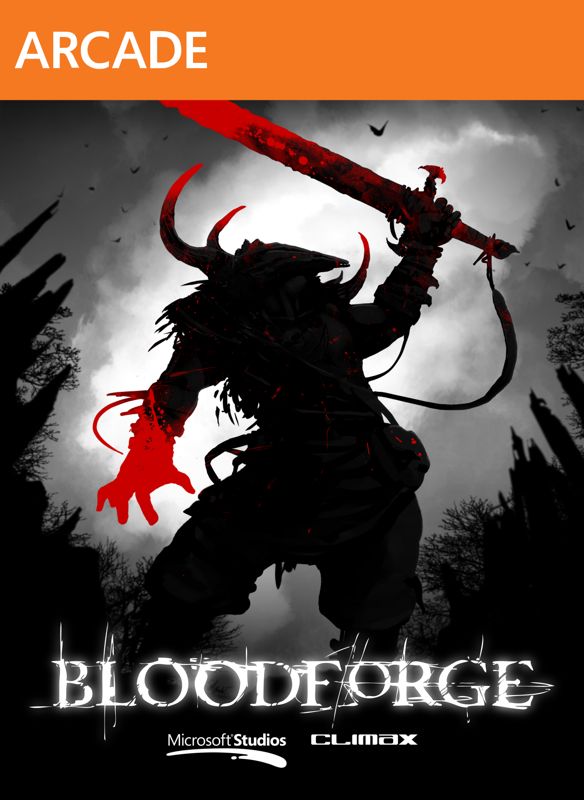
Retro Replay Review
Gameplay
The first hour of Bloodforge knows exactly what it wants from you: get close, hit hard, and paint the floor red enough to fund your next improvement. Crom has a useful spread of tools in his sword, war hammer, steel claws, and crossbow, so combat is more than mindlessly leaning on one attack. Combos, blocks, rolls, evasions, and special attacks give you ways to answer a crowd instead of merely enduring it. When the rhythm clicks, you move from aggression to defense and back again with satisfying force.
Its best idea is tying blood to almost everything. Spilling more of it earns currency for abilities and rune attacks, while also pushing the rage meter toward a temporary state that slows time and boosts damage. That creates a clear, gratifying loop: play well, build momentum, then cash it in when the fighting gets crowded. Enemies can also be confused by your attacks, opening them to finishing moves. It is a grisly reward for maintaining control rather than simply reducing every encounter to health-bar arithmetic.
Frustration sets in because health does not regenerate. Recovery depends on pickups hidden in destructible objects, so mistakes can linger far longer than you want them to. That raises the stakes of blocking and evading, but it can also make progress feel dependent on how much healing you happened to uncover. Weapon upgrades arrive as the game goes on and offer three tiers for each weapon, yet they do not completely change the fact that the campaign is a short five-level march toward boss fights.
Outside that campaign, Blood Duels and Challenge mode give the combat a second purpose. Blood Duels let you send a score challenge to friends, while Challenge mode asks you to survive successive enemy waves and alter attributes before each one for score multipliers. If you enjoy shaving seconds and chasing a better result than a friend, these modes make the combat feel more durable. If you only want a strong single-player action campaign, they are extras rather than a rescue.
Graphics
You spend the game looking over the shoulder of Crom, a barbarian warrior cutting through a fantasy world shaped by Celtic mythology. The clearest visual payoff comes from the violence itself: enemies marked for a finishing move give you an immediate on-screen cue that a gruesome takedown is ready.
Story
Bloodforge gives Crom an uncomplicated revenge quest, and that directness suits a game built around melee encounters. You are not here to untangle a dense mythological saga; you are here because Crom has a grievance and a large collection of weapons with which to pursue it.
The Celtic-inspired fantasy backdrop gives the journey a stronger flavor than generic barbarian action, but the narrative mostly functions as a reason to keep moving through the five levels and toward their bosses. That is not automatically a weakness. Revenge stories can work well when they maintain pressure, and Bloodforge’s real focus remains on the next fight.
Go in expecting motivation, not emotional complexity. Crom’s quest gives the carnage a direction, but the payoff rests on whether you enjoy the journey from one combat arena and boss battle to the next. For further release and development context, the Bloodforge history is useful background.
Overall Experience
Bloodforge is most enjoyable when you treat it as a lean, slightly rough action game with a strong taste for gore and score-chasing. Its combat has enough moving parts to reward practice: vary weapons, use defense rather than absorbing damage, build blood and rage, and take the opening for a finisher when it appears. There is genuine satisfaction in that cycle.
At the same time, the campaign’s five levels leave little room for the game to develop beyond its core routine. The no-regeneration health rule can turn a hard-fought stretch into a search for breakable objects, and the upgrade path is incremental rather than transformative. Bosses provide a natural punctuation mark, but they do not make the overall trip feel larger than it is.
Give Bloodforge a chance if you enjoy third-person brawlers that reward aggression, defensive timing, and repeatable score challenges. Skip it if you need a long campaign, a story with more weight than revenge, or combat that constantly reinvents itself. At 5.5 out of 10, it lands as a functional, occasionally satisfying bloodbath that finds its footing in bursts but never becomes the genre standout its weapons suggest.


Reviews
There are no reviews yet.