 Retro Replay Retro Replay gaming reviews, news, emulation, geek stuff and more!
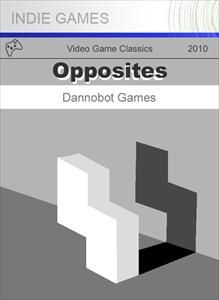
Retro Replay Review
Gameplay
Opposites starts with an idea you can grasp almost immediately, then asks you to think about it from two directions at once. White pieces arrive from the left, black pieces arrive from the right, and both players occupy the same board simultaneously. The crucial twist is that one side’s solid structure is the other side’s open space, so a move that seems safe for you may be handing your opponent a route through the field.
That shared-board rule gives the game its bite. You are not simply racing to make neat lines; you are shaping territory in a contest where every clear changes the balance. Finish a line in your color and it vanishes, shifting the field toward your rival. Victory comes when one player’s open space reaches the other edge, making line clears feel like forceful positional attacks rather than routine cleanup.
The result sounds simple, but simultaneous play should keep your attention pinned to the board. There is little room to settle into a private puzzle-solving rhythm when another player is actively changing the same space from the opposite side. Against the computer, it offers a quick way to learn how the shifting field behaves; with a second player, the core design has the clearest chance to become an immediate, competitive back-and-forth.
Frustration can come from the very thing that makes it interesting: your board is never entirely yours. If you want a slow, contemplative falling-block game built around planning several quiet moves ahead, this push-and-pull may feel intrusive. If you enjoy seeing a clean line clear become a direct blow against someone else, though, the tension is the point.
Graphics
The visuals are built around a shared playfield divided by direction and color: white pieces press in from the left, black pieces from the right, and the changing solid and open spaces are central to what you watch. It is an abstract puzzle-game view, where following the board state matters more than ornament.
Story
There is no need for a grand narrative when the match itself supplies a clear conflict: two opposing forces claim the same space from opposite sides. White and black pieces make that contest legible at a glance.
Each completed line functions like a small turn in that conflict. The board shifts, the boundary moves, and one side gets closer to breaking through to the other edge. It is a story told in momentum rather than characters or scenes.
That stripped-down approach suits a competitive puzzle game. You are not here to follow a plot; you are here to create reversals, deny space, and turn a favorable clear into a winning push.
Overall Experience
Opposites earns attention by making a familiar block-puzzle foundation feel genuinely adversarial. Its best idea is not merely that two people play at once, but that they interpret the same field in opposite ways. That makes the board feel contested from the opening moves onward.
The game is likely strongest when you have another person beside you, because its rules invite quick reactions and visible swings in control. Still, the computer option matters: it lets you practice reading how your color, your clears, and the field shift fit together before bringing that knowledge into a match.
Give it a chance if you like puzzle games that reward aggression as much as tidiness. Its narrow focus is a strength: one board, two sides, and a win condition that turns every useful line into pressure. The payoff is a concise competitive puzzle duel with a clever spatial hook.


Reviews
There are no reviews yet.