 Retro Replay Retro Gaming History, Reviews & Emulation
Retro Replay Review
Gameplay
Smelter is at its most interesting when it refuses to settle into one lane. Classic Mode joins side-scrolling action with top-down territorial expansion, so you are not simply pushing through a sequence of combat stages. You are also spreading across the Rumbly Lands, using buildings, units, and upgrades to press into new ground. It is an old-school mixture with real ambition, and it gives progress more texture than a straightforward platformer would have.
Action Mode strips out the direct strategy and lets the minions handle annexation, putting the spotlight on Eve’s action stages instead. That is the right choice if you mainly want to focus on the platforming, dangerous terrain, enemies, and bosses. Eve has three elemental skill sets and more than 40 upgrades tied to combat, movement, and defense, while the Smelt ability works both in fights and when navigating the environment. There is enough room here to favor the tools that fit how you like to attack and move rather than treating every encounter exactly the same way.
Difficulty is part of the bargain. Secrets, powerful hidden upgrades, hard trial levels, and Boss Rush Mode all point toward a game that wants you to learn its challenges rather than casually stumble through them. That can be satisfying when a new ability or upgrade opens up a solution, but it also means the game is better suited to someone who enjoys a stiff platforming and boss-fighting workload. The standalone Boss Rush is a particularly direct test for anyone who wants to revisit the game’s outlandish opponents without the larger adventure around them.
If you are deciding between modes, start with Classic Mode if the strategy half is why the premise caught your eye. Choose Action Mode if you want the sharper, more concentrated action-platformer experience. Either way, the useful thing about Smelter is that it does not make you commit to a single kind of game before you know which side of its personality you prefer.
Graphics
The game uses 2D side-scrolling action scenes alongside diagonal-down strategy maps. Its worlds are described as ranging from hellish areas to more beautiful ones, a welcome fit for a journey that moves across several domains rather than staying in one repeated landscape. The change in viewpoint between platforming and territorial play also helps the two halves feel visually distinct.
Story
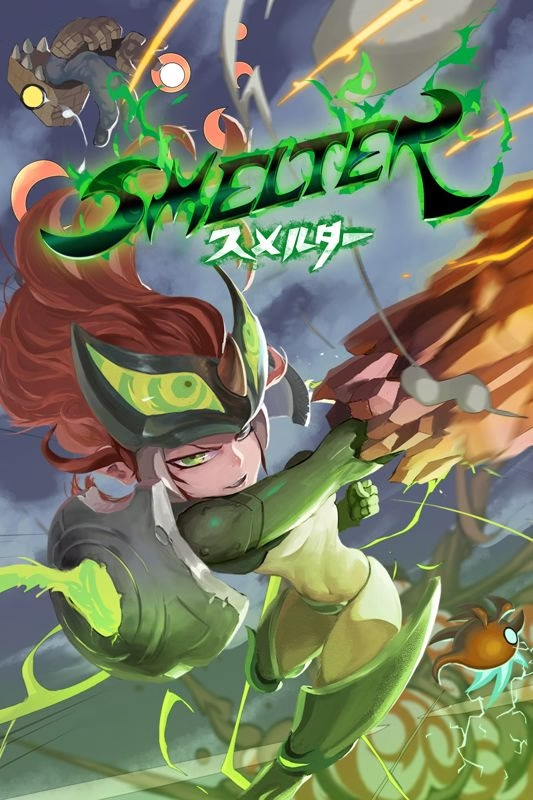
The setup is knowingly mythic and a little odd. After the Garden is destroyed, Eve wakes in an unfamiliar world without Adam and meets Smelter, an overconfident winged creature who can transform and fuse with others. His offer of help turns into their fusion, giving the adventure its central partnership and its unusual action premise.
Eve and Smelter head into the treacherous Rumbly Lands to search the various domains for Adam and a route home. It is a simple motivation, but it gives the territorial expansion more purpose than conquest for its own sake. Each advance carries the larger hope that they are getting closer to an answer.
Smelter himself looks like the source of much of the game’s personality. The cast is said to run from eccentric to completely insane, and that tone should appeal if you like a fantasy quest that leaves room for broad, unruly character energy alongside its darker opening. Do not come expecting a restrained fable. This is a quest built around a loud premise and an even louder companion.
Overall Experience
Smelter earns attention because it treats its genre collision as the main course. The strategy layer gives its journey outward a sense of scale, while the platforming side carries the immediate pressure of movement, combat, hazards, and bosses. Action Mode is also a smart alternative for gamers who love the latter and do not want the former in the driver’s seat.
Its biggest strength is that there is a lot here for a committed action fan: multiple elemental paths, upgrades, secrets, trial stages, strategic expansion, and a separate boss challenge. Its biggest risk is the same density. If you want a short, low-pressure platformer, the game’s demanding challenges and split focus may feel more like homework than variety.
For the right gamer, though, the payoff is a refreshingly unapologetic throwback with more ideas than most retro-minded action games attempt. The synth-and-guitar soundtrack, including themes by Manami Matsumae, suits that energetic 16-bit inspiration. For a closer look at the original game’s official details, the Smelter publisher page is useful. Give it a chance if you want platforming and strategy to actively compete for your attention, not politely stay in separate modes.



Reviews
There are no reviews yet.