 Retro Replay Retro Gaming History, Reviews & Emulation
Retro Replay Review
Gameplay
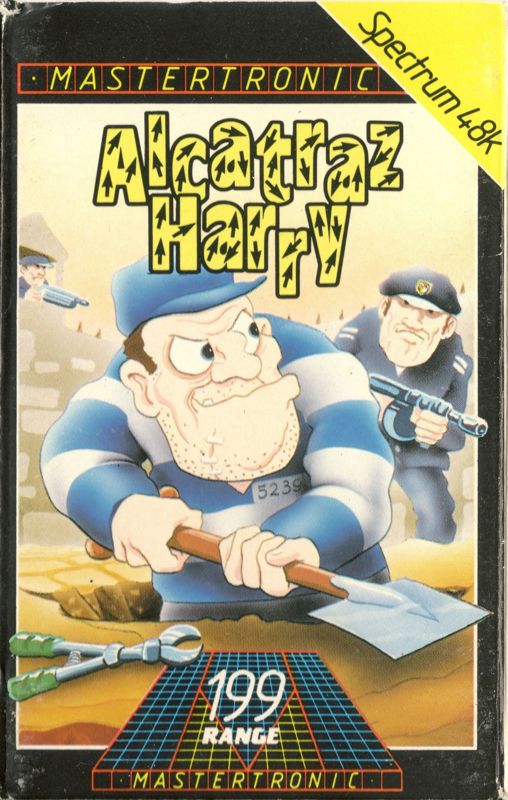
Alcatraz Harry puts you in the least glamorous kind of prison break: not a grand sprint for freedom, but a careful scavenger hunt through a hostile maze. You play Harry, a prisoner searching the camp for escape equipment and secret files while guards patrol the routes between locations. The first few screens have a pleasingly direct tension. You are looking for something useful, trying not to blunder into a guard, and wondering whether the route ahead is a shortcut or a trap.
The objective has enough structure to keep the exploration from becoming completely aimless. Revolvers, ladders, wire cutters, and other scattered items turn each new location into a small question: is this part of the solution, and can you safely get it back into your wider escape plan? With 144 locations to investigate, the prison feels large for a game built around fixed or flip-screen movement. Progress comes from memory as much as nerve; once you start recognizing routes and remembering where useful equipment appeared, the maze begins to click.
That same scale can test your patience. Alcatraz Harry asks you to search thoroughly, avoid patrolling guards, and learn the layout through repeated exposure. Getting delayed or forced away from a promising route is frustrating because the game’s core activity is already methodical. If you want fast action, its deliberate hunt for tools will feel like work. If you enjoy drawing maps, retaining landmarks, and slowly turning an unfamiliar space into known territory, the pressure of the guards gives that process a satisfying edge.
Graphics
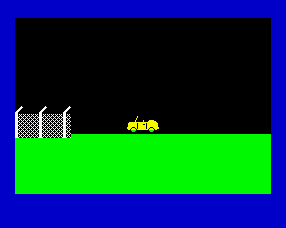
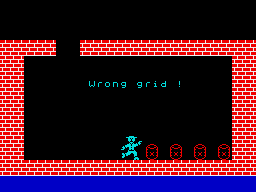
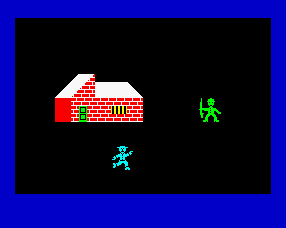
The action is shown from the side in fixed or flip-screen prison locations. That format makes each area feel like a discrete piece of the larger maze: you move on, take in the next section, and gradually build a picture of how the camp connects. Guards and the scattered escape items matter visually because spotting them quickly is central to surviving and searching effectively.
Story
There is not much need for elaborate storytelling here. Harry is a prisoner in a camp, and he needs to escape by stealing equipment and secret files. It is a clean setup that gives the item hunt a reason to exist and makes the guards more than simple wandering hazards.
The prison-break premise works because it turns ordinary maze exploration into contraband hunting. A ladder or wire cutters are not just pickups; they are pieces of Harry’s route out. Secret files add another required layer to the plan, so the goal is not merely reaching an exit by luck.
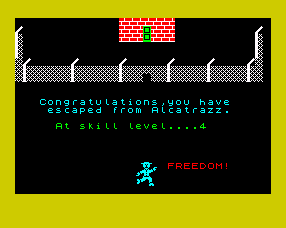
Do not expect character drama or a detailed narrative arc. The story is carried by your own route through the camp: close calls with guards, the discovery of needed tools, and the gradual realization that you may finally have what it takes to leave. For this kind of 1984 Spectrum game, that is enough motivation to make each searched location feel purposeful.
Overall Experience
Alcatraz Harry is a tough fit for anyone who needs constant forward momentum. Its maze is extensive, its objective depends on finding scattered gear, and guards can turn exploration into a cautious stop-start routine. The game makes you earn familiarity with its prison rather than handing you a clear route.
But there is a real pull to that stubbornness. The best moments come when an initially confusing set of screens becomes a place you can navigate with intention, and a newly found item feels like genuine progress instead of another random collectible. The escape plan gradually emerges from observation, memory, and careful movement.
Give it a chance if you like early maze games with puzzle and stealth pressure, especially if making your own map sounds appealing rather than tedious. Everyone else may find its search-heavy design and unforgiving guards more draining than exciting. It is an interesting prison-break concept with enough tension to reward persistence, but it asks for more patience than it consistently repays.



Reviews
There are no reviews yet.