 Retro Replay Retro Gaming History, Reviews & Emulation
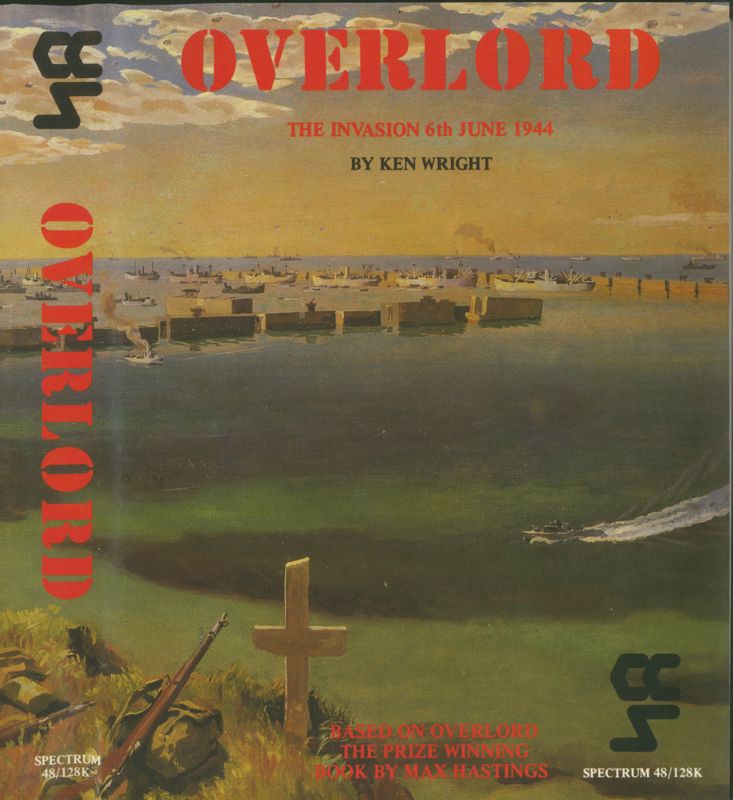
Retro Replay Review
Gameplay
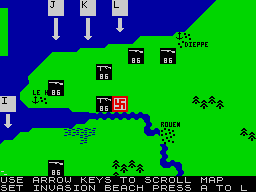
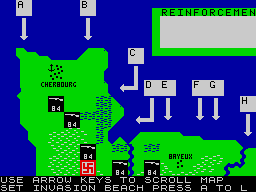
The first hour of Overlord is spent learning to think like a commander rather than a unit wrangler. Before the invasion begins, you select five of twelve possible beaches and set one of three difficulty levels, which affects your troops’ morale. Choosing landings that need not match history gives the opening a welcome sense of responsibility: you are not merely reenacting D-Day, you are gambling on where your invasion can break through.
Once ashore, the game becomes a peculiar and often compelling exercise in giving intent instead of issuing precise orders. Each army receives a central goal plus left and right flank points, then moves toward them on its own. You cannot steer individual divisions. At first, that can feel like a lack of control, especially when an army does not advance exactly as you pictured it. Give it time, though, and the system starts to make you plan in wider strokes. Good objectives matter because they shape the route, the frontage, and the risks your forces will accept.
Combat orders are where your personality as a commander comes through. Attack tells an army to engage regardless of the odds, defend puts more emphasis on terrain, and initiative holds back until the fight looks favorable. Since battles resolve automatically from troop types, strength, terrain, and morale, there is no tactical rescue button once forces meet. That can sting, but it creates a useful tension: reckless advances may gain ground, while cautious orders can leave you short of the inland space needed to bring in reinforcements.
The victory conditions keep the campaign focused. Push to the right edge of the map, or reduce one side to 40 percent strength, and the war is decided. It is a clean operational race rather than a sprawling simulation. If you need direct control over every tank and infantry unit, Overlord will test your patience. If you enjoy setting a plan, accepting imperfect execution, and adjusting before the whole invasion loses momentum, its restrictions become its strongest idea.
Graphics
The game is built around a top-down map of northern France, where the beaches and inland push are the important sights. It is functional rather than flashy, but the broad map view fits a game concerned with armies, landing space, and reaching the far side of France instead of individual firefights.
Story
There is no character-led wartime tale here. Overlord draws its drama from Operation Overlord itself: British, American, and Canadian forces must establish a foothold in German-occupied France and drive inland before the invasion stalls.
That historical frame gives the beach-selection screen more meaning than a standard scenario setup. Picking where to land immediately asks you to balance ambition against survival. Airborne units can be sent farther from shore, while the beach armies need to create room before reinforcements can arrive, so the familiar D-Day outline becomes a practical command problem.
The game also wisely leaves room for alternate outcomes. You can use non-historical landing beaches, and the campaign’s outcome depends on whether your forces can cross the map or grind the enemy down. It is history as a strategic situation, not a fixed sequence of events, which suits the game’s detached command style.
Overall Experience
Overlord: The Invasion 6th June 1944 is more interesting than immediately welcoming. Its broad-order system asks you to stop looking for perfect control and start judging whether an army has been given a sensible direction and an appropriate combat posture. The first few poor engagements may feel unfair; later, you will usually recognize the costly assumption behind them.
The payoff is a compact D-Day wargame with real friction. Morale, terrain, force composition, and the need to clear space for reinforcements all pull against a simple headlong advance. Because the game resolves movement and combat for you, it is less about tactical cleverness in the moment and more about whether your earlier decisions created favorable conditions.
Give it a chance if you like historical strategy games that make you live with your orders. Skip it if automatic battles and indirect army control sound like work rather than suspense. For the right kind of patient armchair general, Overlord has a stern, satisfying rhythm: land, expand, reinforce, and hope your plan survives contact with France.


Reviews
There are no reviews yet.