 Retro Replay Retro Gaming History, Reviews & Emulation
Retro Replay Review
Gameplay
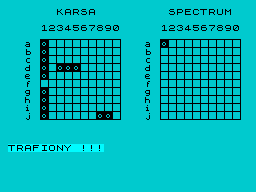
The first few turns feel comfortingly familiar: place five ships, choose a square, and wait to learn whether you found metal or water. Then the unusual ship shapes start to matter. In ordinary Battleship, a second hit often tells you which line to follow. Here, it may be a corner instead. That one complication gives every successful shot a little more tension.
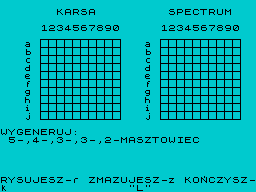
You can arrange your own fleet or let the computer do it randomly, and both options have their place. Setting the board yourself invites a small bluffing game: spread the ships sensibly, but use bends to make the opponent’s search harder. Random placement is the better choice when you want to get straight into firing and trust the game to handle the setup.
Its strongest moments come when you have enough evidence to make a real deduction. A cluster of hits can tempt you into assuming a ship’s direction, only for a miss to force a rethink. That makes the pace more deliberate than a simple lucky-guess contest. Frustration can set in during cold streaks, because turns still hinge on choosing one square at a time, but that patience is the whole bargain.
This is a clean strategy game rather than a grand naval battle. There are no extra systems crowding the board: just placement, observation, risk, and the satisfaction of finally finishing off an awkwardly shaped target. If you already like Battleship, the curved-ship rule is enough to make Ships worth a look; if you dislike methodical grid guessing, it will not convert you.
Graphics
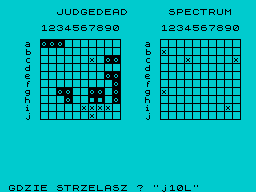
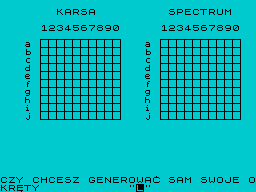
Ships is built around two 10-by-10 boards and square-by-square targeting. The top-down board-game view keeps attention where it belongs: on the growing record of hits, misses, and the gaps that may still conceal a ship.
Story
There is no campaign or character drama to carry the matches. The conflict is the immediate one between your hidden fleet and the computer’s: find every connected shape before your own ships are wiped out.
That stripped-back setup suits the game. Each round creates its own tiny story of a promising lead, a mistaken assumption, and a late discovery that changes how you read the board.
Do not come to Ships for naval fiction or a dramatic finale. The payoff is purely competitive: the last surviving ship, the last correct guess, and the knowledge that your deductions held up better than the computer’s.
Overall Experience
Ships earns its interest through restraint. It takes a game nearly everyone understands in seconds and changes one foundational assumption just enough to make old habits unreliable. Curved fleets are not a cosmetic gimmick; they reshape how you interpret every hit.
The game works best in short, attentive sessions. You need to remember what each miss rules out and resist firing blindly at the first plausible continuation of a damaged ship. When that thought process clicks, even a quiet exchange of turns has a pleasing tactical rhythm.
Its narrow focus also sets a clear limit. There is little here for anyone wanting a broad strategy game or a lavish naval theme, but the core contest is solid and distinct. Give it a chance if you want a compact Battleship variant that asks you to think one step past the obvious line.



Reviews
There are no reviews yet.