Retro Replay Retro Replay gaming reviews, news, emulation, geek stuff and more!
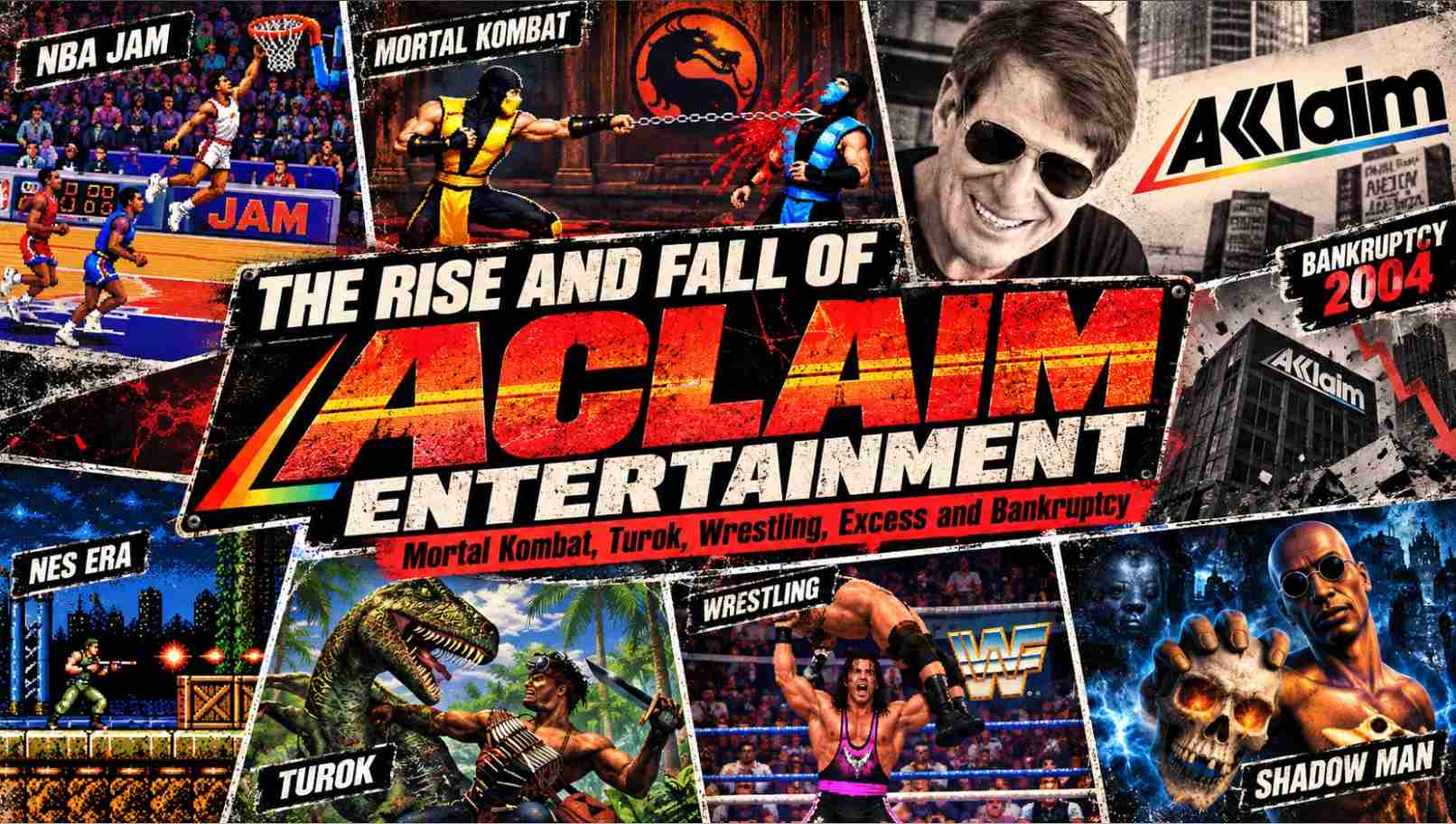
The Rise and Fall of Acclaim Entertainment — Mortal Kombat, Turok, Wrestling, Excess and Bankruptcy
There are game companies that were successful, game companies that were influential, and game companies that were so loudly, unapologetically 1990s that they now feel like a time capsule all by themselves. Acclaim Entertainment belongs in that last category. The Long Island publisher did not simply sell games. It sold attitude. It sold licenses. It sold controversy. It sold the idea that if you could slap a famous name, a hot arcade property, a comic-book brand, a sports endorsement, or a shocking publicity stunt onto a box, you could turn noise into market share. For a while, that gamble worked brilliantly. Acclaim became one of the defining third-party publishers of the cartridge and early CD era, moving from the Nintendo generation into the age of Mortal Kombat, NBA Jam, Turok, WWF WrestleMania, Shadow Man, Extreme-G, Re-Volt, and, eventually, some of the most desperate and self-destructive marketing decisions of the early 2000s.
This is a story about much more than a publisher logo on the front of a box. It is a story about how three industry veterans built a console powerhouse out of timing, relationships, licensing savvy, and a sharp instinct for what American players wanted. It is also a story about how a company can mistake momentum for permanence. Acclaim was great at attaching itself to hits, but that strength sometimes hid a deeper weakness: the company often seemed more comfortable riding trends than surviving after those trends changed. When the industry shifted, development costs rose, licenses got more expensive, retailers got pickier, and the easy money vanished, Acclaim’s old playbook stopped working. The same company that once looked like a master of the market ended up as a warning about overexpansion, branding without discipline, and the danger of believing that one more stunt can fix structural decline.
If you have spent time in Retro Replay’s History Of archive, you already know the kind of story we love most: the kind where personalities, technology, business, and cultural chaos all collide. Acclaim is perfect for that treatment. The company’s history touches the NES era, the rise of home arcade ports, the birth of the ratings wars, the explosion of comic-book licensed gaming, the Nintendo 64 boom, wrestling’s television-era peak, extreme-sports opportunism, the tasteless edge of early-2000s marketing, and finally the cold, unglamorous paperwork of collapse. In other words, this one has everything.
From Activision Alumni to Nintendo-Era Publisher
Acclaim was founded in 1987 by Greg Fischbach, Robert Holmes, and Jim Scoroposki, three men who had already spent time learning how the business worked from the inside. Their backgrounds mattered because Acclaim did not enter the industry as a garage operation built around a single coder or a single miracle game. It entered as a business-minded publisher with a sharp eye for retail realities, platform politics, and the value of recognizable product. That distinction shaped almost everything that came later. While some companies began with a development identity and figured out publishing afterward, Acclaim’s DNA leaned the other direction. The company understood packaging, platform relationships, and shelf presence early, and that gave it an edge during the heavily controlled console market of the late 1980s.

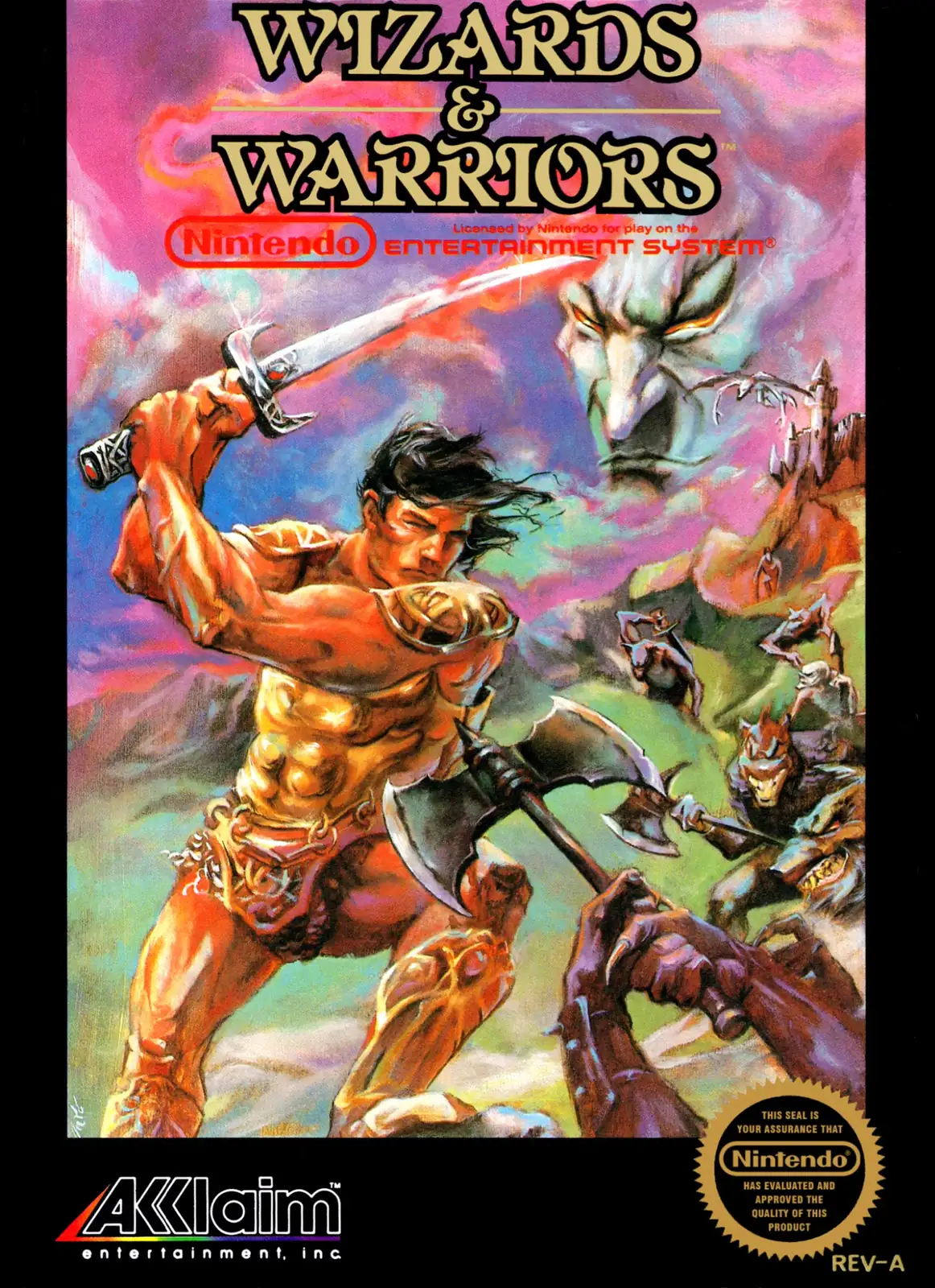
The timing helped. Nintendo’s dominance created a system in which access mattered almost as much as creativity. If a publisher could secure a position inside the NES ecosystem and feed stores a steady supply of credible releases, it had a real shot at growth. Acclaim was one of the early North American publishers that learned how to operate inside that environment without losing sight of the mainstream customer. It did not necessarily begin by chasing prestige. It began by chasing viability. A title like Wizards & Warriors now looks like one piece in a huge retro library, but in its own moment it represented something crucial: Acclaim’s ability to carve out a visible identity on Nintendo hardware while borrowing a sense of scale and spectacle from arcade and fantasy trends that were already familiar to players.
That instinct for approachable, sellable software defined the early Acclaim catalog. The company quickly grasped that the path to stability was not merely releasing original software in the abstract. It was releasing software that retailers could understand, that platform holders would tolerate, and that kids could spot from a few feet away. Acclaim was not yet the swaggering company of the Mortal Kombat and Turok years, but the basic strategy was already in place. Build distribution. Earn retailer confidence. Use brand clarity as a weapon. In the late 1980s and early 1990s, when a logo on a box could help determine whether a game got noticed, this mattered enormously.
Licenses, Familiar Faces, and the Business of Being Obvious
One of the smartest things Acclaim ever did was realize that the video game business did not reward subtlety. A familiar logo, a familiar athlete, a familiar TV property, or a familiar arcade name could do more for a product’s commercial chances than a dozen elegantly written design documents. Acclaim made a career out of understanding that blunt truth. It moved aggressively into licensed entertainment and sports properties, and that shift made the company increasingly visible in malls, toy stores, electronics chains, and the pages of game magazines. It is easy to mock “licensed game publisher” as a synonym for creative laziness, but in Acclaim’s case the strategy was more complicated than that. The company recognized that licenses were not just decorations. They were routes into consumer trust, and, when paired with competent software, they could build an empire.
David Craddock’s excellent piece on Acclaim’s relationship with Midway highlights a revealing point from Robert Holmes: WWF WrestleMania was Acclaim’s first major licensing deal. That matters because it captures the company at the moment when it was learning how valuable outside brands could be. WWF was not just a sports-entertainment name. It was a television phenomenon with instantly recognizable stars, broad toy-store appeal, and cross-generational visibility. A wrestling license did not guarantee quality, but it guaranteed attention, and Acclaim understood attention better than most publishers of its era.
By the middle of the 1990s, that strategy had grown far beyond the basics. Acclaim’s catalog became a patchwork of recognizable entertainment forms: sports, comics, wrestling, arcade hits, and action brands with built-in fan bases. That made the company seem much larger than any one internal creative culture. It was not “the company that made one kind of game.” It was the company that could plausibly publish almost anything if the name on the box felt commercially useful. The upside was obvious. The downside was subtler. The more Acclaim leaned on licenses, the more it tied its fortunes to costs, renewals, celebrity relationships, royalties, and the moods of licensors. When the machine was humming, that dependence was invisible. When things started going wrong, it became a major vulnerability.
Mortal Kombat, NBA Jam, and the Midway Gold Rush
If early Acclaim built the foundation, the relationship with Midway turned the company into a cultural force. Home versions of Mortal Kombat and later NBA Jam helped define the company’s identity during the early and mid-1990s. This was not merely a matter of publishing popular games. These were games that shaped public conversation. Mortal Kombat pushed Acclaim into the center of debates about violence, censorship, parental anxiety, and the newly emerging logic of content ratings. NBA Jam, meanwhile, proved that Acclaim could also cash in on the joy of loud, fast, instantly understandable arcade sports. Put the two together and you get a nearly perfect snapshot of the company at its commercial peak: one foot in controversy, one foot in mass-market fun, and both hands gripping the cash register.



The contrast between Street Fighter and Mortal Kombat was not merely aesthetic. It reflected two visions of fighting-game popularity. Capcom’s game was a polished sprite-based tradition. Midway’s game was digitized, transgressive, and deliberately provocative. Acclaim saw exactly what that meant for the home market. The company had a property that could be sold not just as a game but as an event, a debate, and a dare. Nintendo’s censorship concerns and the broader uproar over game violence only made the title louder. As David Craddock notes in his piece on the missing NES port of the original Mortal Kombat, Acclaim sat in a uniquely powerful position as the home publisher of Midway’s material, and the company’s fortunes benefited enormously from that status.

“Nintendo forced Midway, Acclaim, and Sculptured Software to censor home versions of Mortal Kombat.”
That line, drawn from Craddock’s discussion of the ratings era, captures something central about Acclaim. The company thrived in spaces where culture wars and retail opportunity overlapped. It did not create every controversy around its products, but it rarely suffered from free attention. Mortal Kombat made Acclaim visible to people who never cared about ordinary release schedules, while NBA Jam Tournament Edition made the company look unstoppable in a different way. NBA Jam was pure broad-appeal electricity: celebrity athletes, arcade-speed pacing, easy multiplayer, and a style that translated beautifully into screenshots and magazine coverage.
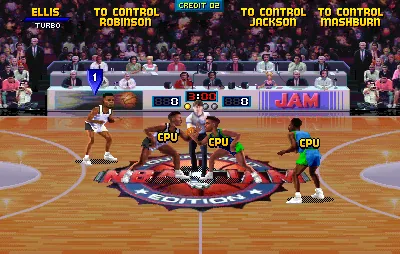
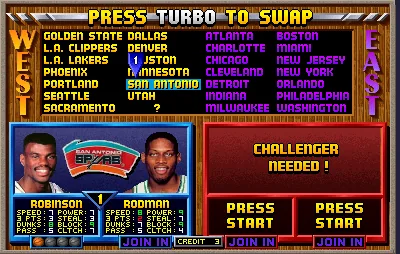
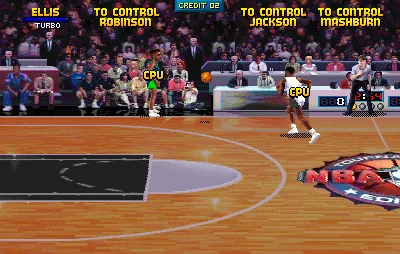
Acclaim’s mid-1990s catalog often felt like a shopping mall version of everything players were supposed to want. That sounds harsher than it really is. Plenty of these games were fun. Several were genuinely important. But the point is that Acclaim’s genius was often curatorial and commercial rather than auteurist. The company found heat and packaged it well. Sometimes it also nurtured real development depth. But even when Acclaim had talented internal studios and memorable original work, the publisher’s public brand still revolved around recognizability, impact, and attitude. That formula helped the company grow fast, and it also set a trap: the business became conditioned to expect big brands and obvious hooks.
From Publisher to Portfolio: Buying Talent, Buying Capacity
As the 1990s advanced, Acclaim did what many rapidly growing publishers did: it expanded through acquisition. Instead of remaining only a label attached to externally developed software, it assembled a network of studios. Probe in the UK, Sculptured Software, Iguana Entertainment, and other teams gave Acclaim more direct control over production and a broader development base. On paper this was a logical evolution. If the company was going to keep feeding a growing catalog across multiple platforms, internal capacity mattered. If it wanted to keep more value in-house and respond more quickly to trends, owning studios made sense. The publisher was becoming something closer to a mini-empire.
This strategy brought real benefits. Internal teams could specialize. Ports could move faster. Licensed properties could be produced under tighter company oversight. Acclaim could develop its own technical expertise instead of simply acting as a packaging and distribution layer. The problem, as always, was that growth increases complexity. More studios mean more payroll, more overhead, more management pressure, more scheduling risk, and more titles that must succeed simply to justify the machine around them. While success stories like Turok and Shadow Man made Acclaim’s studio network look clever, the broader structure also made the company more fragile when the market cooled and margins tightened.
Turok and the Moment Acclaim Looked Unstoppable
No franchise better symbolizes Acclaim’s ability to transform raw commercial instinct into a generational hit than Turok. The property had roots outside games through the classic comic-book character, and that alone made it a natural Acclaim play. This was the company that loved turning existing recognition into interactive spectacle. But what mattered most was execution. Under the Acclaim umbrella, and especially through Iguana’s work, Turok: Dinosaur Hunter became exactly the sort of game that could sell both a system and a publisher image at the same time. On Nintendo 64, it looked aggressive, modern, and different enough from its competitors to command attention.
The broader corporate context is important here. Acclaim’s relationship to comics and comic-derived properties became even more visible through its association with Jim Shooter and the Valiant world that eventually turned into Acclaim Comics. The company was not merely borrowing a character name for convenience. It was deepening its investment in transmedia ownership and cross-brand opportunity, or at least trying to. That helps explain why Turok felt like more than a one-off product. It was a flagship franchise, a platform showcase, and a piece of corporate ambition.

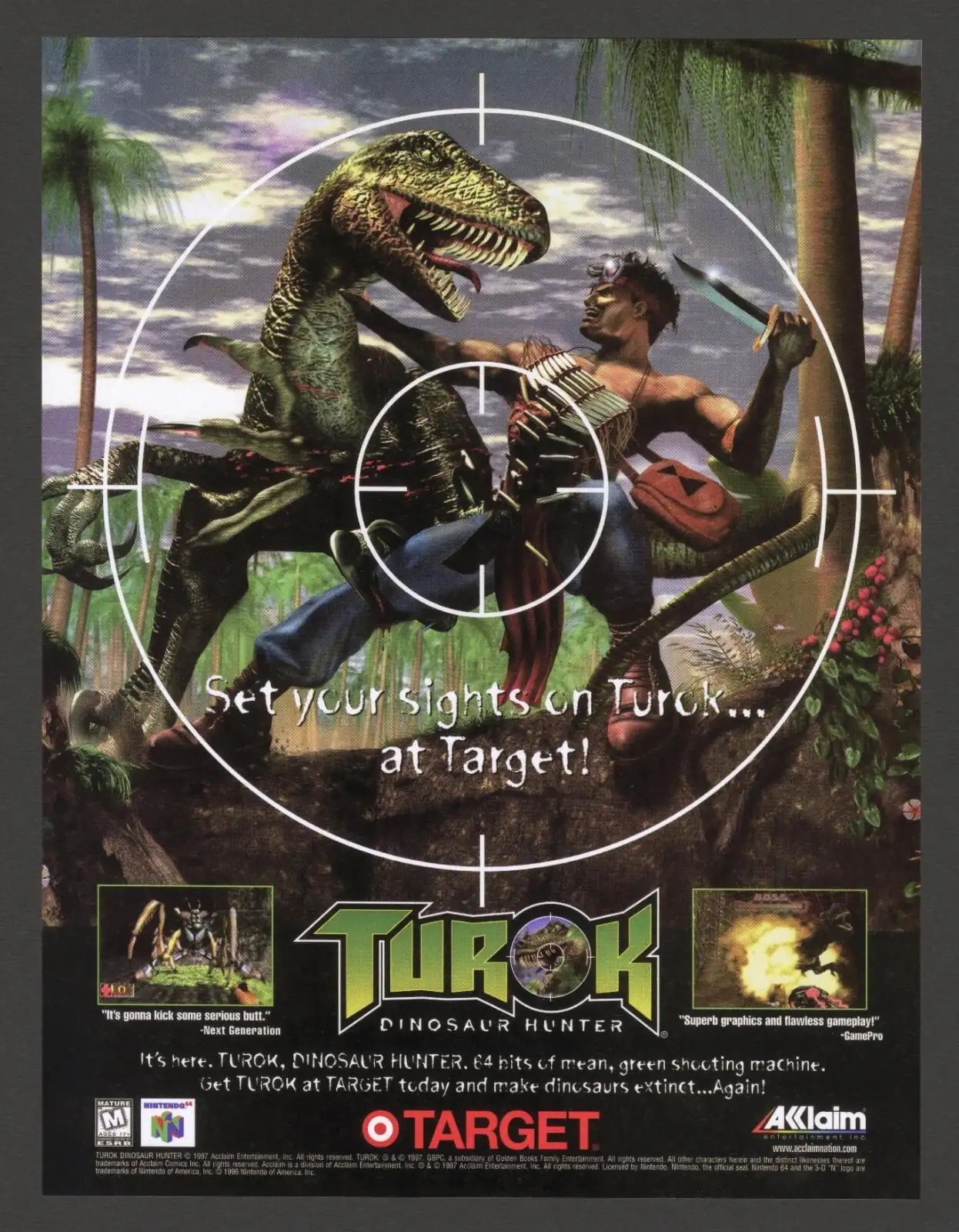
“Set your sights on Turok… at Target!”
That slogan says everything. Acclaim was not marketing a niche shooter to hobbyist purists. It was driving a prestige-console release into big-box retail with all the volume and confidence of a national brand campaign. The game’s first-person action, dinosaur combat, and comic-book toughness gave it a visual identity that leapt off magazine pages. At a time when the Nintendo 64 was still forming its software identity, Turok looked like the sort of game that could make the system seem older, edgier, and more aggressive than the family-friendly Nintendo stereotype suggested.
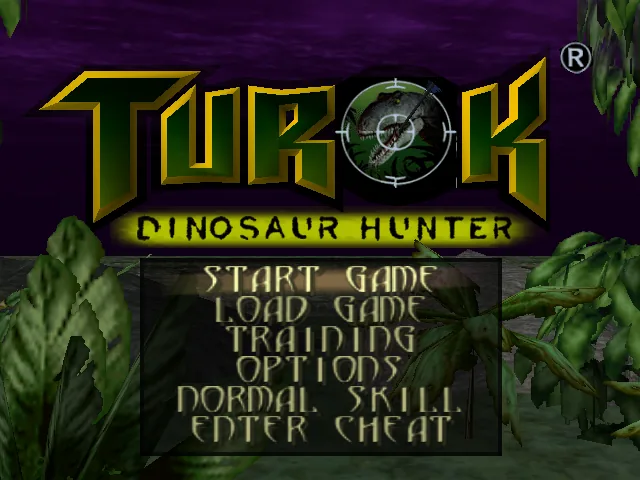
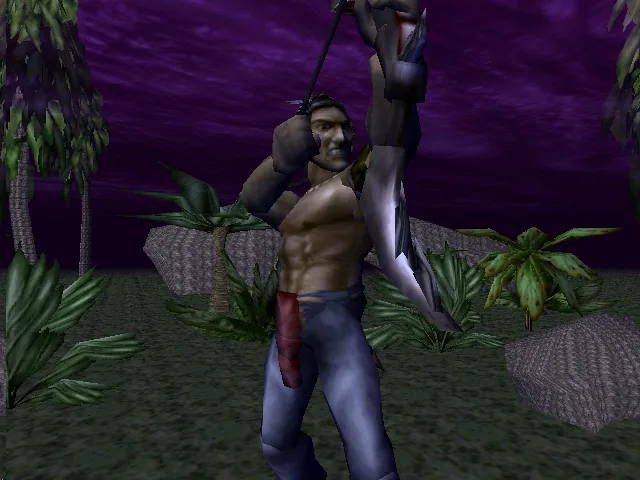

Just as importantly, Acclaim marketed Turok like it knew it had a weapon. The ads were loud, the attitude was obvious, and the positioning was calculated to make the game feel dangerous in a fun, commercial way. This was a recurring Acclaim skill. When the company had a property with genuine momentum, it did not whisper. It shouted. That confidence fed back into the brand itself. Acclaim was becoming the publisher of games that seemed a little meaner, a little bigger, and a little more eager to prove themselves than the safe competition.
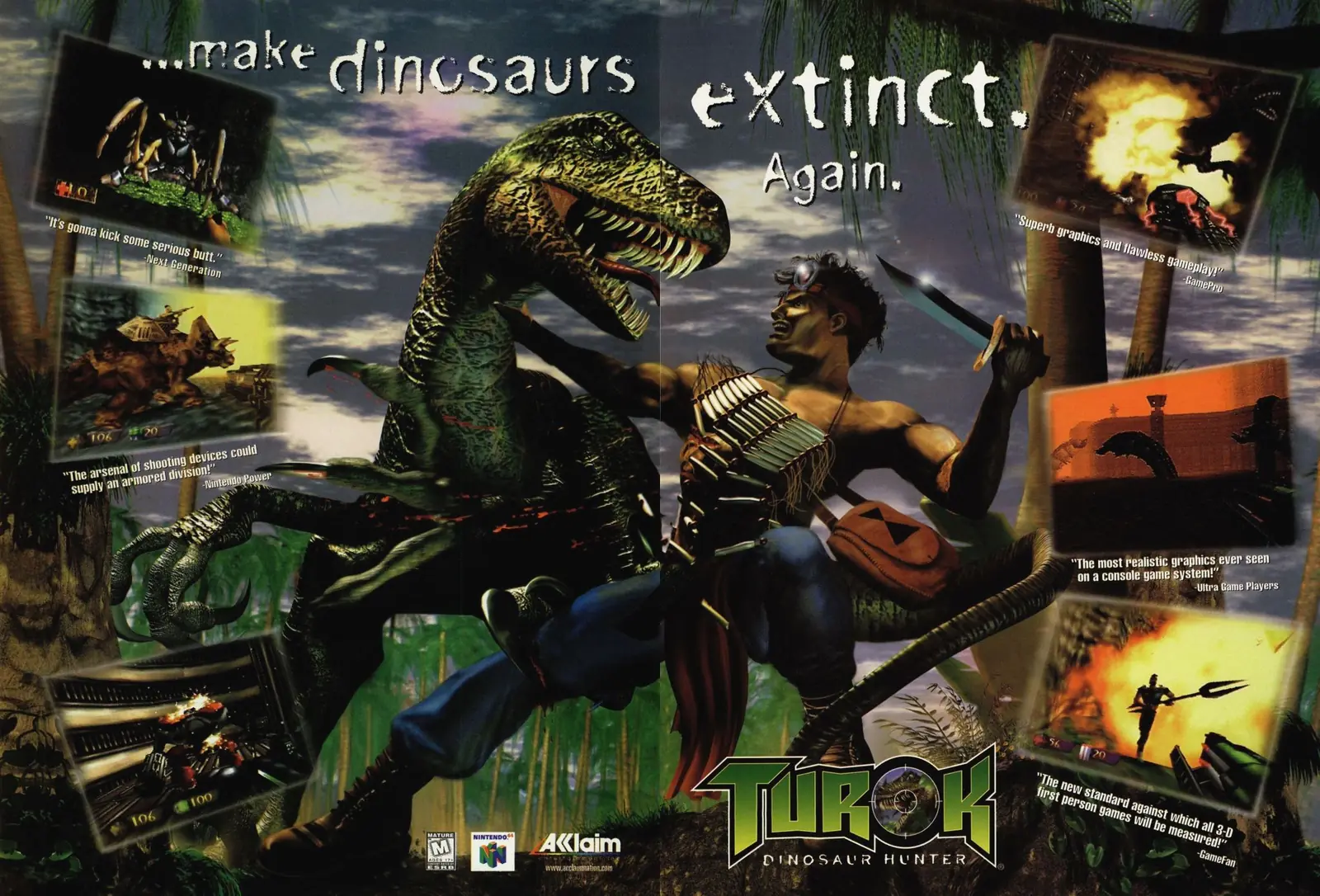
The success of Turok also masked some long-term issues. A hit franchise is wonderful, but it can encourage management to believe that the pipeline is healthier than it really is. Once a company becomes accustomed to major properties landing exactly when needed, budgets swell and organizational sprawl becomes easier to justify. Acclaim kept expanding, and during the late 1990s it often looked as though the strategy was working. In hindsight, though, Turok represents both the high point of Acclaim’s confidence and one of the last moments when the company’s whole model felt entirely convincing.
Sports, Comics, and the Dream of Being Everywhere
One reason Acclaim loomed so large in memory is that the company rarely confined itself to one lane. Even players who did not care about Mortal Kombat or Turok were likely to encounter Acclaim through sports shelves, comic-book tie-ins, or brand-heavy cross-promotion. The company had hits and recognizability in areas far beyond the titles that dominate its legacy. Series like NFL Quarterback Club and All-Star Baseball helped Acclaim occupy that very valuable middle space between “core” hobbyist game company and broad retail entertainment company. It did not need every release to redefine a genre. It needed enough releases to keep the logo everywhere. In the 1990s, being everywhere could look like invincibility.
That ambition also helps explain why Acclaim often thought like a media company rather than a mere software publisher. Its investment in the old Valiant line and the rebranding of that material as Acclaim Comics was not just a vanity side project. It reflected a period belief that intellectual property could and should move across formats in both directions. A comic character could become a game. A game publisher could become a comic-book owner. A successful product line could be nurtured as a world rather than simply as a one-off title. Plenty of companies in the 1990s flirted with this sort of empire thinking, but Acclaim committed to it in a very visible way. That is part of why the company could feel so much bigger than many of its direct rivals. It was not just selling cartridges and discs; it was trying to build a branded entertainment ecosystem before that language became standard industry jargon.
There was also a distinctly American commercial showmanship to Acclaim’s approach. The company liked obvious hooks, celebrity names, and big promises. It liked games that could be communicated in a single ad page or thirty seconds of TV-style energy. It understood that the same customer who bought a basketball game, a wrestling game, a dinosaur shooter, or a comic-book adaptation might not care about studio pedigree but would absolutely respond to a loud sales pitch. In that sense Acclaim was unusually honest about what mass-market game publishing often was: a packaging business built on timing, confidence, and the art of making software feel inevitable. When the company looked powerful, that honesty looked like genius. When the company began to fail, the exact same trait made it look crass and overextended.
Why the Acclaim Brand Felt So Big
It is worth pausing to explain why Acclaim’s cultural footprint felt outsized even compared with some publishers that were just as important on paper. The answer has a lot to do with tone. Acclaim titles were often sold with a sense of confrontation. Mortal Kombat challenged parental comfort. Turok promised violence and dinosaurs. Wrestling games sold chaos and personality. Sports games sold trash talk, celebrities, and TV polish. Even the company’s more stylish or atmospheric material was packaged with force. That added up to a publisher identity that felt less like a quiet manufacturer and more like a showman. Acclaim did not simply want to be on the shelf. It wanted to dominate the page, the commercial break, and the lunch-table conversation.
That quality helps explain why so many players remember the company fondly even if their personal batting average with its games was mixed. Acclaim had presence. Its boxes were memorable. Its ads were memorable. Its library cut across enough genres that almost anyone who played games in the 1990s brushed against the brand somewhere. In historical terms, that matters. Plenty of publishers release good games and still leave only a faint emotional trace. Acclaim’s specific blend of hit licensing, aggressive promotion, and culturally tuned spectacle meant that it left a stronger memory than many cleaner or more disciplined businesses. That is not the same as saying it was better. It is saying it knew how to make itself felt.
Studios, Experiments, and the Search for the Next Big Identity
Acclaim was never only Mortal Kombat, NBA Jam, and Turok. One of the more interesting things about the company is how often it chased stylish second-tier hits or unusual prestige plays that gave the catalog texture. Extreme-G 2 represented the publisher’s love of speed, sheen, and futuristic arcade spectacle. Re-Volt offered radio-controlled-car racing with a playful identity all its own. Shadow Man showed Acclaim willing to back darker, moodier material that did not rely entirely on sports or celebrity branding. These games matter because they complicate the common caricature of Acclaim as a company that only chased cheap licenses and controversy. The truth is messier. At its best, Acclaim also published smart, visually distinctive software that broadened its catalog.
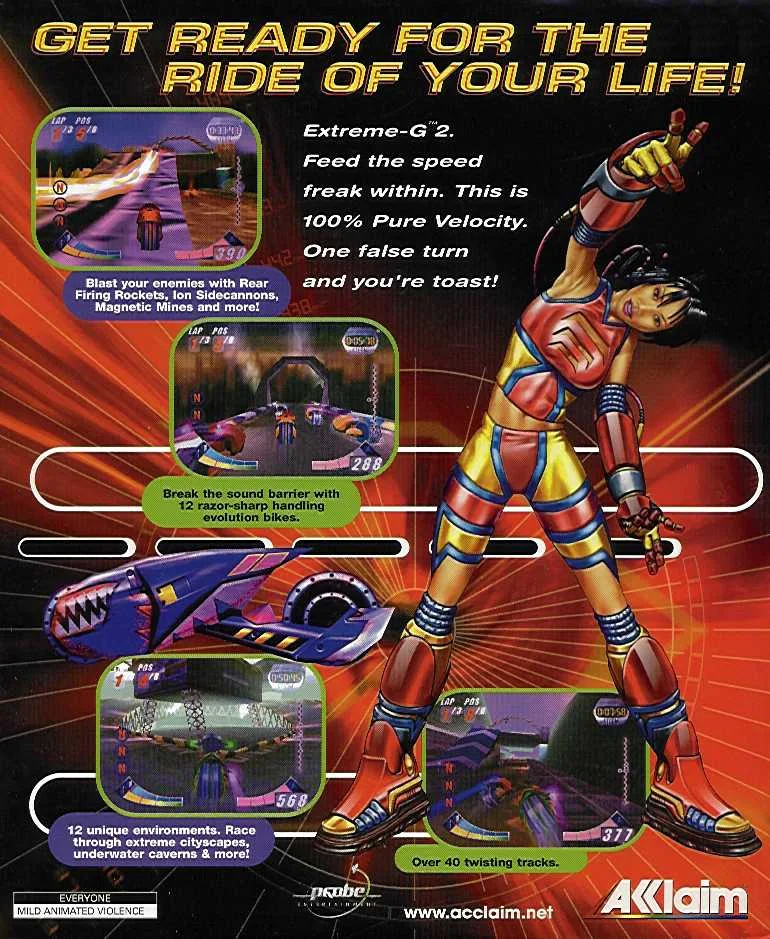
Extreme-G fit perfectly into the late-1990s appetite for impossible speed and weaponized racing, and it had the sort of slick, screenshot-friendly energy Acclaim loved. Re-Volt, published by Acclaim in North America, had a totally different appeal. It was whimsical but technically impressive, a kind of toy-box racing game that benefited from the publisher’s ability to push unusual concepts into the mainstream. Then there was Shadow Man, which felt more adult and more atmospheric than the company’s broadest hits. In hindsight, it is one of the best examples of Acclaim trying to look serious, eerie, and creatively ambitious instead of merely loud.

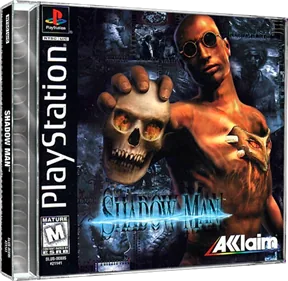
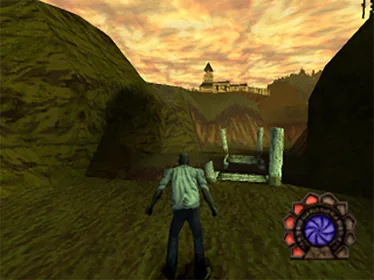
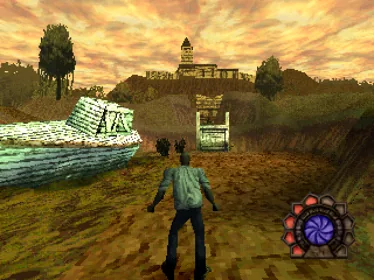
These releases show both the promise and the tension inside Acclaim. On one hand, the publisher absolutely had taste for commercially viable originality. On the other hand, the broader corporate image kept pulling attention back toward bigger, noisier brand hooks. That imbalance mattered. When people remember Acclaim, they often remember the loudest things first: Mortal Kombat, Turok, wrestling, and scandal. The company’s more nuanced or mood-driven releases did not always reshape its identity in the same way. They enriched the catalog, but they did not necessarily save the business when the hits became harder to find.
Wrestling, Attitude, and the Television Era
Few categories suited Acclaim’s temperament as well as wrestling games. Professional wrestling in the 1990s was all about personas, slogans, instantly readable conflict, larger-than-life faces, and shameless promotion. That is also a decent description of Acclaim’s marketing philosophy. So it is no surprise that wrestling kept resurfacing as a major thread in the company’s history. There was the early value of the WWF license. There was WWF WrestleMania: The Arcade Game, which borrowed the absurd exaggeration of arcade brawlers and mapped it onto televised wrestling spectacle. Later there were ECW titles and eventually Legends of Wrestling, which tried to turn nostalgia itself into a salable brand.
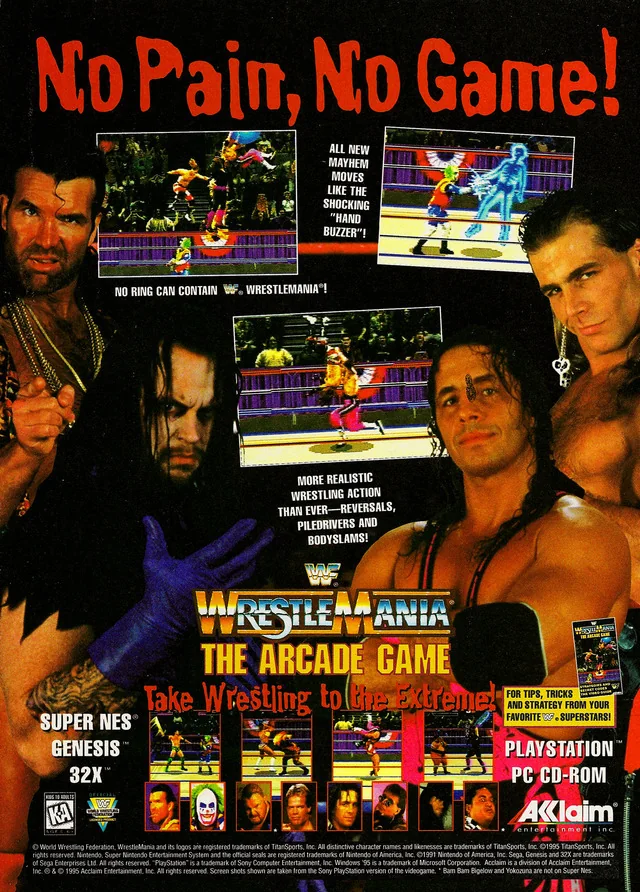
WWF WrestleMania: The Arcade Game is especially revealing because it shows Acclaim merging two of its strongest instincts: license exploitation and arcade immediacy. This was not a slow, simulation-driven wrestling approach. It was big hits, big personalities, and all the theatrical excess you could cram into a mid-1990s package. That matched the company’s image perfectly. If Acclaim could not always guarantee subtle design, it could usually guarantee legibility. You knew exactly what sort of time you were being sold.
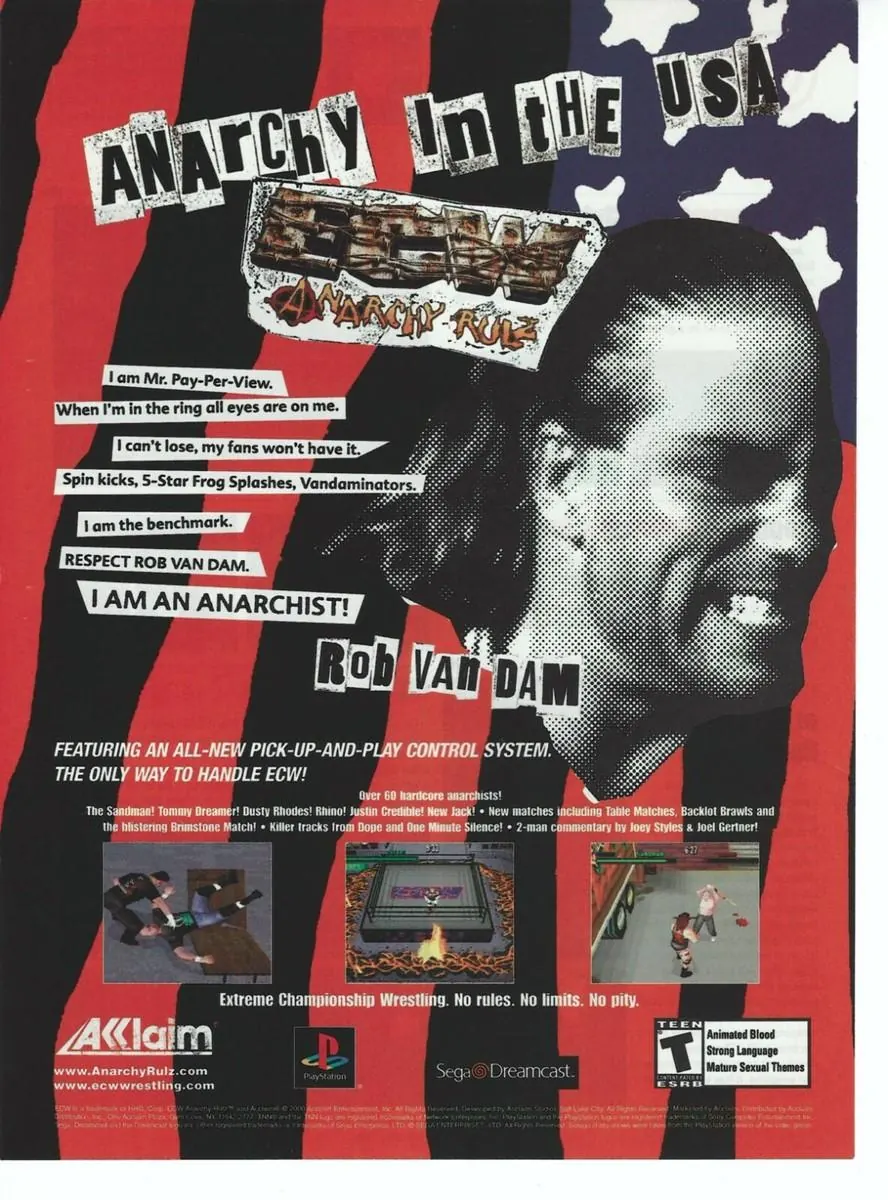
The ECW period took that logic to a harder edge. By the time Acclaim was publishing ECW Anarchy Rulz, the company’s instinct for “attitude sells” had become almost reflexive. Hardcore wrestling’s anti-authority image fit neatly with Acclaim’s own attraction to provocation. The company did not just want sports or wrestling fans. It wanted the fans who thought the mainstream version was too tame. That strategy made sense in the short term because it differentiated the product. It also nudged Acclaim farther toward a brand personality built around aggression and sensationalism, a trait that would eventually become self-defeating.

Legends of Wrestling showed the other side of the same coin. Instead of leaning purely on contemporary shock value, Acclaim tried to bottle wrestling nostalgia. That was a smart business move, at least conceptually. If current talent deals and league politics could become messy, history could be repackaged. But the reliance on recognizable brands and eras never really went away. Even Acclaim’s attempts to refresh itself usually circled back to the old lesson: put a known thing on the front and hope the market answers.
AKA Acclaim and the Turn Toward Bad Publicity
Every long-running entertainment company reaches a point where its confidence starts looking less like swagger and more like strain. For Acclaim, one of the clearest warning signs came in the early 2000s, when the company leaned into publicity stunts and edgy branding with a level of desperation that, in hindsight, feels impossible to miss. The AKA Acclaim label and the promotion around BMX XXX are the most infamous examples. There is a difference between provocative marketing and marketing that announces to the world that you are out of better ideas. Too often, late-period Acclaim landed on the wrong side of that line.

BMX XXX has become legendary not because it was a great game, but because it distilled every anxious, cynical impulse of the era into one product. What had begun life as a more conventional extreme-sports project was transformed into a nudity-and-shock campaign that seemed engineered to generate headlines rather than trust. The move made a certain grim sense if you were staring at a balance sheet and hoping controversy might substitute for broad appeal. But it also damaged the company’s image. Acclaim stopped looking like a brash hit-driven publisher and started looking like a business flailing for attention in a market that no longer found its old tricks charming.
The saddest part is that this phase tends to overshadow the company’s legitimate accomplishments. When modern players hear “Acclaim,” many jump straight to BMX XXX or bizarre publicity schemes, skipping over the years when the company helped define entire slices of console culture. That is what decline does to a legacy. It compresses a messy, varied history into a handful of embarrassing late images. But the descent did not happen because Acclaim suddenly forgot how to publish games. It happened because the market changed, development economics got harsher, and the company’s dependence on recognizable hooks no longer guaranteed survival.
The Industry Changed Faster Than Acclaim Did
To really understand Acclaim’s fall, it helps to step back from the company’s own mistakes and look at the wider business around it. The industry that rewarded Acclaim in the early and mid-1990s was not the same industry that confronted it by the early 2000s. In the cartridge era, shelf presence and recognizable branding could compensate for a lot. Teams were smaller, development cycles were shorter, and the right license could give a publisher a huge head start. By the PlayStation 2 generation, all of that had become more demanding. Production values rose. Consumer expectations rose. Platform fragmentation made planning harder. Retail space became more competitive. Marketing costs remained high even as the odds of any single mid-tier release breaking out became less reliable. A publisher built to thrive in one version of the market could suddenly look badly calibrated for the next one.
Acclaim was hardly the only company to struggle with that transition, but its particular strengths left it exposed. A business anchored in licensed properties can flourish when those licenses reliably convert into sales. It can suffer badly when those deals become expensive while the underlying software sells merely well instead of spectacularly. A business with many studios can look robust during growth and dangerously bloated during contraction. A business known for noise and attitude can enjoy free publicity during expansion and look embarrassing when the headlines stop translating into hits. In other words, the entire ecosystem around Acclaim shifted in ways that turned many of its former advantages into sources of pressure.
There was also the matter of identity. In an era when companies like Rockstar, Electronic Arts, Activision, Capcom, Konami, and others were sharpening clearer global reputations, Acclaim could seem fragmented. It had great brands, but the company itself often felt like a collection of opportunities rather than a single coherent creative mission. Sometimes that was a strength. It let Acclaim move flexibly from sports to action to wrestling to horror to racing. But when the business environment became harsher, flexibility without a deeply unified center could become drift. The company had many revenue streams, yet not enough of them were dependable enough to carry the whole operation when the market started punishing inconsistency.
This is part of why Acclaim’s bankruptcy still resonates as more than a simple case of one publisher failing. It stands as a hinge-point story in the medium’s commercial evolution. The company was built for an age of retail visibility, blunt branding, and fast exploitation of recognizable properties. The next era demanded bigger capital, more durable franchises, cleaner management, and stronger long-term planning. Acclaim still had recognizable names, but it no longer had the structural advantage it once enjoyed. Once that edge vanished, the company’s long list of liabilities became impossible to ignore.
Leadership Changes, Cost Cutting, and the Collapse
By the early 2000s, Acclaim’s problems were no longer things that could be hidden behind ad copy. The company had too much overhead, too many moving parts, and too little margin for failure. Big licensed brands were expensive. Studio operations were expensive. Console development in the PlayStation 2, Xbox, and GameCube period was more demanding than the cartridge generation Acclaim had mastered. The company still had name recognition, but name recognition is not the same thing as a stable business model. Once enough releases underperformed, the entire structure began to wobble.
The paperwork tells the story in a much colder language. In a January 2003 SEC press release, Acclaim announced major leadership changes, including the resignation of Greg Fischbach as co-chairman and chief executive officer and the elevation of Rodney Cousens. The tone was corporate, but the underlying message was unmistakable: the company needed rescue, restructuring, and a new plan. One line from that release says a great deal about the moment.
“In order to effectively reduce operating expenses and enhance our efforts to return to profitability…”
That is the language of a company no longer talking like a market bully. It is the language of retrenchment. By the time of Acclaim’s 2004 Form 10-K, the public record makes clear that the company was in profound distress. The same publisher that had once looked like a console-era shark was now trying to survive debt, falling revenue, organizational instability, and the consequences of too many bets that had failed to pay off. Rights issues and royalty problems only deepened the crisis. A model built on deals and recognizable brands becomes especially fragile once the money gets tight, because licensors do not become more forgiving when you are weak.
Acclaim’s end came quickly once the ground fully gave way. Bankruptcy was not a dramatic finishing move so much as the last formal acknowledgment that the old formula could no longer support the company that had grown around it. The irony is hard to miss. Acclaim spent years selling power fantasies, sports swagger, transgression, rebellion, and domination. In the end, it was destroyed by very ordinary corporate realities: costs, obligations, missed payments, declining leverage, and a catalogue that could no longer reliably turn noise into profits.
What Acclaim’s Story Means Now
Acclaim’s legacy is bigger than its bankruptcy. It helped define how home publishers marketed arcade games in the 1990s. It sat at the center of the Mortal Kombat censorship firestorm. It brought NBA Jam to living rooms. It pushed Turok into the mainstream and helped make that franchise one of the signature early Nintendo 64 successes. It published memorable games outside its loudest headlines, from Shadow Man to Re-Volt to Extreme-G. It understood that wrestling, comics, toys, TV energy, and sports celebrities could all be folded into the language of video game commerce. In that sense, Acclaim was not simply a participant in the 1990s console business. It was one of the companies that taught the industry how fully entertainment branding and video games could merge.
At the same time, Acclaim’s collapse is a cautionary tale about scaling a publisher identity around heat rather than durability. The company was exceptional at spotting what the market wanted right now. It was less successful at building a business that could remain healthy when right now changed. The late years reveal what happens when a publisher becomes too attached to spectacle, too dependent on licensing costs, and too willing to believe that notoriety can compensate for weakening fundamentals. That does not erase the company’s real achievements. If anything, it makes them more interesting. Acclaim was not a joke company that accidentally survived for a while. It was a genuinely important publisher that rode its strengths until those strengths hardened into liabilities.
And that is why the Acclaim story still matters. If you grew up in the 1990s, there is a good chance the company helped shape what games looked like, sounded like, or felt like to you. Maybe it was a fatality in Mortal Kombat. Maybe it was the first time you heard “Boomshakalaka!” in your living room. Maybe it was a Turok ad promising dinosaur extinction, a wrestling game trying to turn TV bravado into button-mashing spectacle, or a weird dark action game like Shadow Man reminding you that Acclaim could be moodier than its loudest reputation suggested. The company’s rise and fall contain nearly every major theme of 1990s and early-2000s publishing in miniature: explosive growth, license dependence, studio acquisition, retail confidence, controversy marketing, brand excess, and financial collapse. In other words, Acclaim was not merely part of the era. It was one of the era’s purest expressions.
Further Reading and Related Links
- GamesBeat: Greg Fischbach on founding Acclaim and returning to publishing
- David Craddock: Rob Holmes on the end of Acclaim’s relationship with Midway
- David Craddock: Why Mortal Kombat never appeared on NES
- SEC: January 2003 Acclaim press release
- SEC: Acclaim Entertainment 2004 Form 10-K
- MobyGames: Wizards & Warriors
- MobyGames: NBA Jam Tournament Edition screenshots
- MobyGames: Extreme-G 2
- MobyGames: WWF WrestleMania: The Arcade Game
- MobyGames: Shadow Man
- Wikipedia: Valiant Comics
- Wikipedia: Acclaim Entertainment overview
Keep exploring Retro Replay: History of · Game Database · Retro Reviews