 Retro Replay Retro Gaming History, Reviews & Emulation
Retro Replay Review
Gameplay
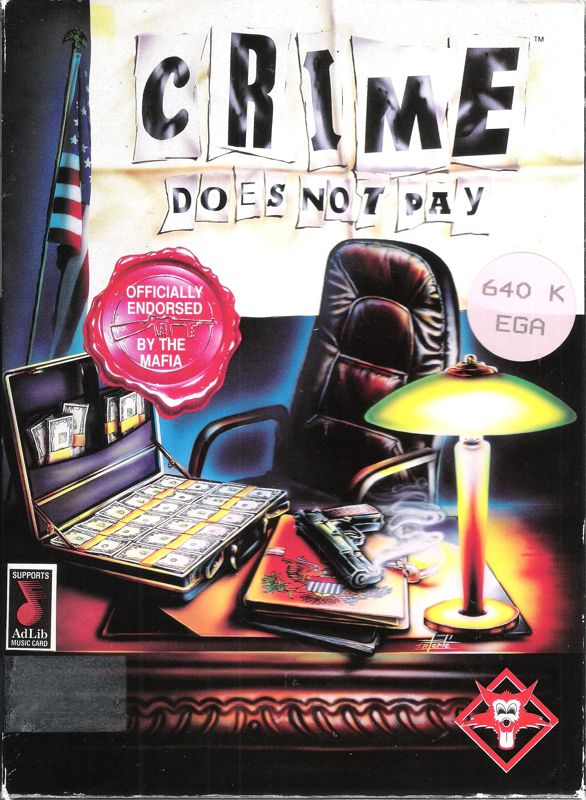
The first pull of Crime Does Not Pay is its gleefully disreputable setup. You are not simply wandering through another 2D action game; you are choosing to operate as the Godfather, a femme fatale, or the Killer, with a choice between Chinese and Italian gangs behind you. That is a strong fantasy for a small-scale 1991 game, and it gives the action a nastier, more purposeful edge than a standard street brawl.
Its gangland tools are the detail that makes the concept worth a look. Mobsters can be used to bribe, blackmail, or fight, so money and power are not just decorative crime-movie words attached to a side-scroller. The game invites you to think in suitably crooked terms: force is on the table, but so are less direct ways to get what you want. When that angle clicks, the game feels more distinctive than its basic action-game outline first suggests.
Still, the moment-to-moment conflict comes from hostile streets and hostile people. Punks, cops, killers, and rival gangs give you a broad enough range of opposition to keep the criminal climb from feeling completely abstract. Frustration can set in if you arrive wanting a deep simulation of organized crime; this is fundamentally an action game with mob-management flavor, not a sprawling criminal empire builder. Go in for compact, old-fashioned gangster action and the premise has room to breathe.
Graphics
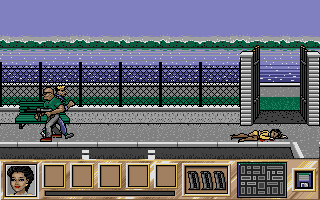
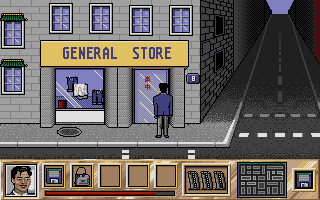
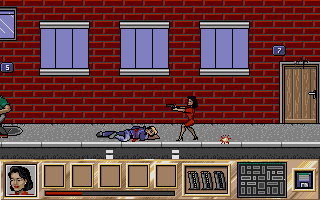
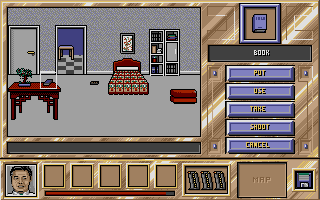
The game uses a 2D side-view, scrolling format, putting the action on a straightforward horizontal plane. That is a natural fit for keeping your character, enemies, and the immediate street-level danger in view, even if the format is plainly rooted in its early-’90s home-computer era.
Story
Crime Does Not Pay has a title that sounds like a warning, then hands you the keys to a criminal career. That contradiction is part of the fun. Its story material is built around gaining money and power through the Chinese or Italian gangs, rather than asking you to play a conventional hero cleaning up the streets.
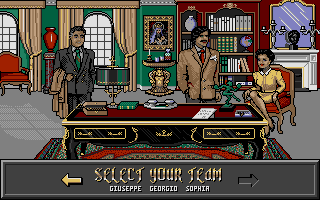
The selectable identities give the premise a little extra pulp. The Godfather, femme fatale, and Killer are familiar crime-fiction archetypes, but they suit this kind of direct, heightened underworld game. You can choose the flavor of criminal fantasy that appeals most rather than being locked into one lead from the outset.
Do not expect the setup alone to carry every minute. The narrative strength here is the broad atmosphere of rival gangs, police pressure, and dirty tactics, not a richly detailed crime saga. It works best as a frame for the action: you are climbing over anyone standing between your gang and greater power.
Overall Experience
There is something admirably blunt about Crime Does Not Pay. It puts crime-movie roles, rival gangs, and street-level trouble into a scrolling action game without much fuss. The mix of fighting with bribery and blackmail is the reason it earns more curiosity than an anonymous period side-scroller; those ideas give its criminal setting a practical role in how you play.
Its limitations are equally plain. A game centered on money, power, mobsters, and competing gangs naturally raises hopes for more elaborate criminal maneuvering than a compact action design can fully satisfy. If you judge it against later games built around elaborate criminal worlds, it will feel modest. If you judge it as an unusual 1991 genre mash-up, it has a grubby charm.
Give it a chance if you enjoy digging into old DOS, Amiga, or Atari ST action games with an offbeat premise, especially if the chance to play a gangster through more than simple violence sounds appealing. Skip it if you need deep strategy or a heavily developed crime narrative. For everyone else, it is a mildly engaging relic: not a classic, but distinctive enough to be remembered.


Reviews
There are no reviews yet.