 Retro Replay Retro Gaming History, Reviews & Emulation
Retro Replay Review
Gameplay
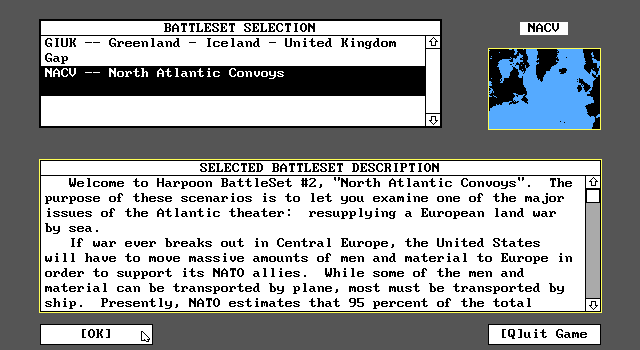
North Atlantic Convoys finds a naturally stressful use for Harpoon’s military-simulation format. The central problem is blunt and compelling: Soviet forces want to sever allied supply convoys, while NATO has to get them across the North Atlantic using escort tactics. In your first hour, that simple conflict gives the scenarios an immediate sense of purpose. You are not merely moving forces around a new map; you are contesting a route that matters to the wider war.
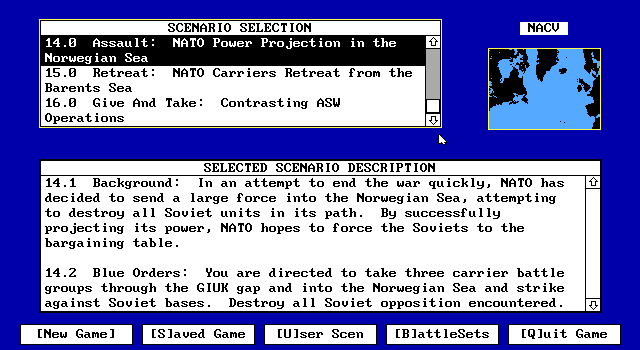
The 16 scenarios can be played from either side, and that is the add-on’s biggest strength. NATO’s job carries the familiar tension of guarding vulnerable shipping, while Soviet command lets you approach the same strategic problem as the force trying to break the convoy system. That switch keeps the material from feeling like a single repeated exercise and makes the hypothetical 1990 NATO–USSR war more interesting to examine from both directions.
The expanded North Atlantic map and added Western and Soviet ships, aircraft, submarines, and weapons give this BattleSet a proper change of scope rather than just a different scenario list. Still, it is firmly an add-on for people already comfortable with Harpoon’s deliberate style. Frustration can set in if you want fast tactical fireworks or a lightweight naval game: the reward here is in settling into the larger convoy problem and seeing how the opposing sides tackle it.
Graphics
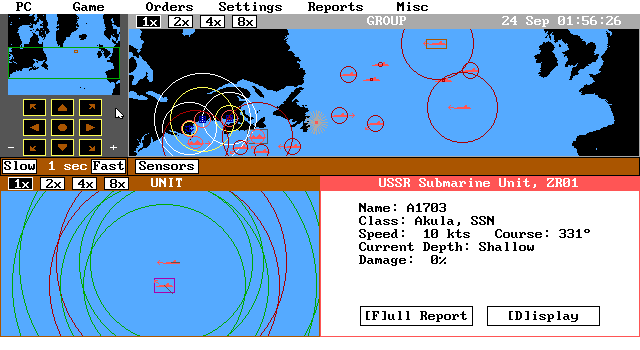
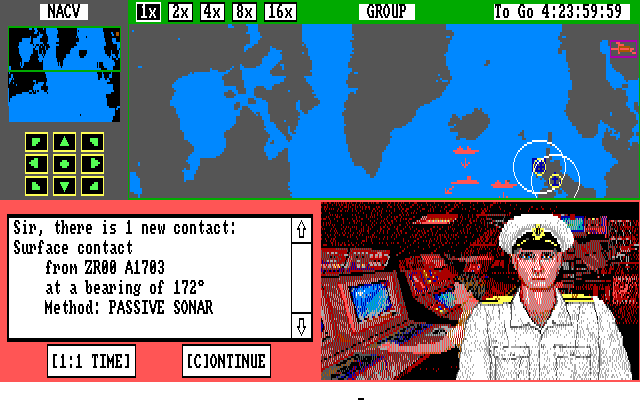
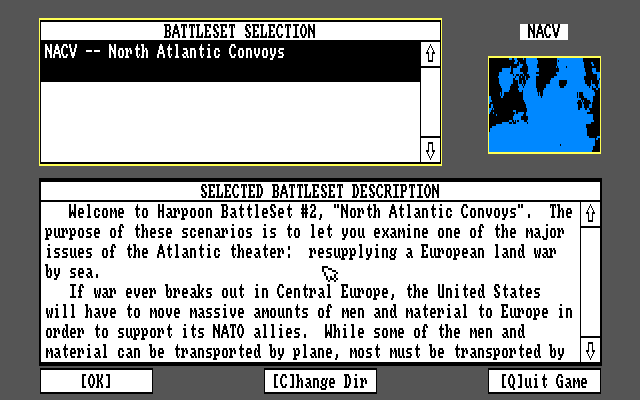
The new North Atlantic map is the key visual change, giving the scenarios a wider ocean theatre for the convoy war. This is a functional expansion of Harpoon’s existing look, centered on following naval and air forces across a broad operational area rather than on flashy new artwork.
Story
There is no need for an elaborate plot when the setup is this clear. It is 1990, NATO and the USSR are already in full-scale war, and the Atlantic supply line has become a battlefield. The historical echo of German attacks on Allied convoys in the world wars gives the conflict an instantly understandable stake without turning the game into a retelling of either war.
NATO’s side has a defensive urgency: the convoys have to survive. The Soviet side has a direct strategic objective: stop them. That contrast gives the scenario collection a stronger dramatic throughline than a grab bag of unrelated military engagements.
The hypothetical setting also suits Harpoon particularly well. It lets modern Western and Soviet forces meet in a conflict built around a recognizable strategic fear of the era, while the two playable perspectives keep the war from being framed as a simple victory lap for either side.
Overall Experience
North Atlantic Convoys is a good expansion because it chooses a conflict Harpoon can make tense without needing to change its foundation. Convoy warfare turns a broad cold-war confrontation into a concrete problem, and the ability to play all 16 scenarios as NATO or the USSR gives the package satisfying variety.
Its limitations are also straightforward. This is not a standalone fresh start or a major overhaul; it asks you to bring your appreciation for Harpoon with you. If that core command-focused pace already works for you, the expanded map and force database make this a meaningful addition rather than a token mission pack.
Give it a chance if you want a naval wargame campaign where protecting supply routes or cutting them off is the entire point, and you are happy to live inside Harpoon’s careful tempo. After this Atlantic detour, Harpoon Battleset 3: The MED Conflict is the natural next stop for another BattleSet theatre.
Reviews
There are no reviews yet.