 Retro Replay Retro Gaming History, Reviews & Emulation

Retro Replay Review
Gameplay
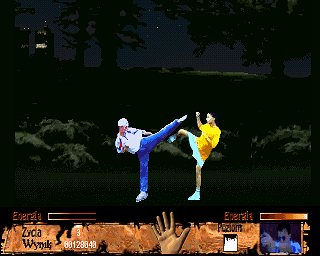
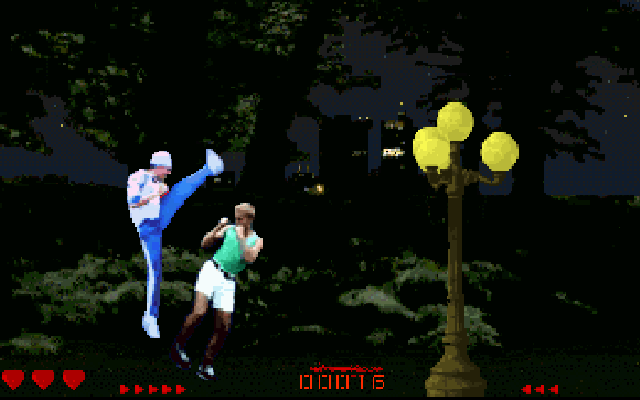
The first few minutes make Prawo krwi easy to understand. You push forward through a side-scrolling mission, confront enemies directly, and try not to waste your limited energy or extra lives. There is no great mystery to its brawling, which can be a virtue if you want a blunt action game that gets to the point. Every encounter is about staying upright and clearing the path ahead.
What keeps it from becoming completely monotonous is the mission structure. Most stages use the beat-’em-up format, but missions two and six shift into first-person shooting, while missions four and eight become time-limited car chases. That is a smart attempt to break up the usual march to the right. The catch is that this kind of variety can also feel abrupt: if you came mainly for hand-to-hand action, the driving and shooting detours may register more as interruptions than highlights.
Resource management gives the fighting some needed tension. Health is finite, lives are few, and an enemy can leave behind a useful pickup: more energy, temporary invincibility, points, or an extra life. You will appreciate those drops most after a scrappy stretch where damage has piled up. The game does not sound generous, so it suits anyone who enjoys making a limited stock of survival resources last rather than cruising through on endless continues.
Its best quality is its willingness to be a compact mixed-action challenge rather than one long brawl. Its weaker side is that the core remains uncomplicated, and the mode changes do not automatically make each mission deeper. Give it a chance if you enjoy mid-1990s action games with a little friction and a willingness to surprise you with a different genre for a stage or two.
Graphics
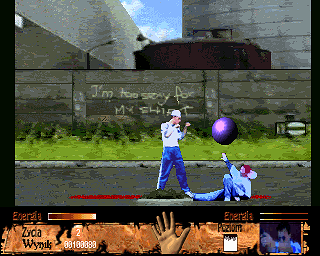
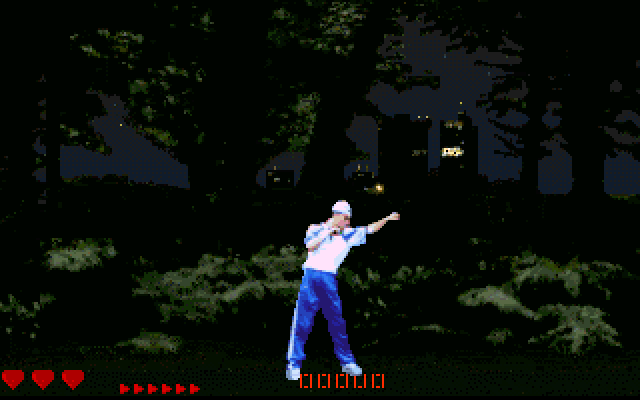
The fighters are built from digitized recordings of actors performing attacks and camera-facing moves. That gives the main character and enemies a photographed, human look rather than a conventionally drawn sprite style. In the side-scrolling stages, this makes the strikes and bodies the main visual focus.
The game also moves between side-view fighting, first-person shooting, and car-chase missions, so the camera does not stay locked to one viewpoint for the entire campaign. The digitized combatants are the most distinctive visual element, even if the result has the stiff, period-specific feel many players associate with this approach.
Story
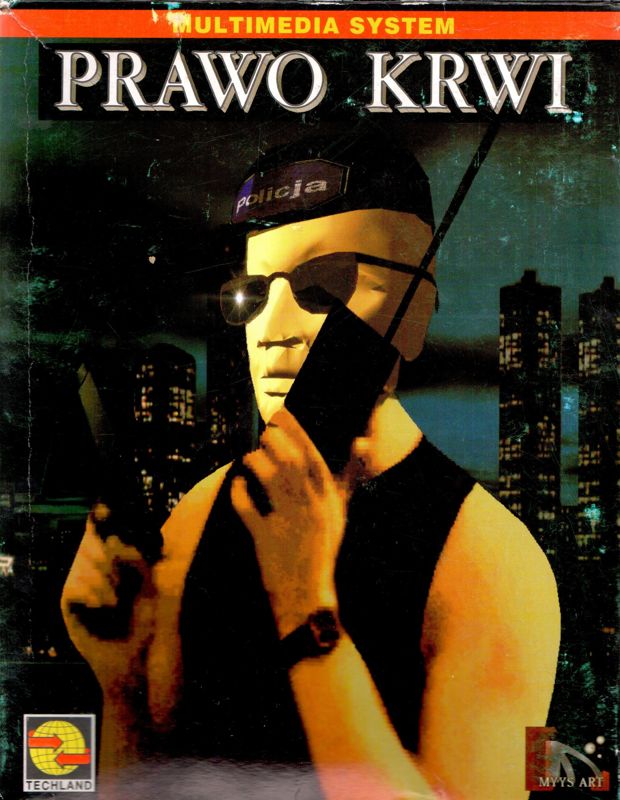
Prawo krwi grounds its action in post-Communist Poland, where criminals from the East have made the country a target for illegal activity. The government responds by creating GROM, a special anti-terrorist unit. It is a direct setup for a mission-based action game, and it gives your constant forward push a clearer purpose than simply fighting for its own sake.
You are not the original commander. You take over after your predecessor is killed during the prior mission, immediately placing you in a job that has already proven dangerous. That small detail gives the role a little weight: you are replacing someone who did not make it back, not merely picking up an anonymous badge.
Each mission begins with a brief briefing, which helps frame the campaign as a sequence of operations. Do not expect the premise to overshadow the action; the story chiefly exists to send you into the next assignment. Still, the GROM angle and the succession of mission briefings give the game more character than an entirely context-free brawler.
Overall Experience
Prawo krwi is an uneven but understandable slice of 1990s action design. Its brawling foundation is simple, its health and life limits create pressure, and its power-ups offer just enough recovery to make a difficult run feel salvageable. The shooter and driving missions add welcome changes of pace, though they also make the package feel less focused.
The digitized actors are a genuine point of distinction, particularly if you have a soft spot for games that tried to make arcade combat feel more physical through filmed performers. Combined with the Polish anti-terrorist premise, they give Prawo krwi a personality that is more memorable than its basic walk-right-and-fight structure might suggest.
At 5.9, it lands in the territory of a curiosity rather than an essential action classic. You may find a modest payoff in learning its mission rhythms, conserving health, and seeing what form the next stage takes. Go in for the unusual mix of brawler, shooter, and chase sequences, and for the period flavor—not because you expect a polished, consistently strong combat game.


Reviews
There are no reviews yet.